
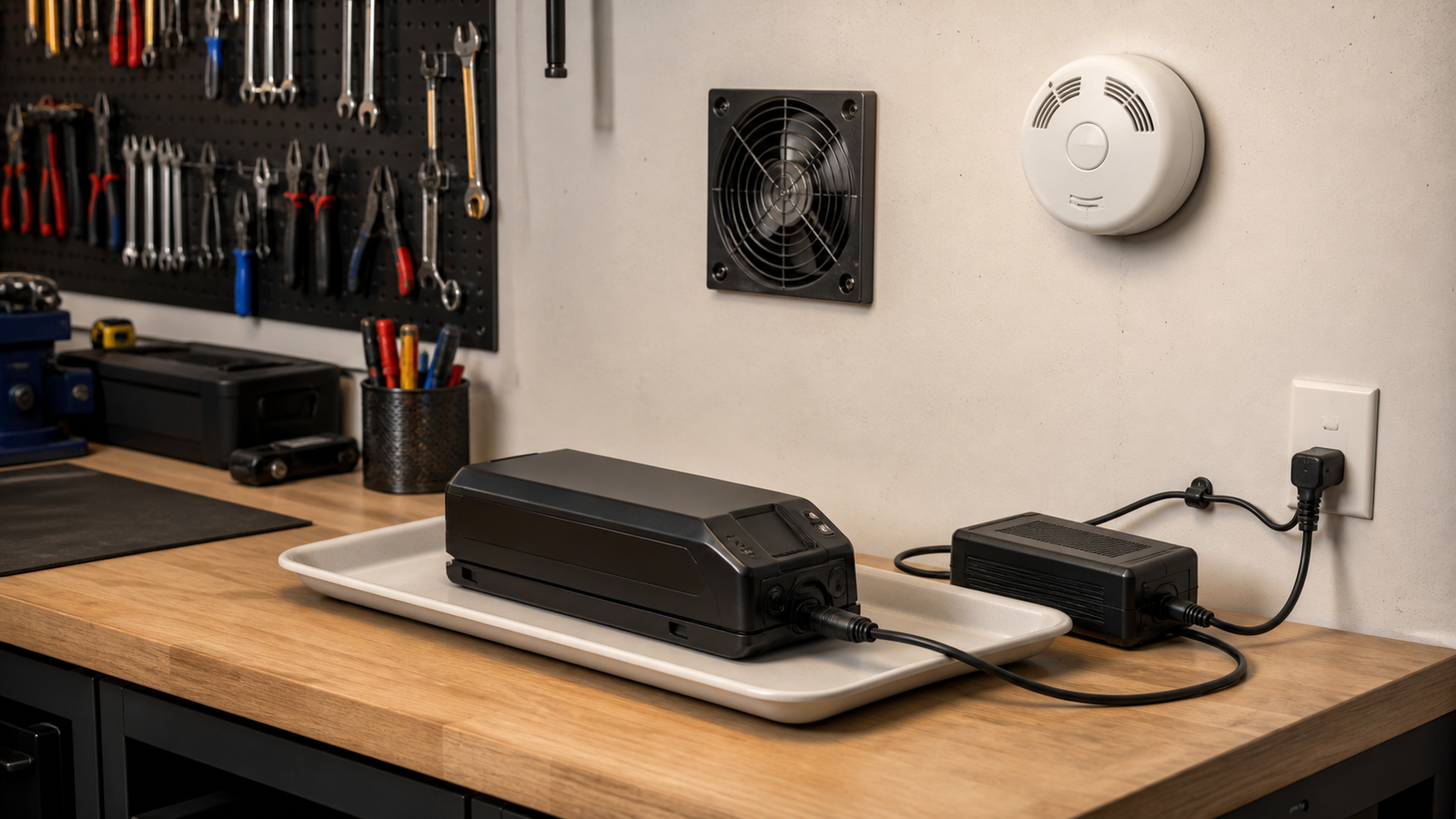
E-bike batteries are no longer niche parts in maker garages. They sit beside 3D printers, soldering benches, robotics kits, camera gear, and home-lab equipment. That makes charging safety a systems problem: chemistry, charger matching, cable routing, heat, storage location, and human habits all matter.
Quick answer
Charge an e-bike battery with the correct charger, on a stable nonflammable surface, away from exits and clutter, with the cable fully seated and the pack visible while charging. Check recall notices, stop using damaged packs, and do not treat a universal charger as a harmless convenience.
Why maker garages need a checklist
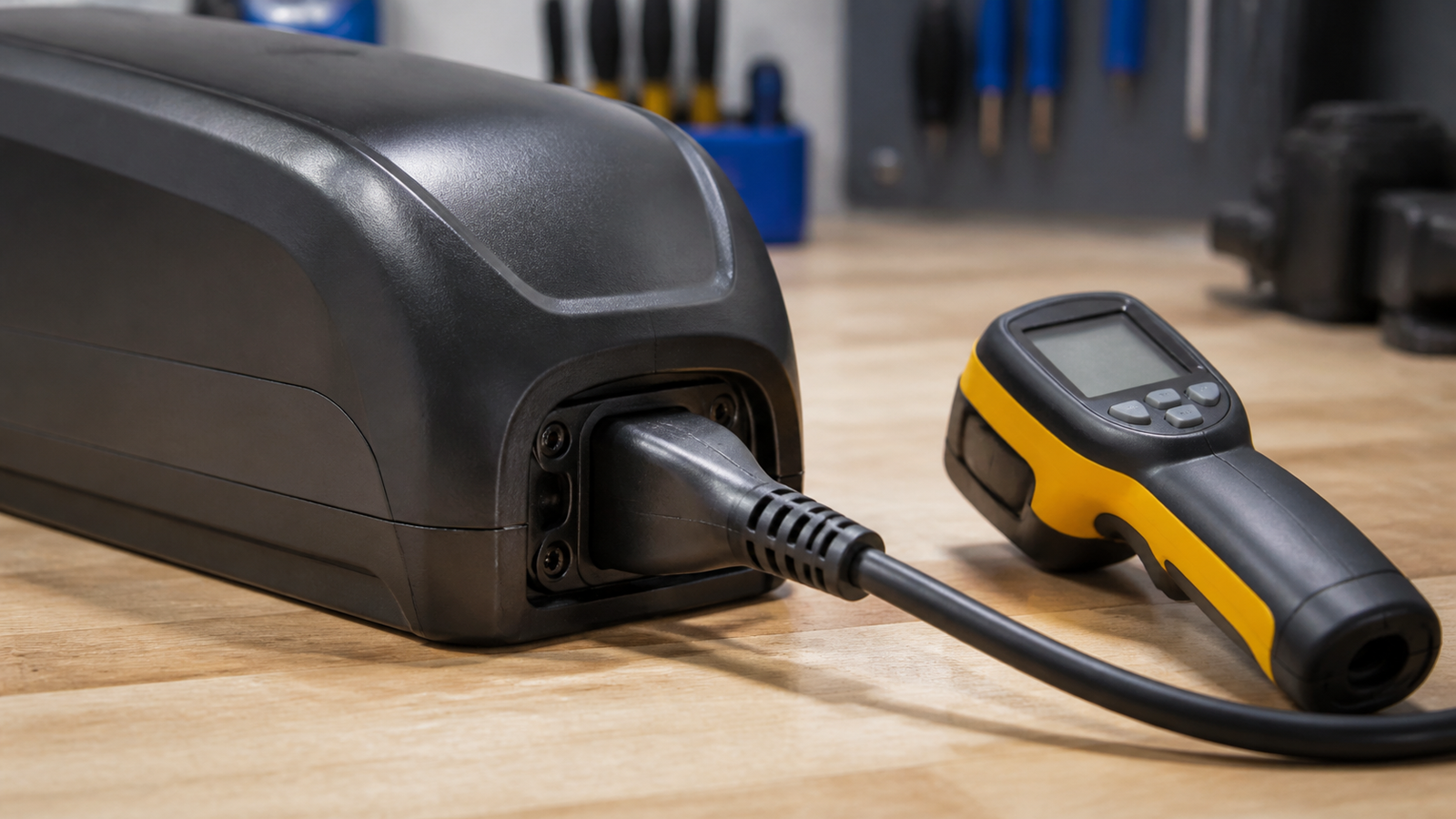
The risk is not that every e-bike battery is unsafe. The risk is that a busy garage often combines high-energy packs with extension cords, tools, cardboard boxes, filament, spare chargers, and unattended overnight charging. NFPA and CPSC both publish lithium-ion battery safety guidance because charging failures can escalate quickly when packs are damaged, mismatched, recalled, or poorly supervised.
A checklist turns that general warning into a practical habit. It also helps families and student teams separate normal charging from warning signs such as swelling, unusual heat, odor, damaged casing, frayed cables, or a charger that does not match the battery system.
Garage charging checklist
- Use the matched charger: voltage, connector, and battery-management expectations matter.
- Pick the surface: avoid beds, couches, cardboard, paper piles, and blocked exits.
- Keep the cable path clear: do not run charging leads through pinch points or under heavy tools.
- Check heat: warm can be normal; unusual heat, smell, swelling, or noise means stop charging.
- Watch recalls: search CPSC or manufacturer notices before using unknown or secondhand packs.
- Plan disposal: damaged lithium-ion batteries need proper disposal instructions, not trash-bin guesswork.
What not to overclaim
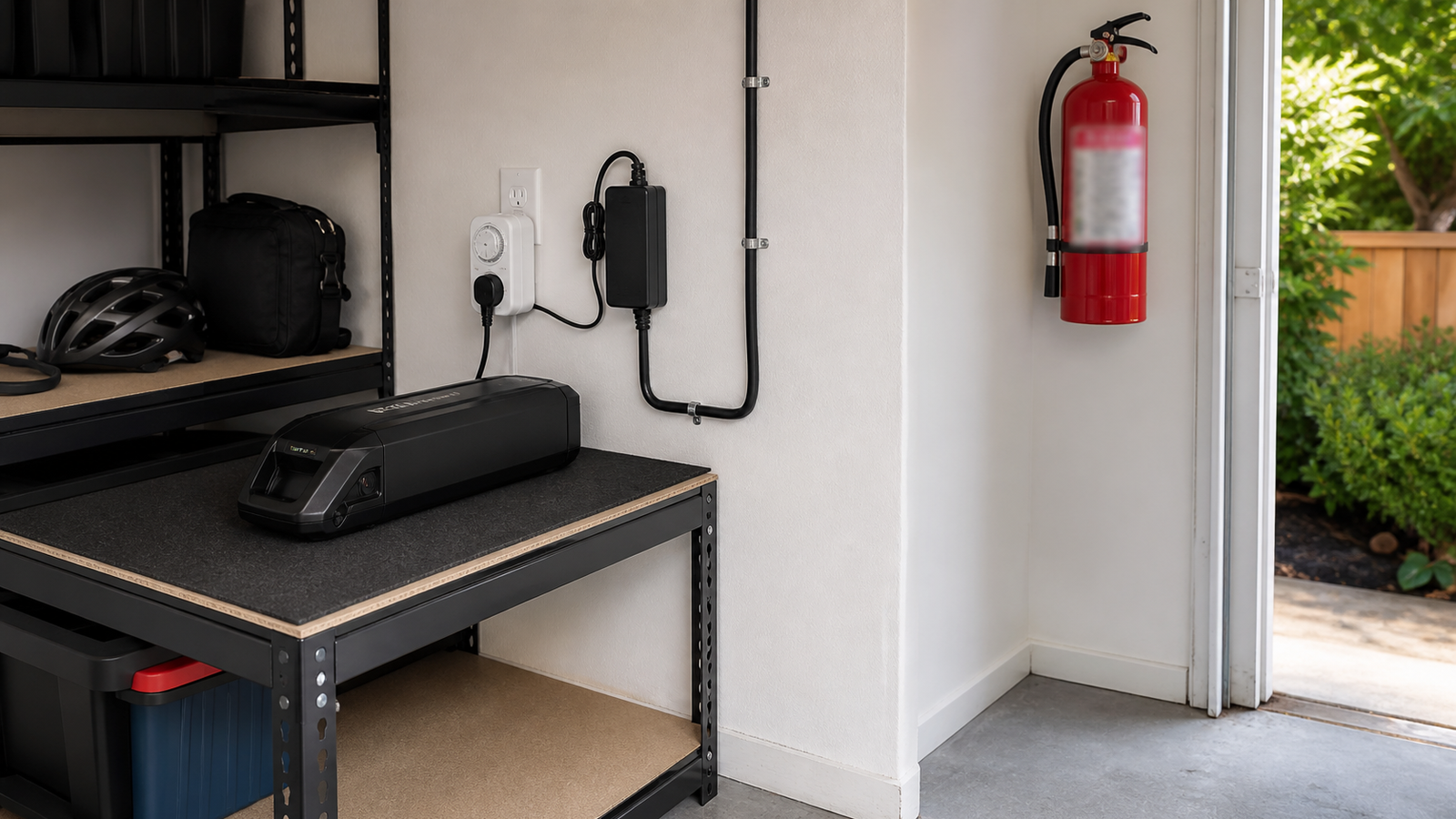
This is not a claim that a garage checklist can make every battery safe. Pack design, cell quality, battery-management electronics, charger behavior, shipping damage, and prior abuse may be invisible to the owner. The checklist is a risk-reduction tool, not a certification test.
It is also not a repair guide for opening packs. If a battery has been dropped, submerged, swollen, overheated, recalled, or modified by an unknown seller, the safer move is to follow manufacturer and public-safety guidance rather than trying to diagnose cells on a hobby bench.
TVG Take
E-bike charging fits TVG’s engineering lane because it is a product-readiness and workflow-reliability problem. The safest garage is not the one with the most gadgets. It is the one where high-energy devices have a documented place, a matched charger, a clear cable path, and a human habit that treats warning signs seriously.
Related TVG reading
- E-Bike Charging Maker-Garage Safety Checklist
- Robot Battery Connectors and Strain Relief
- USB-C Field Robot Power Delivery Checklist