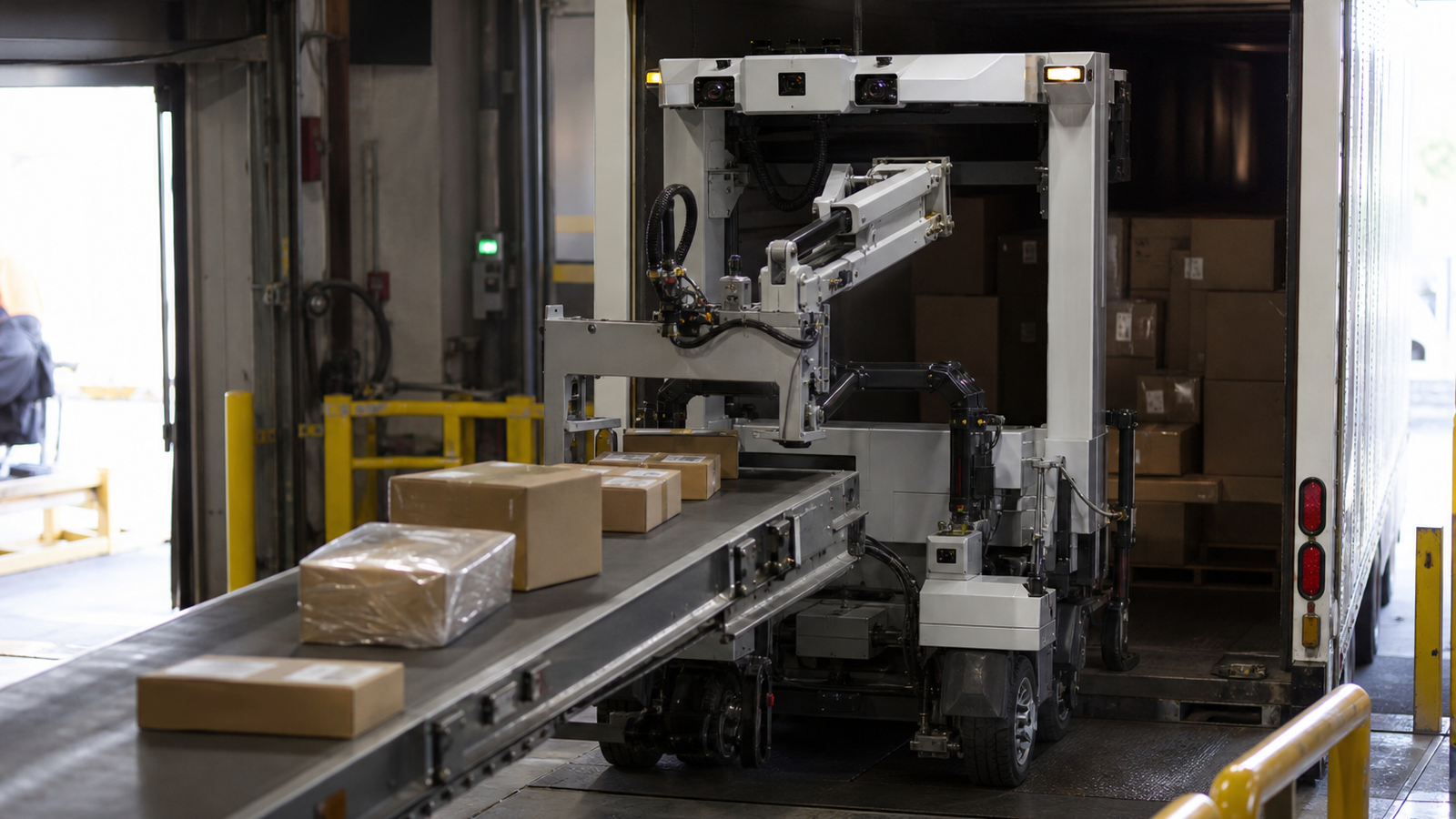
FedEx says it is expanding its collaboration with Dexterity to scale autonomous trailer-loading work at the FedEx Hagerstown Hub in Maryland. The July 30 newsroom announcement describes the effort as an expanded physical-AI deployment focused on the hard logistics task of loading trailers safely and consistently.
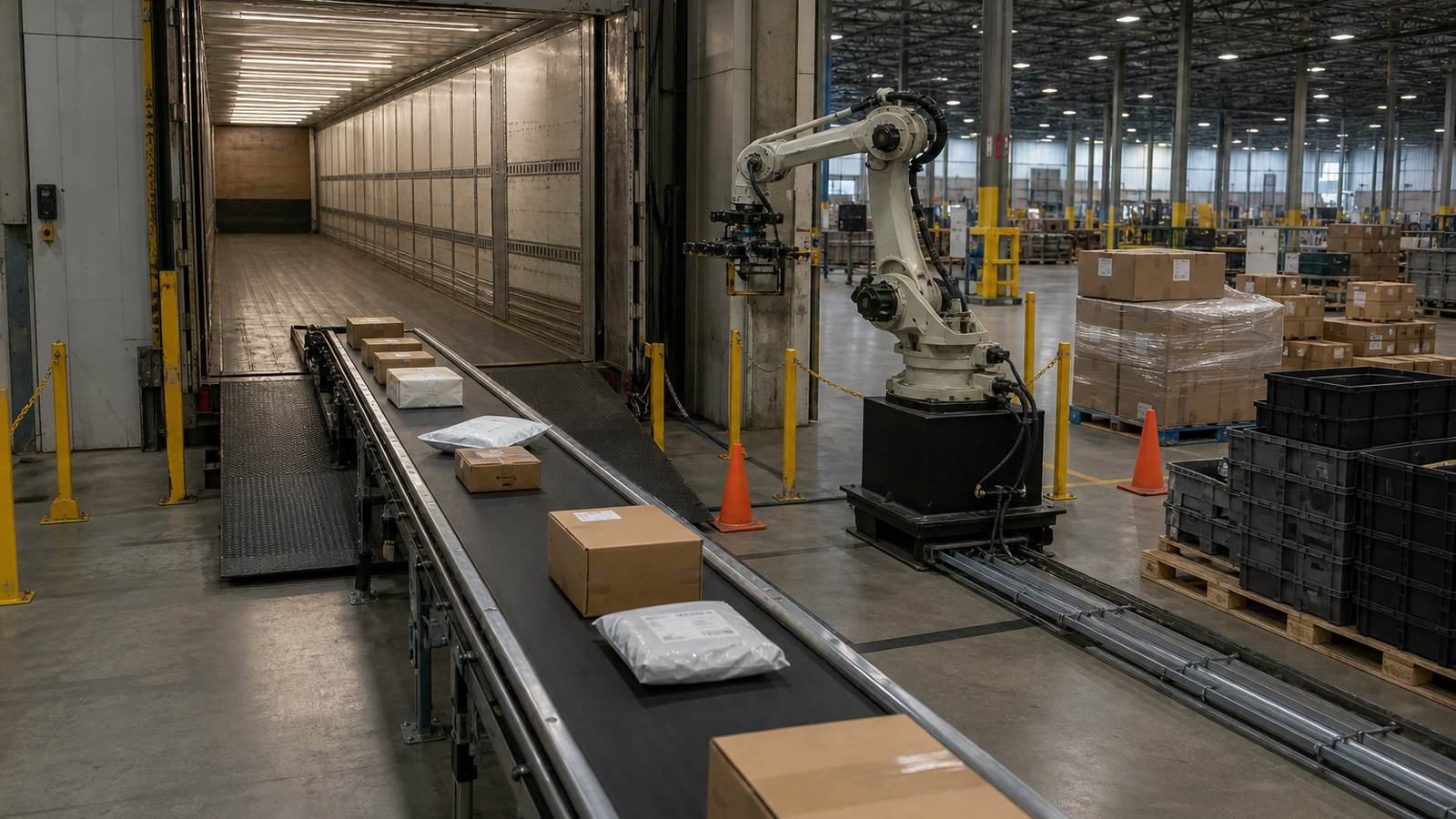
The news is notable because trailer loading is not a clean tabletop robot problem. Packages arrive in different shapes, weights, surfaces, and timing. The robot has to reason about what fits next, how a wall of parcels will remain stable, and how to operate in a constrained trailer opening while other parcel-handling systems keep moving.
What FedEx announced
According to FedEx, the deployment at Hagerstown expands a multi-year collaboration with Dexterity around autonomous trailer loading. Dexterity describes its robotic truck-loading product as a system that moves to the back of trailers, connects with a conveyor feed, and uses its physical-AI software to load packages into the trailer.
Dexterity’s technical material around Foresight frames the system as more than arm motion planning. The company describes a world-model approach for reasoning about how physical actions affect package placement, stability, and future choices. In a trailer, that prediction problem matters because one poor placement can make the next several placements harder.
Why it matters
For warehouse robotics, autonomous trailer loading has always been a credibility test. The task includes perception, manipulation, sequencing, safety, and exception handling inside a space that was not designed around robots. A system may work well on a structured line and still struggle when cartons deform, labels face the wrong way, or package flow changes unexpectedly.
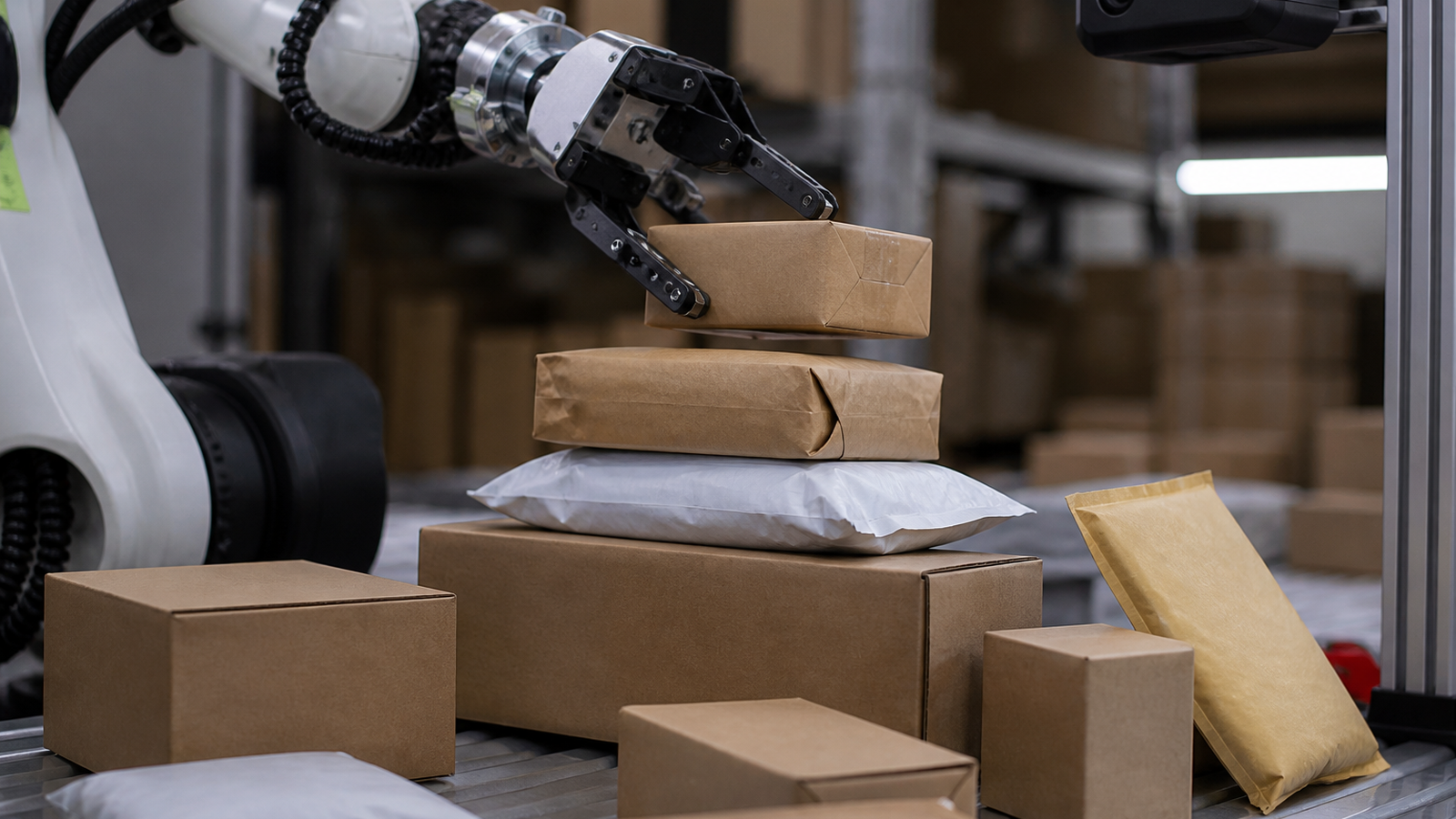
For STEM and maker robotics readers, the useful lesson is that manipulation intelligence is rarely just “pick and place.” A trailer-loading robot has to treat the stack as a changing 3D state, not as a list of independent boxes. That is the same idea students run into at smaller scale when a robot sorts blocks, stacks totes, or packs a bin.
TVG Analysis
The FedEx-Dexterity expansion is important because it points to a maturing robotics question: can physical-AI systems handle repetitive industrial work where edge cases are normal rather than rare? The announcement does not provide a full public scorecard on throughput, uptime, damage rates, or worker feedback. Those are the details that will determine whether the pattern travels beyond a showcase deployment.
TVG will be watching for measurable operating data, how the system handles odd packages and interrupted flow, and whether similar trailer-loading deployments appear across more hubs. For now, the Hagerstown expansion gives builders a concrete example of why robot manipulation, perception, and planning have to be evaluated together.
What builders can study
A useful classroom version of this problem does not need an industrial arm. Students can model trailer loading with blocks, a camera, and a small gantry or mobile manipulator, then score not only whether an item was moved but whether the final stack leaves room for the next item. That shifts the exercise from motion to planning under physical constraints.
Related TVG reading
- E-Bike Torque Sensors vs Cadence Sensors: A Maker’s Diagnostic Guide
- Gemma Translator on Raspberry Pi 5 Shows the Real Test for Local AI Appliances
- Wi-Fi 7 Mesh Backhaul for Home Labs Still Needs Ethernet Discipline