
Quick answer: The 2026 FIFA World Cup is the most technology-advanced World Cup because it combines connected match-ball sensing, upgraded semi-automated offside support, referee point-of-view cameras, centralised match data, and broader team analytics across the largest World Cup format yet. For STEM and maker communities, the important lesson is not “sports tech is expensive.” It is that modern engineering systems work when sensors, computer vision, edge computing, human review, and clear user feedback are designed together.
Key takeaways
- The 2026 World Cup is a live example of human-in-the-loop AI: algorithms can flag events, but referees and operators still make the final decisions.
- The connected ball and offside systems show why timing, calibration, sensor fusion, and explainable visual output matter as much as raw AI accuracy.
- STEM classrooms and maker labs can turn the tournament into projects around IMUs, camera tracking, latency, dashboards, fairness, and sports-data ethics.
The 2026 FIFA World Cup is easy to describe by scale. It is being played across Canada, Mexico, and the United States, with 48 teams and 16 host cities. That alone makes it different from every World Cup before it.
But from a TVG Report point of view, the more interesting story is not just the expanded tournament. It is the systems engineering underneath it.
FIFA says the 2026 tournament will introduce significant technological innovations, including faster offside decisions, improved referee body-camera images, and broader match-analysis access for all 48 participating teams. The official match ball, adidas TRIONDA, also continues FIFA’s connected-ball direction with a 500Hz motion sensor chip designed to support ball-event insight and officiating workflows.
That makes the 2026 World Cup a useful case study for students, makers, robotics teams, and technical educators. It is not just a sports event. It is a large, public, high-pressure demonstration of sensor fusion, computer vision, edge infrastructure, data visualisation, and human oversight.
The World Cup is becoming a distributed sensing system
Most fans see the final call: offside, goal, ball out, foul, restart. Engineers see the pipeline behind the call.
A modern match can include ball sensors, optical tracking cameras, referee communications, video assistant referee systems, broadcast feeds, stadium networks, timing systems, and analytics platforms. None of those pieces is impressive in isolation if the whole pipeline is slow, confusing, or unreliable.
That is why the 2026 World Cup matters for STEM. It shows that “AI in the real world” is rarely a single model making a magical decision. It is usually a layered system: sensors collect data, software interprets signals, humans review the result, and the system has to explain itself quickly enough for people to trust it.
The connected match ball is a good example. A 500Hz sensor is not useful only because it is fast. It is useful because it can help align a specific ball event — a touch, movement, or change in motion — with camera-based player tracking and match context. That is a classic sensor-fusion problem, the same kind of engineering idea that appears in drones, robotics, autonomous vehicles, industrial inspection, and motion-capture labs.
Semi-automated offside is really a lesson in human-in-the-loop AI
Semi-automated offside technology is often discussed as if it is simply “AI deciding offside.” That misses the more useful engineering lesson.
The system can use tracking data and ball-event timing to help identify likely offside situations more quickly. But the match still depends on officials, rules interpretation, review workflow, and presentation. The technology has to support human decision-making without hiding the reasoning.
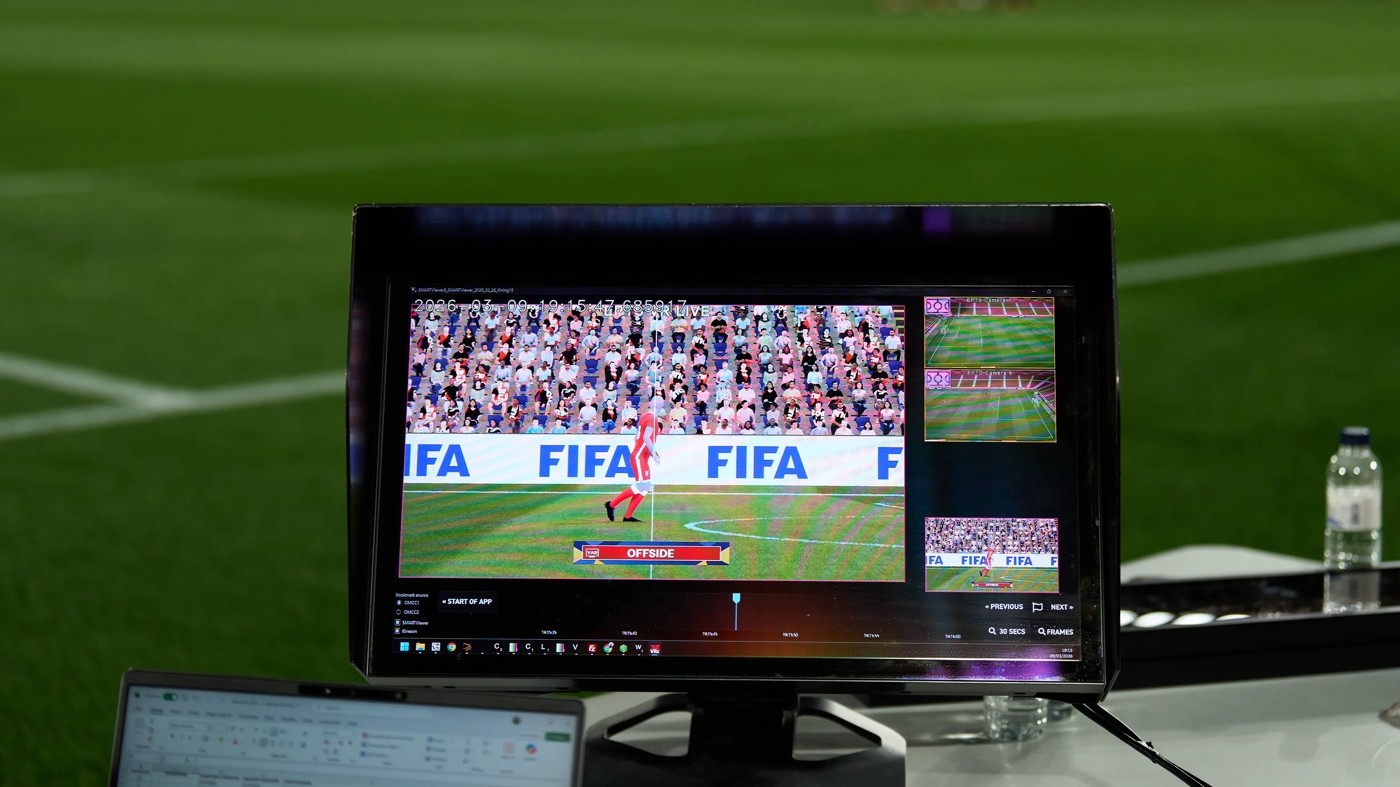
For makers and STEM teachers, this is a strong classroom analogy. A computer-vision model that detects a line crossing is only the beginning. Students still need to ask:
- Where are the sensors placed?
- How often are they sampling?
- How is time synchronised between camera and sensor data?
- What happens when a player blocks the camera view?
- How does the system show uncertainty?
- Who has authority to override or confirm the result?
Those questions are more valuable than a simple “AI is good” or “AI is bad” debate. The World Cup gives educators a familiar context for teaching calibration, confidence, latency, fairness, and accountability.
Referee cameras are a broadcast feature, but also a perception lesson
FIFA has also highlighted improved images from referee body cameras as part of the 2026 innovation package. To fans, that sounds like a new broadcast angle. To engineers, it is a reminder that field-of-view, stabilisation, motion blur, battery life, heat, privacy, and network reliability all become design constraints once a camera leaves a tripod and moves with a person.
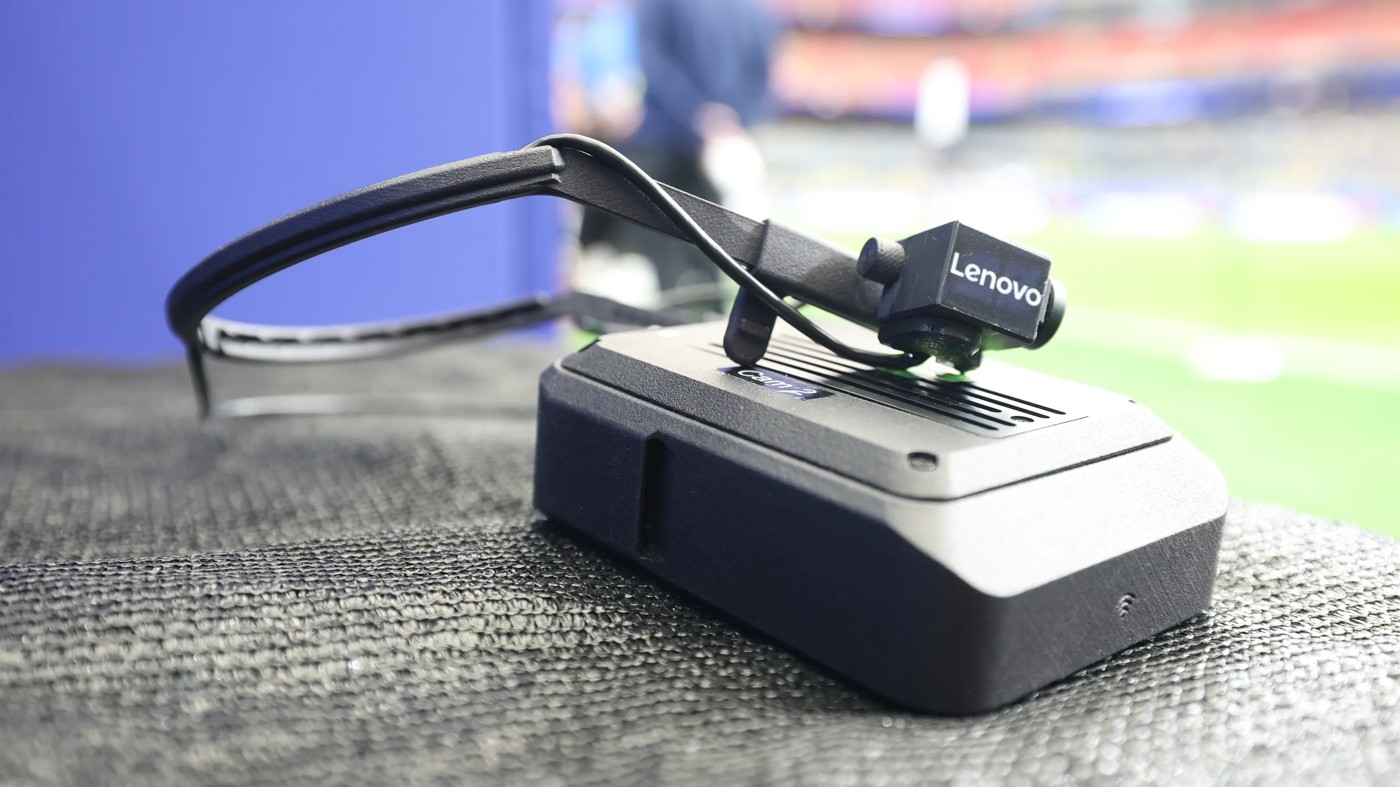
This is a useful maker-lab project area. A student team can build a low-cost point-of-view camera rig and compare:
- wide-angle versus narrow-angle lenses;
- optical versus electronic stabilisation;
- local recording versus wireless streaming;
- battery size versus comfort;
- video quality versus latency.
The engineering takeaway is practical: a camera system is not just a camera. It is optics, compute, power, mounting, networking, compression, and human factors.
The most important tech may be data access
One of the more interesting FIFA claims is that Football AI Pro will make detailed match analysis available to all 48 participating teams, regardless of team size or resources. That point matters beyond elite football.

In many technical fields, the gap is not only who has the best model. It is who has the data pipeline, compute access, dashboards, and staff time to turn raw data into useful decisions. If a tournament platform can give smaller teams better access to analysis, the model for STEM is clear: good engineering education should not stop at collecting sensor data. Students need to learn how to make data usable.
A maker lab version of that idea could be simple. Track a small robot match, drone obstacle course, or soccer-drill exercise. Then build a dashboard showing position, speed, path efficiency, missed detections, and event timing. The important part is not making a perfect professional system. The important part is teaching how raw measurements become decisions.
Five STEM and maker projects inspired by World Cup tech
1. A connected-ball motion lab
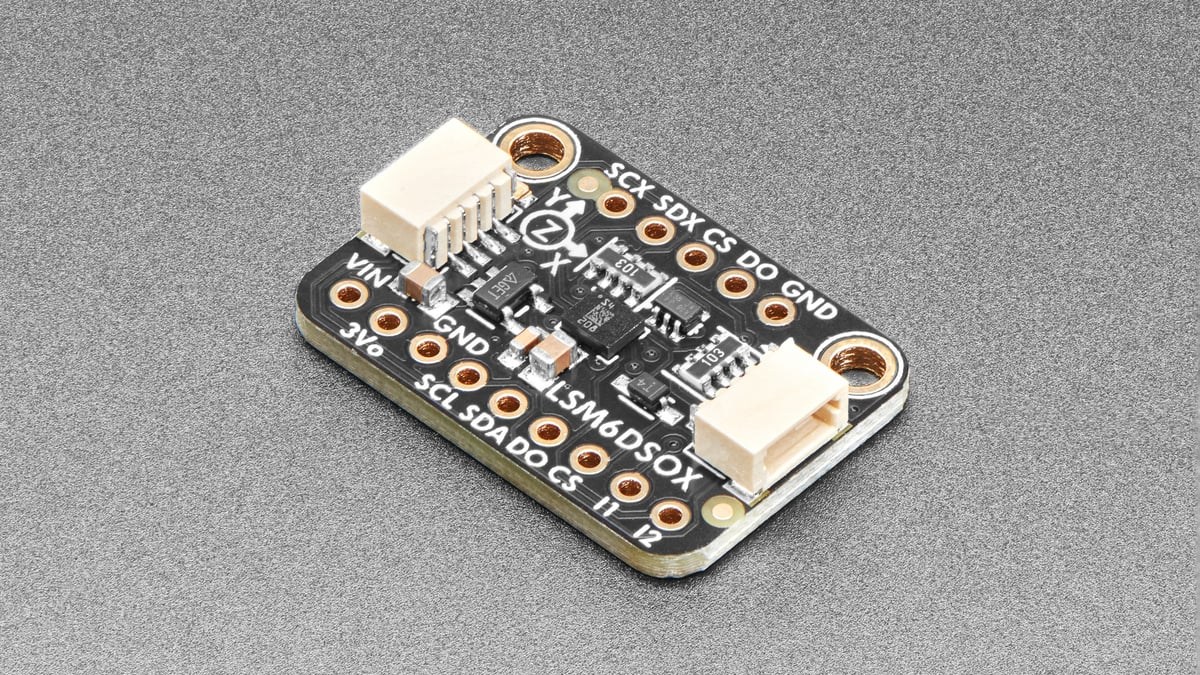
Use a small IMU module, microcontroller, and foam ball or training ball to measure acceleration, rotation, and impact timing. Students can compare different kick, throw, or bounce events and learn why sampling rate and sensor mounting matter.
2. A computer-vision offside demo
Set up a top-down or side-view camera over a mini field. Use coloured markers or AprilTags to track “players,” then calculate whether an attacker is past a defensive line at the moment of a pass. The project naturally teaches coordinate systems, camera perspective, frame timing, and edge cases.
3. A referee POV camera experiment
Mount an action camera or phone to a headset, chest rig, or cap. Compare stabilisation, view angle, battery life, and motion blur while walking, running, and turning. This is a practical way to teach field documentation, sports robotics, and wearable camera design.
4. A latency and decision dashboard
Build a small system where a sensor event triggers a dashboard alert. Measure the time from event to detection to display. Students can test wired versus wireless links, local versus cloud processing, and the tradeoff between accuracy and response time.
5. A fairness and explainability review
Ask students to design the screen that explains a decision to a player, official, or viewer. What data should be shown? What should be hidden? How should uncertainty be presented? This turns AI ethics into an engineering communication problem, not just a discussion prompt.
TVG take: the lesson is systems thinking
The 2026 World Cup is a strong example of where mainstream technology is heading. Sensors are moving into objects. Cameras are becoming decision inputs. AI systems are being asked to support real-time judgement. Data access is becoming part of fairness. And the best systems still need humans in the loop.
That is exactly the kind of lesson STEM programs and maker labs should use. The useful takeaway is not to copy FIFA’s budget or build a professional sports-tech stack. It is to teach the same engineering pattern at classroom scale:
- sense the world;
- time-stamp the data;
- combine signals carefully;
- show the result clearly;
- keep a human responsible for the final decision.
If students can understand that pattern through football, they can apply it to robotics, drones, smart cameras, safety systems, factory automation, and field research. That is what makes the 2026 World Cup technically interesting for TVG Report: it turns a global sports event into a public classroom for real-world AI systems.
FAQ: 2026 World Cup technology and STEM lessons
What technology is being used at the 2026 World Cup?
The 2026 World Cup technology stack includes connected match-ball sensing, advanced semi-automated offside support, referee body-camera workflows, VAR systems, centralised match data, and Football AI Pro analysis tools for participating teams.
Why is the 2026 World Cup useful for STEM education?
It gives teachers and maker labs a familiar example of sensor fusion, computer vision, latency, edge computing, dashboards, and human-in-the-loop AI. Those ideas can be recreated at classroom scale with microcontrollers, cameras, IMUs, and simple analytics dashboards.
Can maker labs build projects inspired by World Cup technology?
Yes. Practical projects include a connected-ball IMU lab, a camera-based offside demo, a referee-view camera test, a latency dashboard, or an explainability screen that shows how a decision was made.
Related TVG reading
- Action Camera, 360 Camera, or Drone? A Field Documentation Buyer Evaluation
- NPU Laptop, Mini PC, or Jetson Kit? A Local AI Lab Buyer Evaluation
- USB Microscope Camera or HDMI Inspection Camera? A Maker Bench Buyer Evaluation
Sources
- FIFA: FIFA World Cup 2026 host cities, dates, and tournament information — https://www.fifa.com/en/tournaments/mens/worldcup/canadamexicousa2026/articles/fifa-world-cup-2026-hosts-cities-dates-usa-mexico-canada
- FIFA: Faster offside decisions, referee body cameras, and Football AI Pro innovation overview — https://inside.fifa.com/innovation/news/offside-decisions-referee-body-cams-innovation-world-cup-2026
- FIFA: TRIONDA official match ball and connected ball technology — https://www.fifa.com/en/tournaments/mens/worldcup/canadamexicousa2026/official-match-ball
- adidas: TRIONDA official match ball launch and connected ball technology — https://news.adidas.com/innovations/adidas-unveils–trionda—-the-official-match-ball-of-the-fifa-world-cup26-/S/27042e3a-12ba-482d-8839-8a96e056b33e
- BBC Sport: FIFA 2026 offside technology changes — https://www.bbc.com/sport/football/articles/c232d34kkyzo
- FIFA: Lenovo technology, referee headset camera, player avatars, and AI at FIFA World Cup 2026 — https://inside.fifa.com/innovation/news/lenovo-world-cup-2026-technology-ref-cam-player-avatars-ai