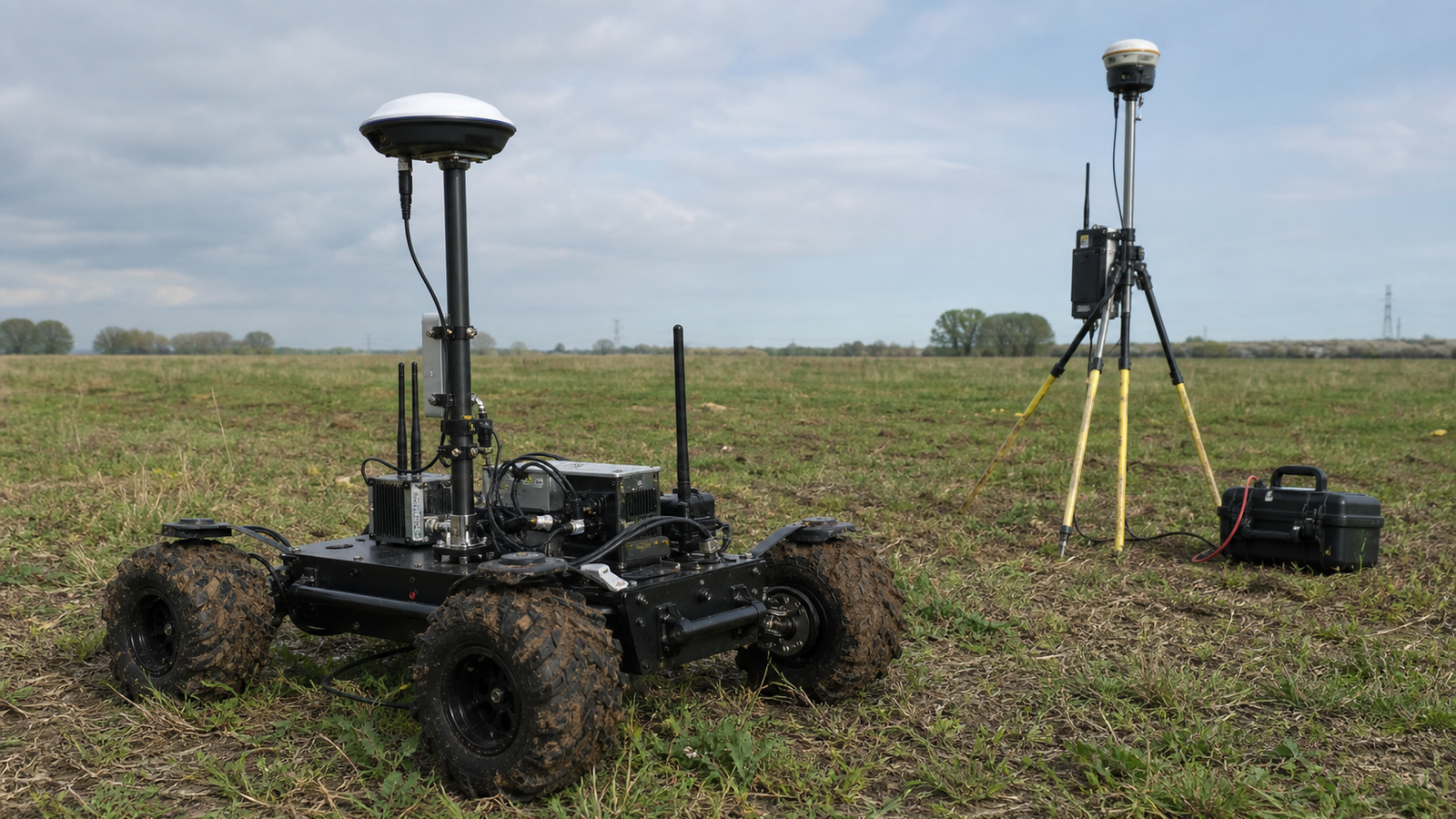
RTK GNSS accuracy depends on more than the rover receiver. A small field robot also needs a correction link that survives distance, latency, power limits, antenna placement, and the ordinary messiness of outdoor testing.
TVG recently covered what maker teams should validate before trusting RTK centimeter claims and why base station placement can make or break a field test. This support article narrows the next decision: should a small robot team use a local correction radio or an LTE/NTRIP connection?
Quick answer
Use a local correction radio when the test area is controlled, cellular coverage is uncertain, and the team can manage antennas, range, and interference. Use LTE/NTRIP when cellular data is reliable, the correction source is appropriate, and the team can log latency and outages. In both cases, run a link-budget test before using RTK results as evidence.
What the correction link does
RTK uses correction data from a reference source to improve the rover’s position solution. The rover may be on a small robot, handheld pole, vehicle, or test cart. If corrections stop, arrive late, or become inconsistent, the rover’s reported precision can become misleading.
A local correction radio sends data from a nearby base station to the rover. An LTE/NTRIP setup typically receives correction data over an internet connection from an NTRIP caster or network service. Both can work. Both can fail in ways that look like navigation bugs if the team is not logging the link.
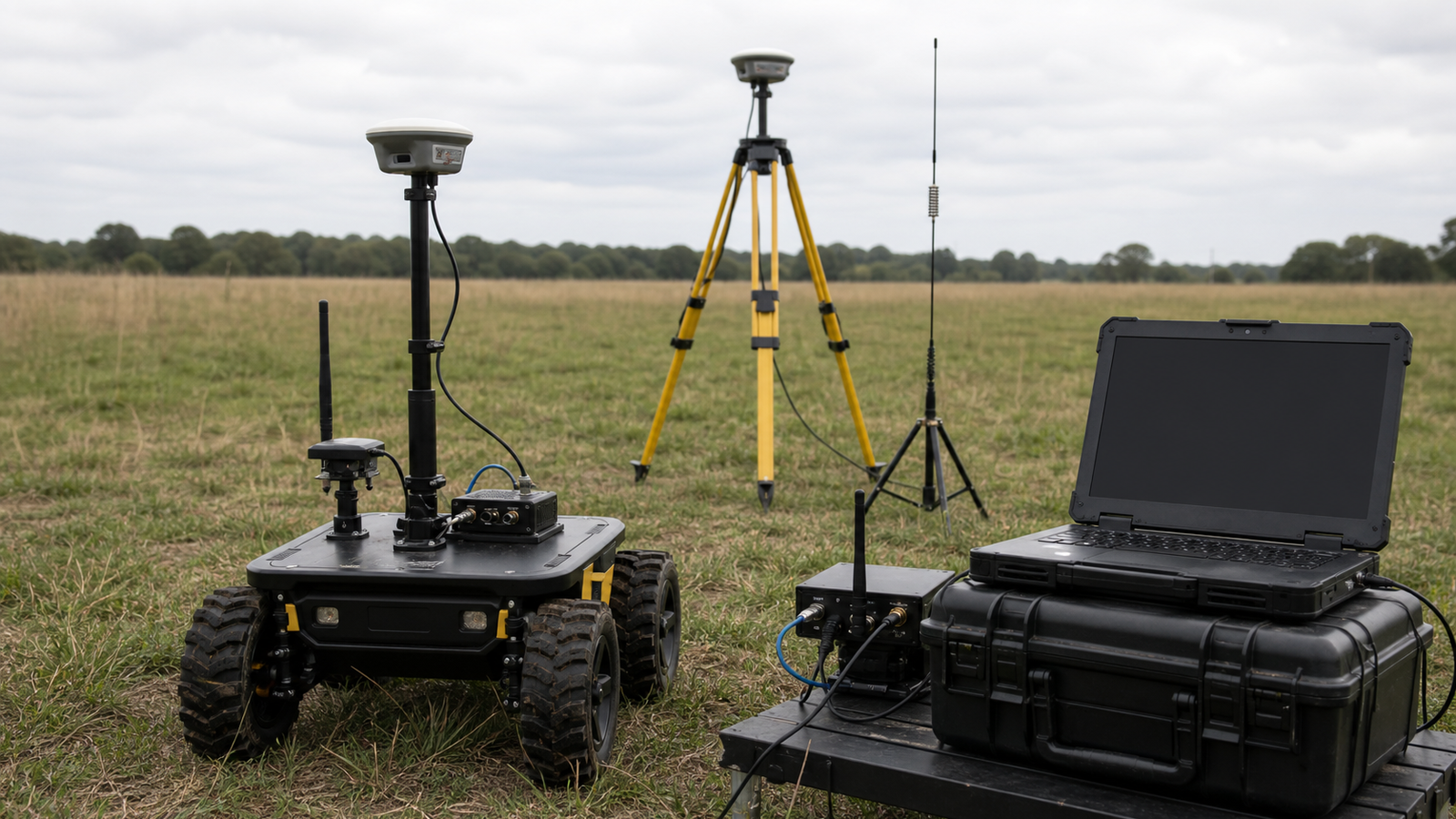
Local radio: strengths and risks
A radio link gives the team direct control. It can be useful at school fields, farms, test lots, and competition practice areas where the base station is nearby and cellular coverage is poor or unavailable.
The tradeoff is that radio links need real RF discipline. Antenna height, orientation, line of sight, transmit power, legal frequency use, terrain, and nearby metal structures can all affect performance. A radio placed low on a robot frame may have worse range than the team expects. A base station next to a vehicle or fence can create a confusing day of intermittent corrections.
For STEM teams, the radio path is educational because it makes the system visible. Students can test range, packet loss, antenna placement, and battery draw. They can also learn that wireless links are not magic; they are measurements with constraints.
LTE/NTRIP: strengths and risks
LTE/NTRIP can simplify the physical setup when cellular service is strong and a suitable correction source is available. The robot does not need a direct radio path to the base station, and the team may be able to work across a larger area.
The risk is hidden dependency. Cellular coverage can change across a field. Latency may vary. A data plan can fail. A service login can expire. A network outage can turn a navigation test into an IT troubleshooting session.
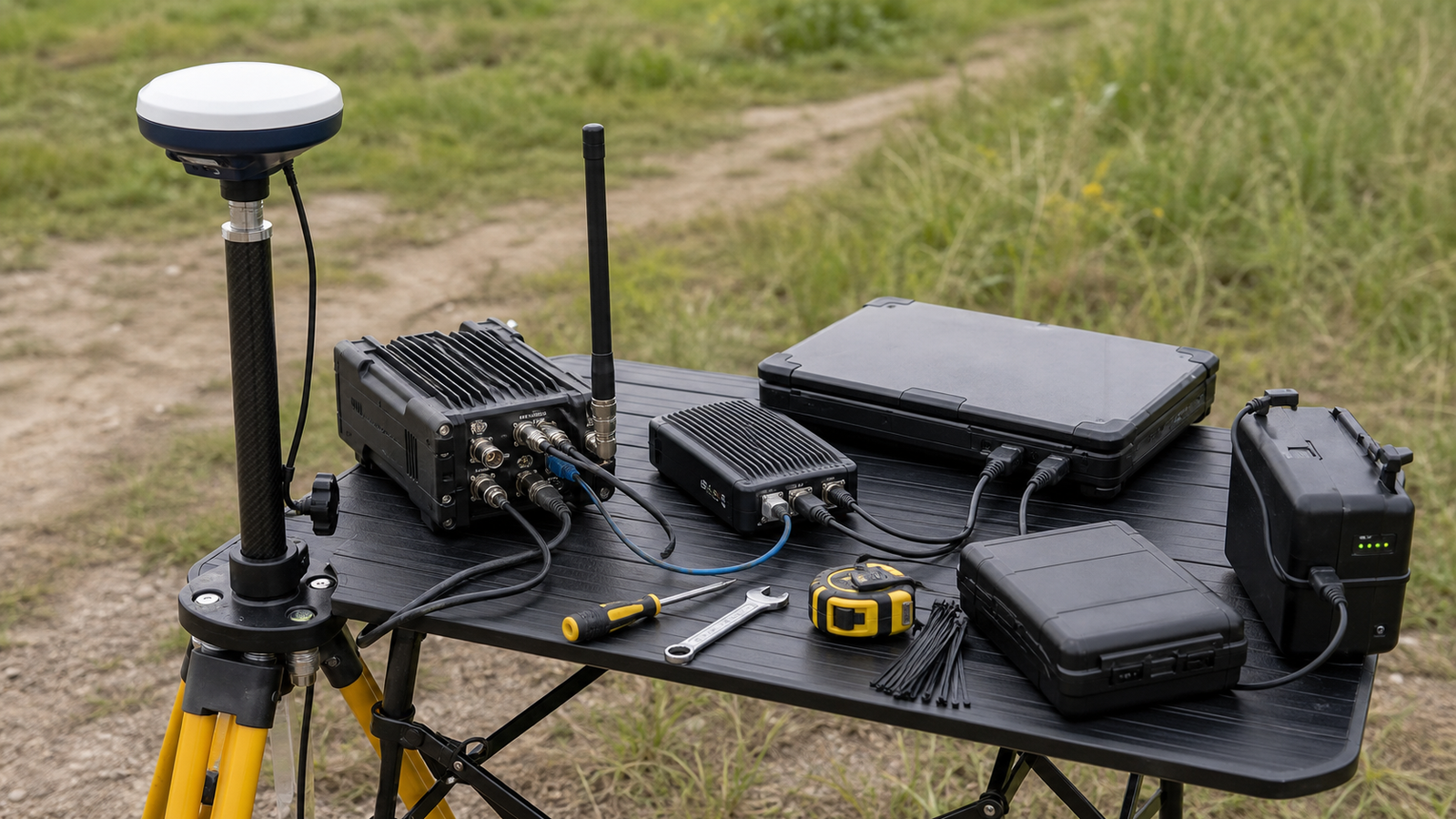
The pre-demo link-budget checklist
- Map the area: Mark expected robot paths, base station location, radio line of sight, and cellular weak spots.
- Log corrections: Record correction age, outages, reconnects, and fix status during the run.
- Test power: Check whether the radio, LTE modem, and receiver stay stable for the full session.
- Move deliberately: Test near, mid-range, and far paths instead of driving randomly until something fails.
- Keep a fallback: Save raw logs or non-RTK navigation data so the team can compare behavior later.
TVG Take
For small field robots, RTK is not a single checkbox. It is a measurement system that includes antenna placement, reference quality, correction transport, firmware behavior, power, and logging.
A local radio is not automatically more reliable than LTE/NTRIP, and LTE/NTRIP is not automatically more professional than a simple radio. The right choice is the one the team can test, explain, repeat, and recover from when the demo field is less perfect than the lab bench.