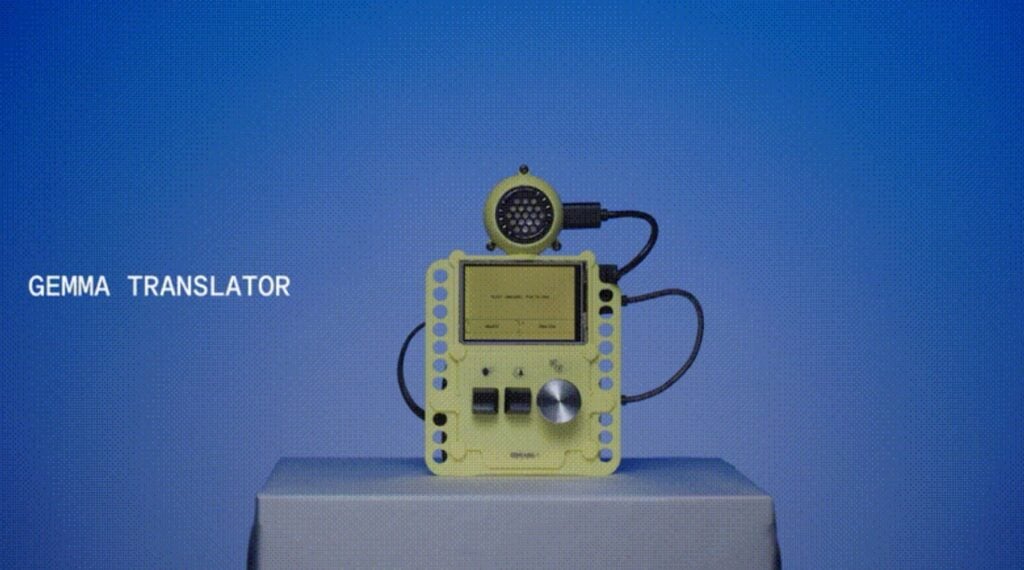
Raspberry Pi and Google have published details of LiteRT optimization work for Raspberry Pi 5, including a Gemma 4 language-model benchmark and a Reachy Mini robot demonstration that ran locally on the board.
In matching August 11 posts, the companies said LiteRT can run conventional machine-learning and generative-AI models using optimized CPU and GPU execution. For language models, Google reported that LiteRT-LM ran Gemma 4 E2B on Raspberry Pi 5 at 99 tokens per second during prompt prefill and 9 tokens per second during decoding, with peak memory use of 1,432 MB. The figures are Google’s measurements and were not independently tested by TVG.
Raspberry Pi 5 robot demonstration
The companies also showed a Reachy Mini robot responding and moving with Gemma and LiteRT running on Raspberry Pi 5. According to the official description, the pipeline handled vision and language workloads concurrently across the board’s CPU and GPU and performed inference locally rather than sending it to a cloud service.
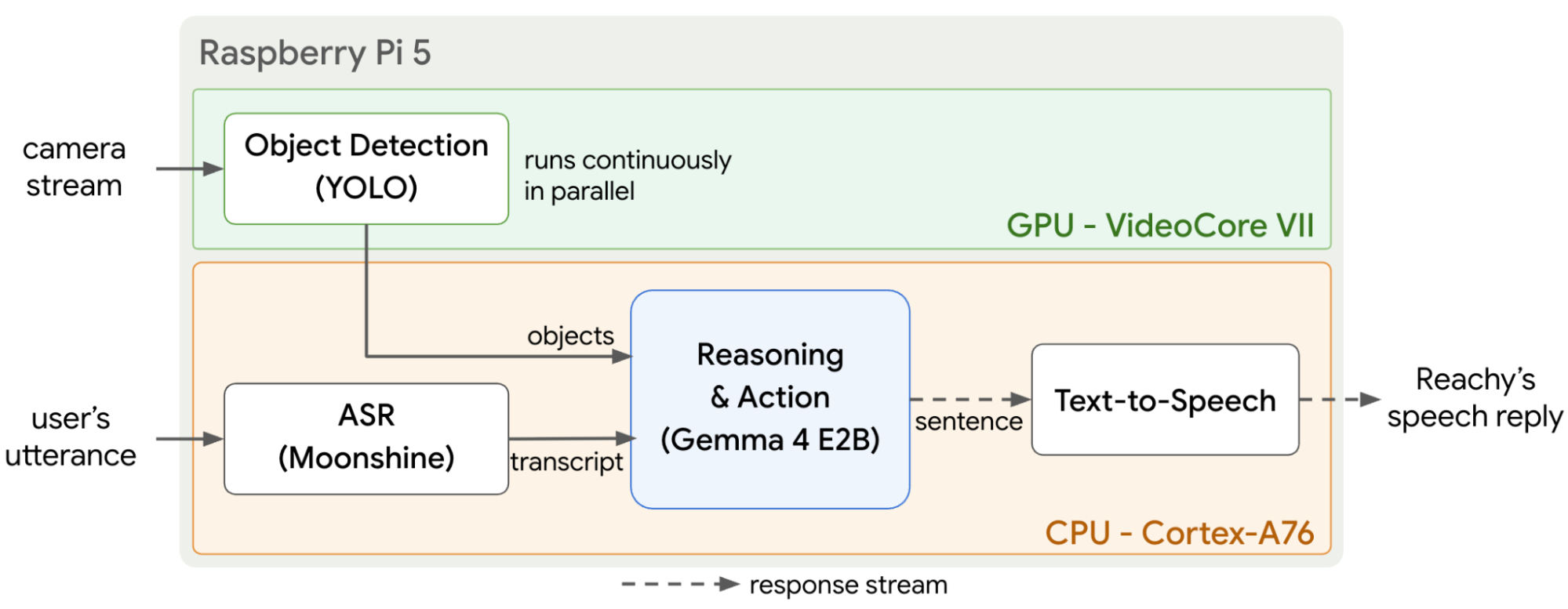
The demonstration illustrates a local inference pipeline; it does not establish autonomous-control reliability or safety. The official posts do not provide task-success rates, end-to-end response latency, power draw, sustained thermal results, or a comparison with cloud-hosted or competing local runtimes.
Analysis
The concrete development is official LiteRT support and published Gemma 4 E2B performance on Raspberry Pi 5, plus sample code and a robot demonstration. Local processing can reduce dependence on network access and keep inputs on the device, but token rates alone do not measure the responsiveness or reliability of the complete robot system.
What remains unknown
The official posts do not identify all hardware and cooling conditions behind the language-model benchmark, quantify the Reachy Mini pipeline’s end-to-end latency, or report how performance changes under sustained mixed CPU/GPU load. Independent benchmarks of the complete demonstration are still needed.