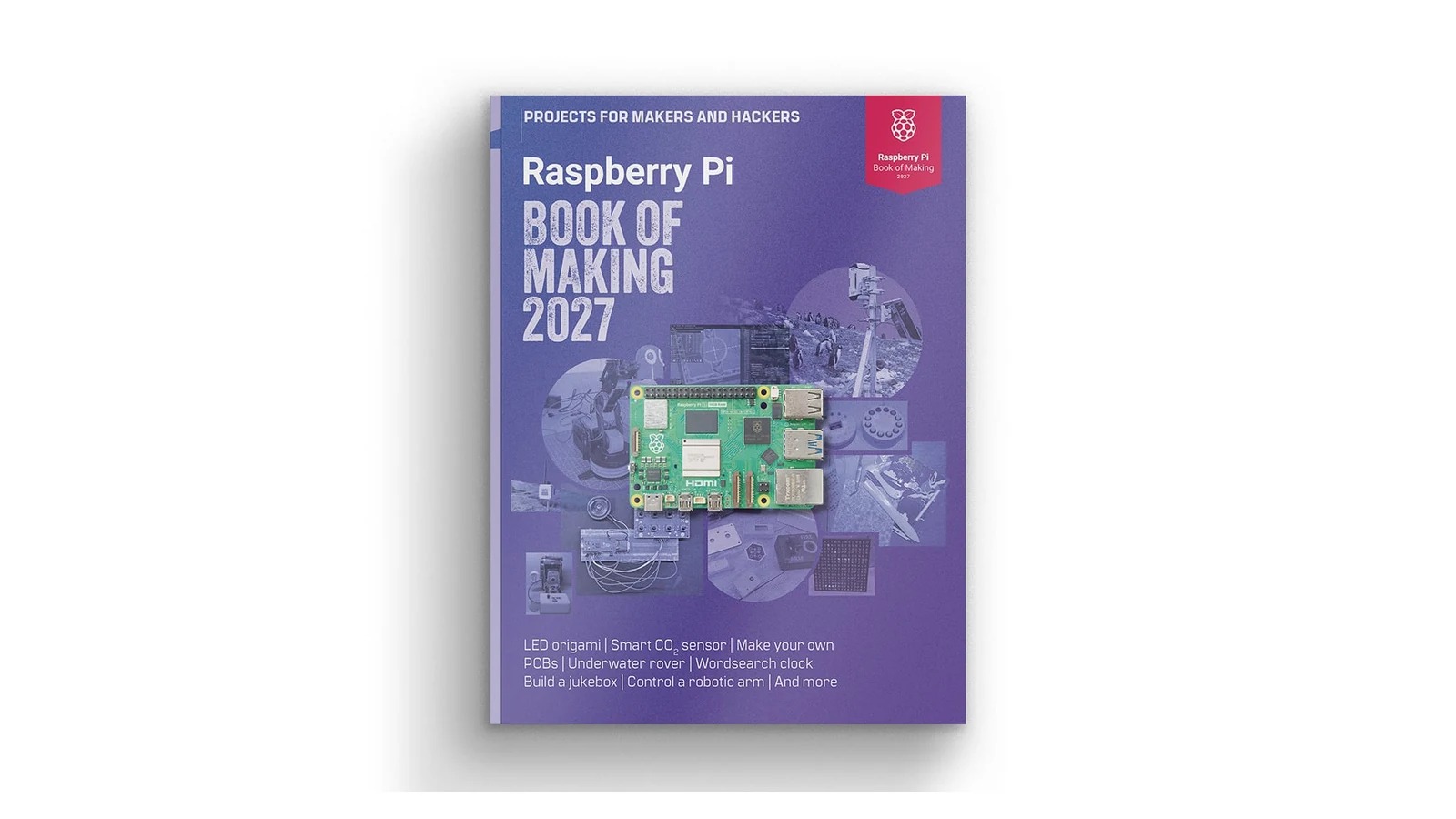
Raspberry Pi published its announcement for Raspberry Pi Book of Making 2027 on 14 August 2026 and said the Raspberry Pi Press title would be available from 18 August. The year in the title is the edition name, not evidence that the book was published in 2027.
The book collects projects previously published in Raspberry Pi Official Magazine. Raspberry Pi’s own preview names paper circuits, basic electronics, a first printed circuit board and a small underwater rover, alongside a scratch-built robot, long-range radio, a CO2 monitor, a drum machine and 3D-printed soap moulds.
What the preview establishes
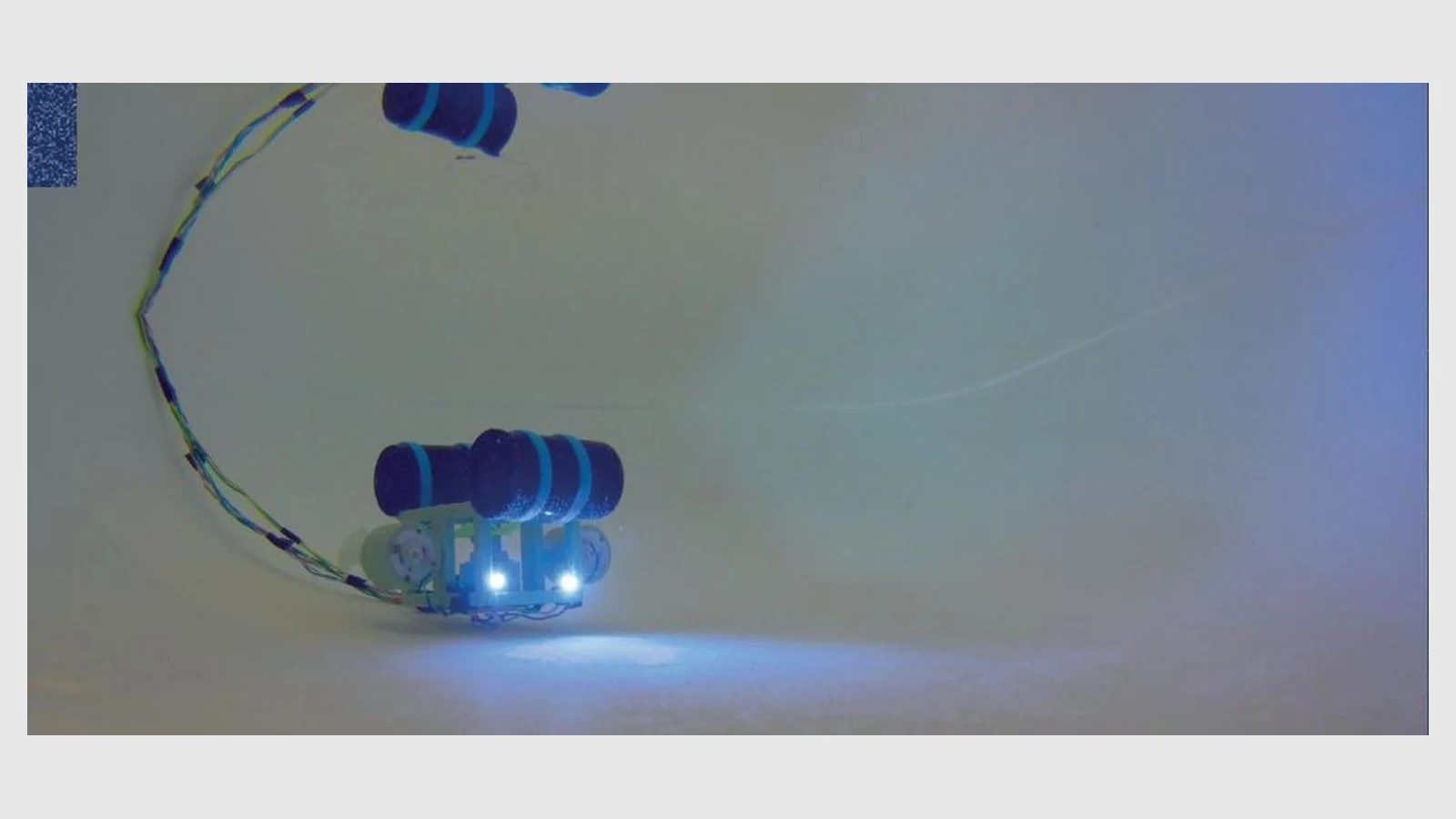
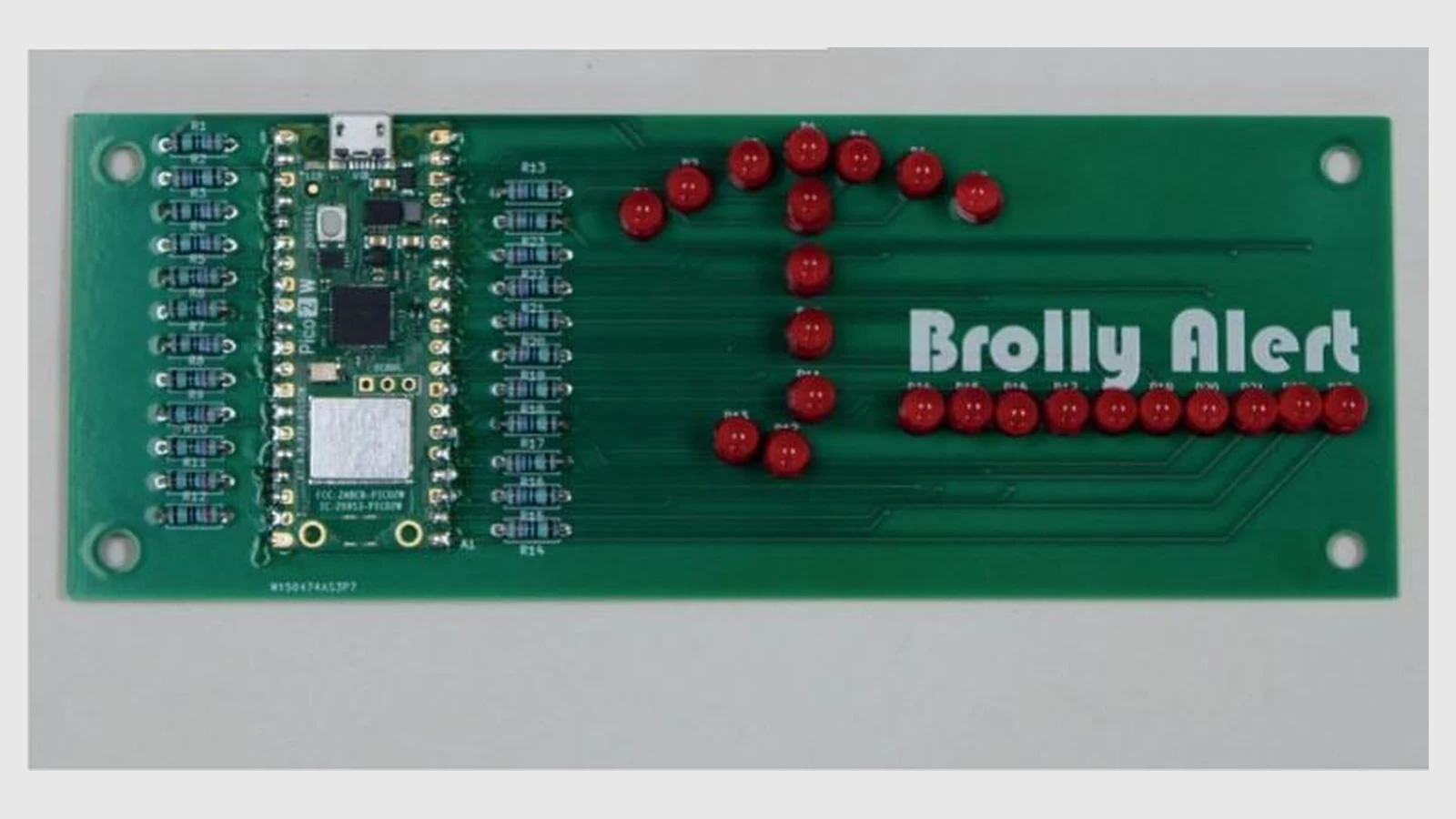
The paper-circuit project combines origami, an RGB LED and Raspberry Pi Pico. The electronics material starts with component basics and progresses toward computer-controlled circuits. The PCB project uses design software to turn a breadboard idea into a manufactured board, while the underwater rover uses PVC pipe, motors, basic electronics and Raspberry Pi control.
Those are documented contents. Raspberry Pi does not present the book as a school curriculum, specify class length or promise that every build fits a particular age group, budget or safety policy.
Turning projects into classroom work
A teacher could use the collection as a project menu rather than assign it cover to cover. The paper lamp can support lessons on polarity, resistance and physical craft. The PCB chapter can introduce schematic capture, footprints and design review. The rover can open discussion about waterproofing, tether management and safe low-voltage operation.
That classroom framing is TVG’s suggestion, not a claim made by the publisher. Before choosing a build, instructors still need to check tool access, soldering supervision, radio rules, water safety, replacement parts and the exact Raspberry Pi hardware required.
Planning should also separate reusable materials from consumables. A Pico, power supply and hand tools may serve several groups, while LEDs, paper, PCB orders, adhesives and damaged components need a per-class allowance. Running one chapter as a pilot can expose missing parts and unclear instructions before a full cohort begins.
A useful selection rule
Choose a project for the engineering habit it can teach. A build is more valuable when students must record wiring, explain a design decision and diagnose one controlled fault—not simply reproduce the final object. The book supplies examples and instructions; lesson objectives, assessment and safety controls remain the instructor’s responsibility.