mimic robotics says it has introduced FLUX-mimic, a video-action model for industrial automation, and that the system is already being implemented with Audi. The company frames the work as a way to reduce deployment time, engineering effort, and robot training requirements for factory manipulation tasks.
The July announcement is notable because it moves the current physical-AI conversation away from demo-stage humanoid videos and toward a harder industrial question: can robot-learning systems handle variable factory work without requiring months of custom fixtures and task-specific integration?
Why it matters
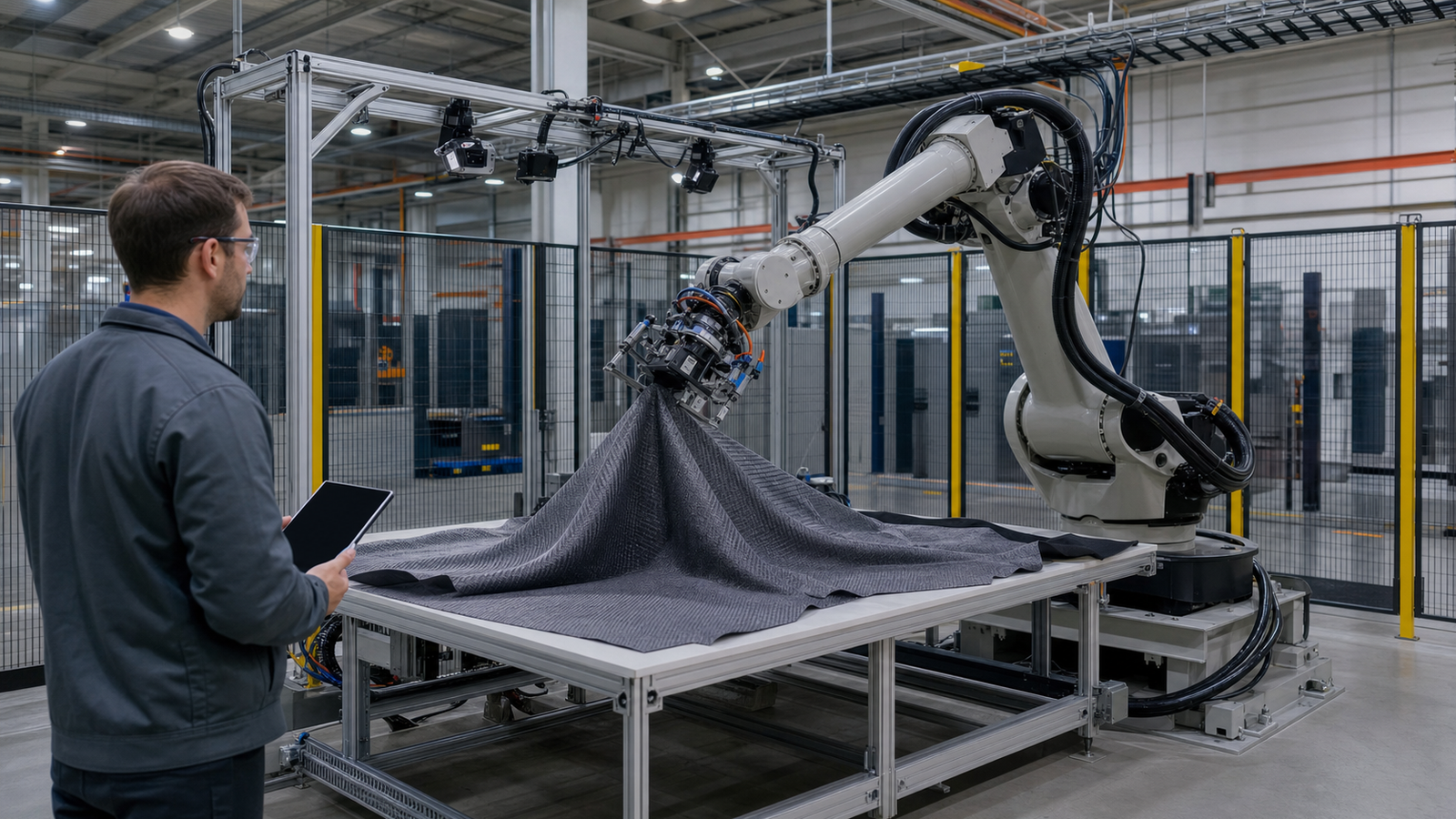
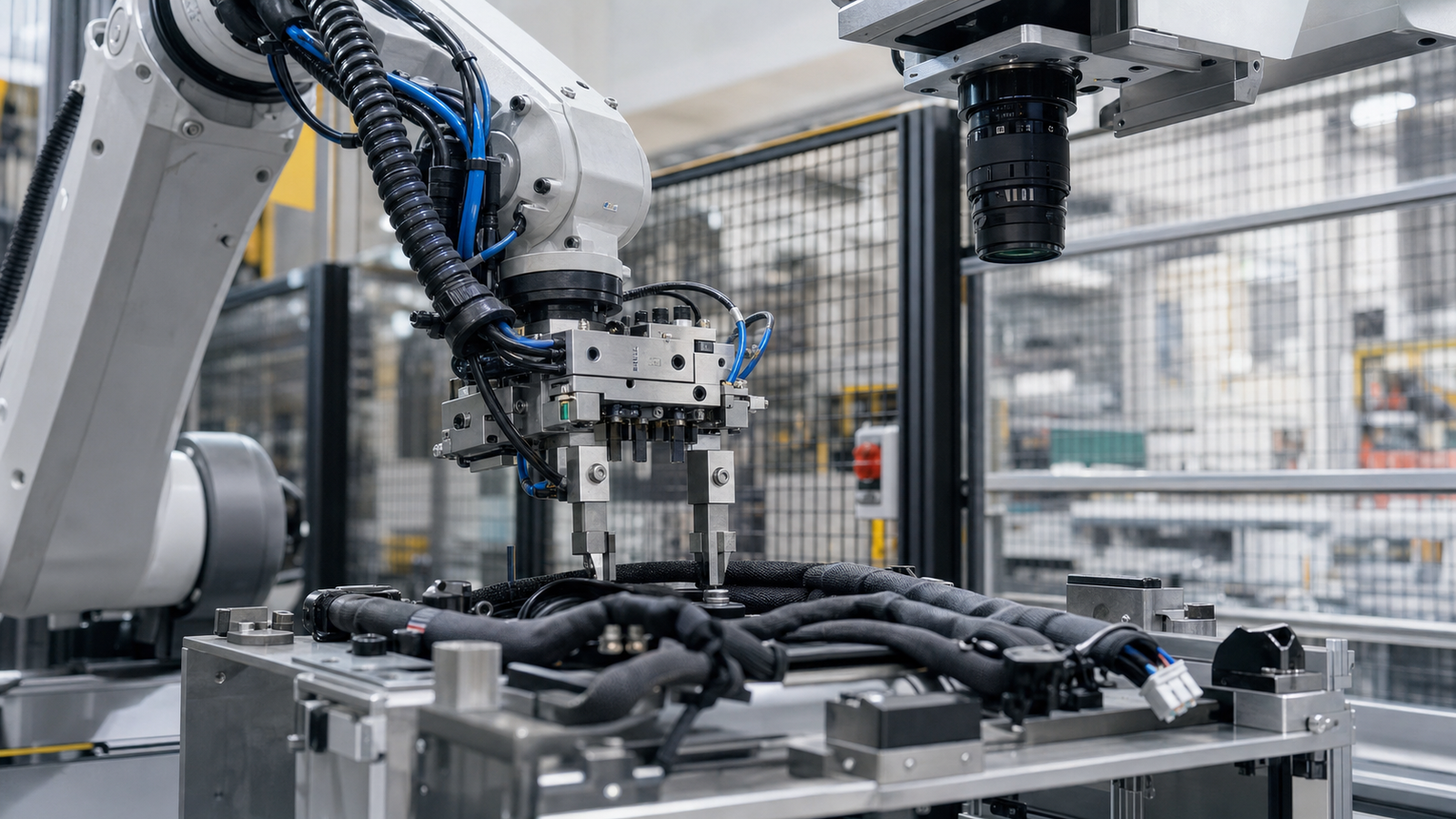
Factory robots are excellent when the part, fixture, path, and tolerance are tightly controlled. They are much less flexible when a task involves soft materials, small variations, or parts that do not behave like rigid blocks. mimic and Black Forest Labs describe FLUX-mimic as a video-action approach meant to bridge that gap by learning from demonstrations and turning visual sequences into robot actions.
Coverage from the Association for Advancing Automation notes mimic’s claim that robots can learn some new tasks from far less robot data than prior pipelines. TVG is treating that as a claim to watch, not as a verified production benchmark.
The engineering test is validation
The important question is not whether a model can produce an impressive robot motion once. Factory value depends on repeatability across shifts, part variation, lighting changes, tool wear, safety stops, recovery after failed grasps, and maintenance by people who did not train the model.
For Audi and other manufacturers, that makes the deployment checklist larger than the model announcement. Teams will need acceptance tests, failure logging, boundary conditions, operator overrides, and a way to decide when a retrained policy is safer than a hand-coded sequence.
What remains unknown
mimic has not published the kind of independent factory data that would let outside readers compare cycle time, fault rate, changeover time, or long-run reliability against conventional automation. It is also unclear how widely the Audi work has moved beyond targeted use cases.
TVG Analysis
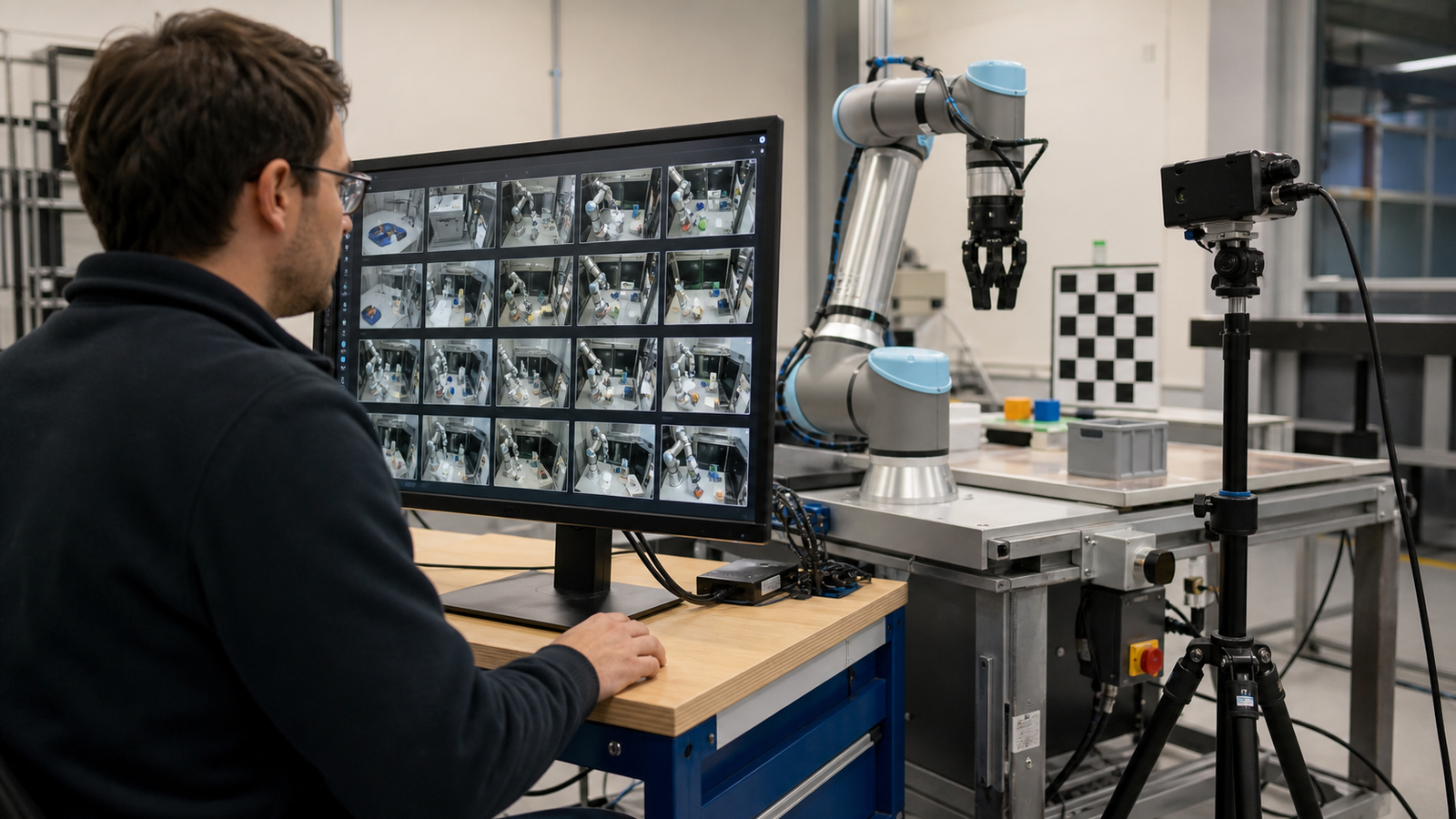
FLUX-mimic is worth watching because it targets a real factory bottleneck: the cost of adapting automation to tasks that are too variable for simple scripting but too valuable to leave entirely manual. The credible path is not a general robot that does everything. It is a narrower loop where demonstration data, machine vision, safety controls, and production metrics can be tested together.
TVG will be watching for independent deployment evidence: how many tasks, how many parts, how much operator intervention, and whether model updates become easier to certify than traditional reprogramming.
What manufacturers should measure next
The next proof point is not a promotional video. It is a deployment record with clear task boundaries: the material handled, the number of variants, the retraining process, the fallback when the robot is uncertain, and the human-supervision model. A manipulation policy that works only with one lighting setup or one fixture may still be useful, but it should be described as a targeted cell capability rather than general factory intelligence.
TVG also wants to see how data collection is governed. Demonstration video, robot-state data, and operator corrections become part of the production system. That raises practical questions about storage, version control, data labeling, and who can approve a policy update on a live line.