Anthropic has opened a beta for Claude Science, a new AI workbench aimed at scientific research teams that want one environment for analysis, tools, packages, computing access, and traceable outputs.
The company describes Claude Science as a customizable app for researchers. The product page says it can work through research tasks, run analysis, and trace steps while giving users access to common research tools and computing resources. Anthropic is positioning the release as a workflow product rather than just another model announcement.
That distinction matters for labs, maker spaces, and technical education programs. Many teams already use general-purpose AI chat tools to explain code, draft notebooks, or summarize papers. Claude Science points toward a more structured category: AI systems that sit closer to the research bench, where the output has to be checked, reproduced, and attached to data, code, and assumptions.
What Anthropic announced
According to Anthropic’s announcement, Claude Science is designed to integrate tools and packages researchers commonly use, produce auditable artifacts, and offer flexible access to computing resources. The Claude product page describes it as an AI workbench that can run analysis and trace each step.
Coverage from TechCrunch framed the launch as a bet on workflow over model-only competition. MIT Technology Review similarly described the product as part of Anthropic’s push into AI for science.
The beta arrives as AI vendors try to move beyond chat windows into work surfaces built for specific professions. For researchers, the hard problems are not only answer quality. They include provenance, code execution, package compatibility, permissions, compute cost, data handling, and whether another person can inspect how a result was produced.
Why it matters for technical teams
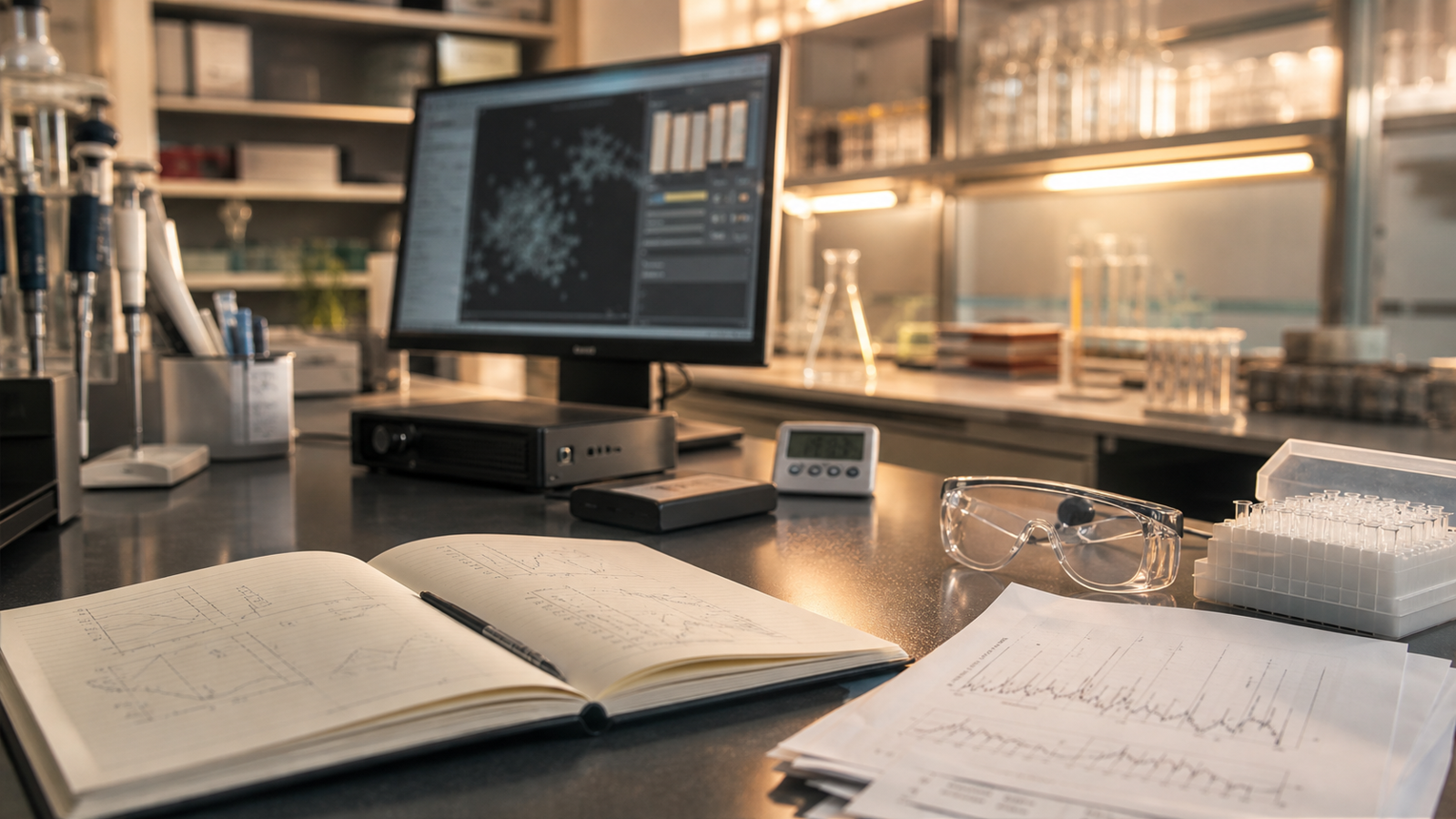
A lab notebook, a Python notebook, a spreadsheet, and an AI conversation all capture different parts of a project. When those records live in separate places, mistakes become easier to miss. A researcher may forget which package version was used, which file was loaded, whether a chart came from cleaned data or an earlier draft, or whether a model suggestion was actually run.
Claude Science appears aimed at that gap. If the workbench can keep analysis steps visible, preserve artifacts, and connect to compute in a controlled way, it could make AI-assisted research easier to review. That is useful not only for biotech or academic groups. Robotics teams, STEM labs, and maker education programs face similar record-keeping issues when students tune sensors, compare field logs, or process camera data from a test run.
There is also a teaching angle. Students often see polished charts but not the messy path that produced them. An AI workbench that exposes steps, code, files, and assumptions could help instructors teach verification rather than prompt magic. The strongest version of this category would make it obvious when an answer came from a model, when it came from executed code, and when a human changed the method.
Risks and open questions
Anthropic has not answered every practical question in the public materials. Labs will still need to evaluate data permissions, export formats, package support, audit logs, collaboration controls, cost, and whether the workbench can fit existing review practices. For sensitive or regulated research, those details are not optional.
There is also a risk that a polished research assistant makes weak methods look more authoritative. AI-generated analysis can still make mistakes, mis-handle edge cases, or choose an unsuitable statistical method. The presence of an artifact does not automatically mean the artifact is correct.
TVG Analysis
Claude Science is most interesting as a sign of where AI products are headed: from general chat toward disciplined workbenches tied to real tools. The practical test is not whether it can produce a convincing explanation. The test is whether another person can inspect the path, reproduce the result, and find the point where a choice was made.
For TVG’s audience, the watch item is broader than one vendor. Expect more AI products to target science, engineering, hardware validation, and lab operations with promises of traceability. The winners will be the systems that make verification easier, not the ones that merely sound more confident.
What remains unknown is how widely Claude Science will be available, how much control teams will have over compute and data boundaries, and whether the beta’s audit features are strong enough for serious review outside early adopters. TVG will keep watching for public examples that show how these workbenches behave on real research tasks.
Sources
- Anthropic: Claude Science, an AI workbench for scientists
- Claude product page: Claude Science beta
- TechCrunch: Anthropic’s Claude Science bets on workflow