Excire Foto 2027 is being positioned as a stronger AI-powered photo-management tool for photographers who need to search and organize large local libraries. That makes it interesting for creators, field teams, drone operators, robotics clubs, and small media operations. But it should be evaluated as local workflow, not as a magic search box.
The official Excire site describes AI-based photo management for Mac and PC. PetaPixel’s coverage highlights automated tagging, subject recognition, and a richer management experience. DIYPhotography frames the update around searchable local archives, OCR-style discovery, and large-library organization. Those are useful claims, but buyers should test them against the messy reality of field work.
Disclosure and review status
TVG Report has not tested Excire Foto 2027 hands-on and has not received a review unit, license, quote, or briefing. This is a spec review and buyer-evaluation checklist based on public information. A full review would require a real archive, controlled search tasks, export testing, and recovery drills.
What looks useful
The appeal is obvious. Small teams collect too many images: drone survey photos, robot build logs, product shots, event coverage, classroom projects, documentation stills, and social media assets. Folder names decay. Manual keywords get skipped. Cloud libraries can be expensive, slow, or awkward for sensitive project images. A local AI-assisted catalog could help teams answer practical questions: “Which photos show the damaged bracket?” “Where are the shots with the white prototype enclosure?” “Which event images include the field setup and not just close-ups?”
If Excire can make those searches reliable without forcing every image into a cloud workflow, it belongs on the shortlist for creator and engineering teams that already manage large local libraries.
What TVG would test first
Local processing and privacy. The first test is whether image analysis, face recognition, and text recognition happen locally, what data leaves the machine, and how the software communicates that to users. Teams working with students, client prototypes, lab notes, or unreleased products need clear boundaries.
Metadata portability. Search is only valuable if the work survives a tool change. We would check whether keywords, ratings, captions, and collections can be written to standard metadata or exported in a usable way. A brilliant private catalog that traps decisions inside one app is risky for a media operation.
False positives and negatives. AI search demos usually show wins. Real archives include blurry test shots, duplicate frames, partial objects, screenshots, receipts, whiteboards, and images shot under terrible lighting. A useful review should measure where search fails and how quickly a user can correct it.
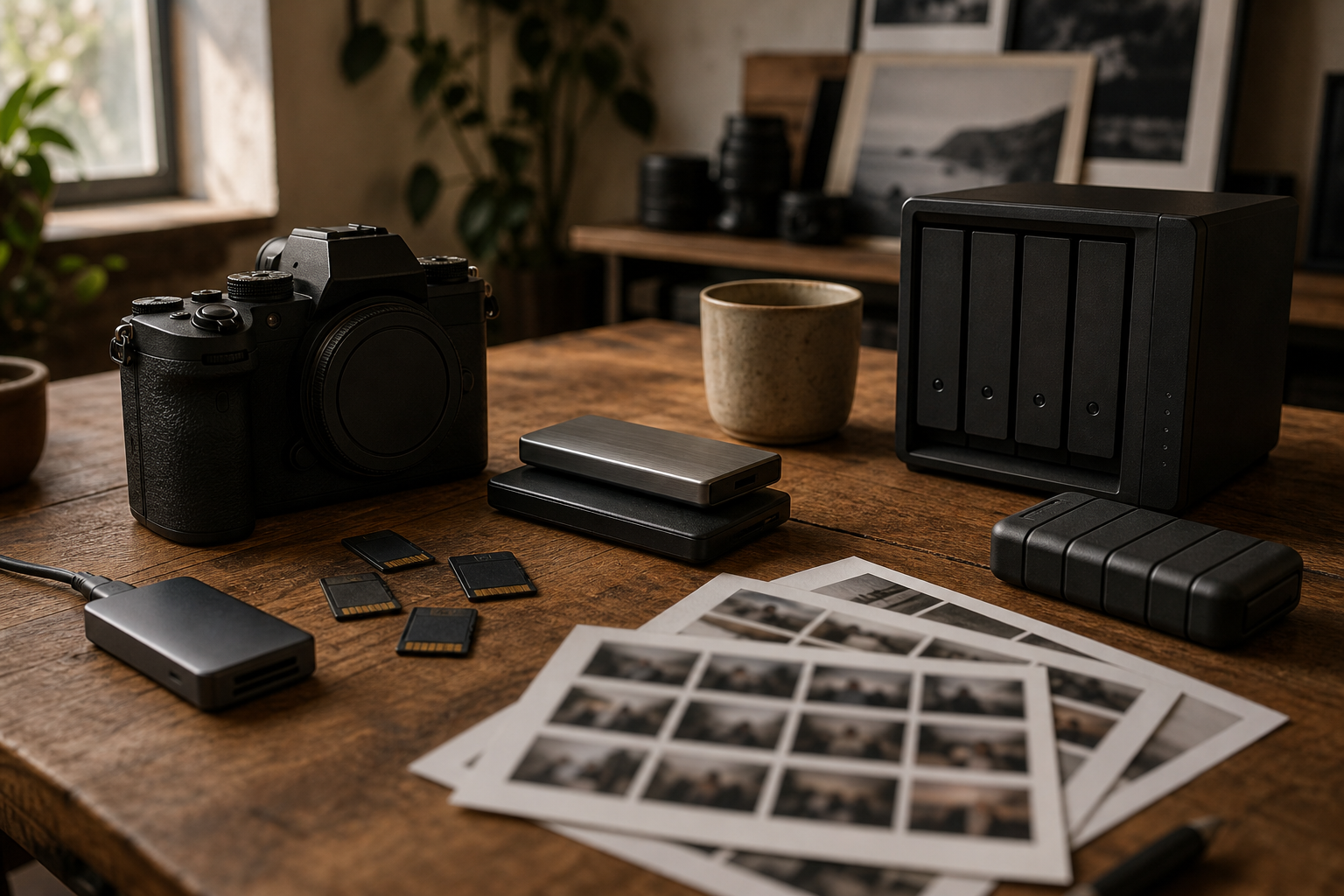
Storage behavior. Field teams often use external SSDs, NAS storage, and memory-card dump folders. TVG recently covered portable SSDs versus microSD workflows for robot logs and field cameras. Excire’s value depends on how well it handles moved folders, offline drives, duplicate imports, backup restores, and renamed directories.
Performance on ordinary machines. AI indexing can be demanding. A creator with a workstation may be fine; a school lab laptop or field editor may not. Buyers should test initial indexing time, background CPU use, fan noise, battery drain, and how responsive the app remains during imports.
Who should consider it
Excire Foto 2027 is most interesting for users who have large existing photo libraries and do not want to rebuild everything around a cloud subscription. That includes solo creators, local news sites, school robotics mentors, drone service providers, product reviewers, and maker labs that document many projects over time. It is less compelling if the team only shoots a few hundred images a month or already has a disciplined asset-management system.
Review plan for a real test
A proper TVG review would start with a mixed 10,000-image archive rather than a polished demo folder. The test set should include drone inspection images, workshop build photos, action-camera frame grabs, phone snapshots, exported social images, screenshots with text, duplicated event folders, and a few deliberately bad imports. We would create a task list before indexing: find images with a specific prototype color, locate all photos that contain readable whiteboard notes, separate finished product shots from work-in-progress shots, and recover a set of images after moving the archive to a different external drive. That plan would reveal whether the software saves time for real teams or only looks impressive with curated material.
Risks and unknowns
The biggest risk is overtrusting search. AI tagging can speed discovery, but it cannot replace source discipline. Teams still need date-based folders, camera-card ingest procedures, backups, and notes that connect images to projects. The second risk is privacy ambiguity. Face recognition and OCR can be useful, but they also create sensitive indexes. The third risk is archive lock-in if metadata does not travel cleanly.
Related TVG coverage on local AI workstation budgeting and field-team display specs points to the same buyer lesson: workflow tools need to be evaluated by the whole system, not only the headline feature.
TVG Take
Excire Foto 2027 appears to target a real pain point: searchable local photo archives. The credible buying question is not whether AI can recognize subjects in a demo. It is whether the software keeps a team’s archive portable, private, recoverable, and fast enough to use when deadlines are real. If those tests pass, it could be valuable local workflow. If they fail, it becomes another shiny catalog that adds work instead of removing it.