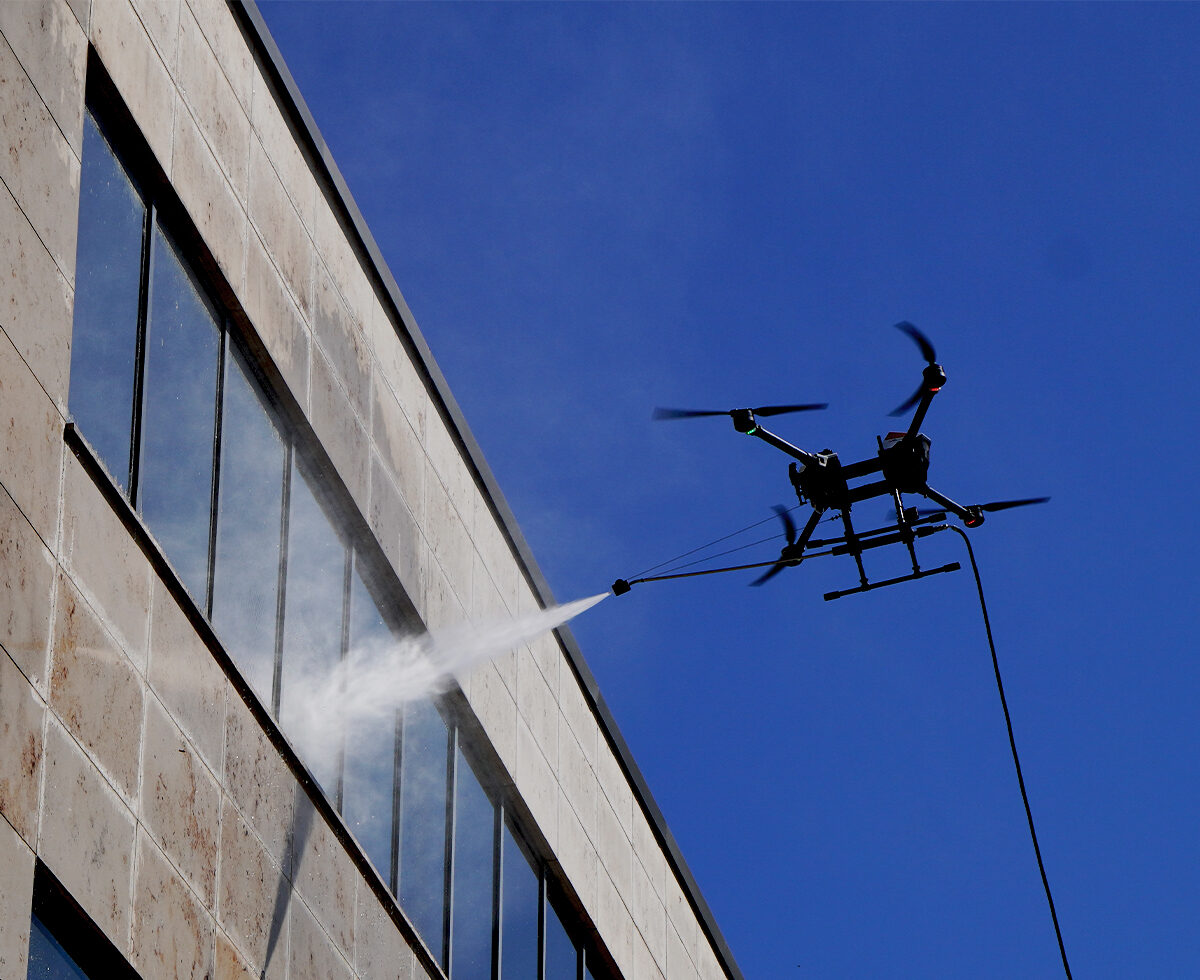
Industrial drone stories often start with the aircraft. The more useful story starts with the worksite. ABZ Innovation is presenting its C10 cleaning-drone use case as a way to clean difficult building surfaces with a high-pressure system instead of relying only on scaffolding, lifts, or rope access. For TVG Report readers, the signal is not that a drone can spray water. The signal is that exterior maintenance is becoming a systems-integration problem.
The company’s own building-cleaning overview describes C10 drones equipped with high-pressure cleaning systems for hard-to-reach areas. DroneDJ’s recent coverage points to the same broader trend: drone cleaning is moving from novelty videos toward practical building-maintenance packages. A third useful reference is ABZ’s product ecosystem around industrial and agricultural UAVs, which shows the cleaning use case as an extension of heavier-duty payload work rather than a consumer-drone accessory.
Why it matters
Facade cleaning is an awkward automation target. It combines height, water pressure, surface variability, pedestrian exclusion zones, wind, hose drag, battery logistics, and worker safety. That is exactly why it is a useful test for industrial drones. A small aircraft that works in calm demo conditions is not enough. A useful cleaning system needs repeatable setup, trained operators, safe water delivery, predictable flight envelopes, and a plan for what happens when the surface, weather, or building geometry does not match the sales video.
That makes ABZ’s use case relevant beyond cleaning contractors. Robotics teams, inspection companies, facilities departments, and maker labs can read it as a preview of where field robotics is heading: tools that combine a mobile platform, a payload, a procedure, and a compliance checklist.
Technical breakdown
The engineering challenge is payload integration. A cleaning drone is not simply a drone plus a nozzle. Hose routing can affect stability. Spray reaction force can disturb positioning. Battery duration changes when the aircraft carries plumbing and works close to walls. The operator also needs enough camera visibility to judge standoff distance without treating the drone as a precise metrology tool.
There is also the question of cleaning quality. A manual crew can adjust pressure, angle, and dwell time surface by surface. A drone workflow needs predefined passes and post-cleaning inspection. That inspection may come from the same drone, a second imaging pass, or human review from the ground. The winning systems will probably look less like one autonomous robot and more like a repeatable job package.
Builder and buyer implications
For builders, the lesson is to prototype around the ugly support gear, not only the aircraft. Water supply, tether management, launch zones, spotters, and data capture will decide whether a drone cleaning workflow is credible. For buyers, the first questions should be operational: what buildings are in scope, what wind limit applies, who signs off on the cleaned surface, and how close can the aircraft safely work near glass, signage, ledges, and people?
TVG has been tracking similar field-hardware tradeoffs in drone infrastructure and field documentation gear. Cleaning drones sit in the same category: useful only when the surrounding workflow is engineered as carefully as the device.
Risks and unknowns
The unresolved questions are practical. Can the workflow maintain consistent cleaning quality across surfaces? How often does hose management slow the job? What insurance, local rules, and site safety requirements apply? How does the aircraft behave near reflective glass, turbulent wind around corners, or irregular facade geometry? None of those questions makes the idea weak; they define the real test plan.
TVG Take
ABZ’s cleaning-drone use case is worth watching because it reframes drones as trade tools. The credible version is not “replace every crew with a flying robot.” It is “move more dangerous, repetitive exterior work into a controlled automation workflow.” That is a more grounded claim, and it is the one buyers should evaluate.