Disclosure: This is a spec review and buyer evaluation based on public documentation, not a hands-on benchmark. TVG has not tested these devices side by side, has not received review units, and is not reporting measured frame rates or thermal results.
For robotics and maker projects, edge AI accelerators are no longer exotic. Builders can add inference to a Raspberry Pi, plug a small accelerator into an existing host, or move to a Jetson-class development kit. The hard part is choosing the path that fits the model, camera, software stack and maintenance plan.
This spec review compares three common routes: the Raspberry Pi AI Kit, the Google Coral USB Accelerator, and the NVIDIA Jetson Orin Nano Super Developer Kit. They overlap in purpose but not in workflow.
Raspberry Pi AI Kit: best fit for Pi 5 builders who want a native add-on
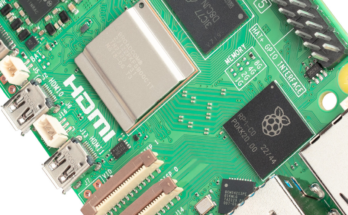
Raspberry Pi says the AI Kit bundles the Raspberry Pi M.2 HAT+ with a Hailo AI acceleration module for use with Raspberry Pi 5. The product page describes the module as a 13 TOPS neural-network inference accelerator built around the Hailo-8L chip. That makes it a natural candidate for Pi 5 projects that need object detection, classification or vision inference without replacing the whole computer.
The practical advantage is ecosystem alignment. If the rest of the project already uses Raspberry Pi 5, official accessories, Pi cameras and the Pi software environment, the AI Kit keeps the architecture compact. The likely engineering questions are model support, conversion workflow, thermal behavior inside an enclosure, camera bandwidth and whether the project can tolerate the split between host CPU tasks and accelerator tasks.
Who should look first: Pi 5 robot builders, school labs standardizing on Raspberry Pi, makers who want a compact edge inference add-on, and teams that value the official Pi accessory path over a more general-purpose AI computer.
Coral USB Accelerator: best fit for supported TensorFlow Lite workloads on an existing host
Google’s Coral USB Accelerator adds an Edge TPU coprocessor over USB. The Coral product page describes it as a USB accessory for accelerated machine-learning inferencing and lists 4 TOPS for the onboard Edge TPU. The attraction is simplicity: plug it into a compatible host and keep the existing computer.
The tradeoff is workflow. Coral is strongest when the model fits the Edge TPU toolchain and TensorFlow Lite constraints. If your project already has a compatible quantized model, Coral can be efficient and tidy. If your project depends on a modern model architecture that does not map cleanly, the low purchase friction can turn into conversion work.
Who should look first: builders with existing Linux hosts, small fixed-function inference tasks, home lab monitoring projects, and teams with models known to work well on Edge TPU. It is less attractive for projects that need broad framework flexibility or large generative models.
Jetson Orin Nano Super: best fit for a fuller edge AI computer
NVIDIA positions the Jetson Orin Nano Super Developer Kit as a compact computer for small edge devices, with up to 67 TOPS of AI performance and support for a broad software stack. Compared with a small USB or M.2 accelerator, this is closer to choosing a full robotics computer. It can run heavier perception stacks, vision-language experiments, ROS workflows and GPU-accelerated software that would be awkward on narrower accelerators.
The tradeoff is system complexity. A Jetson-class board raises questions about power budget, cooling, storage, OS image maintenance, driver versions and deployment discipline. For a serious robotics prototype those may be acceptable. For a simple classroom detector, they may be unnecessary.
Who should look first: robotics teams building multi-camera systems, developers exploring vision transformers or local generative AI at the edge, and projects that need CUDA/NVIDIA ecosystem support rather than only fixed-function inference.
How to choose without overbuying
Start with the model and control loop. If the project uses a known supported model and only needs a compact inference boost, Coral or the Raspberry Pi AI Kit may be enough. If the project needs a full AI development environment, multiple sensors, ROS nodes and model experimentation, Jetson is more flexible. If the team is already committed to Raspberry Pi 5 and wants a neat official hardware path, the Pi AI Kit deserves a close look.
Next, check camera and I/O. Robotics perception is rarely just inference. It includes camera capture, synchronization, motor control, sensor fusion, logging and recovery behavior. A fast accelerator with awkward camera handling may lose to a slightly slower system with cleaner integration.
Then check software ownership. Who will convert models? Who will update dependencies? Who will document the flashing process? Who will maintain thermal settings and power supplies? A cheaper accelerator can be expensive if only one person understands the toolchain.
For background on camera timing, see TVG’s edge AI camera latency-budget guide. For a more focused camera module discussion, see Raspberry Pi AI Camera Buyer Evaluation.
What TVG would test in a hands-on review
For a real lab review, TVG would test setup time, model conversion friction, sustained thermals, camera-to-command latency, supported examples, recovery after unplug/reboot, documentation quality and performance on the same object-detection workload. We would also test whether a student or junior builder can reproduce the setup from a clean image without hidden tribal knowledge.
We would not rely on TOPS alone. TOPS is useful as a rough ceiling, but robotics projects succeed or fail on end-to-end behavior. A lower-TOPS accelerator with a stable model path can beat a more powerful board that burns time in dependency conflicts.
TVG Take
For a Pi 5 robotics build, the Raspberry Pi AI Kit is the cleanest first candidate because it keeps the system compact and official. For an existing host with a compatible TensorFlow Lite workload, Coral USB remains a focused inference add-on. For teams that need a flexible edge AI computer and can manage the software stack, Jetson Orin Nano Super is the stronger platform. The right choice is the one your team can measure, cool, update and explain six months later.