Disclosure / review-unit status: TVG has not received a review unit for this article; this analysis is based on manufacturer specifications, official product information, public documentation, and TVG’s engineering review criteria. This is a spec review and buyer evaluation, not a hands-on verdict.
Product summary
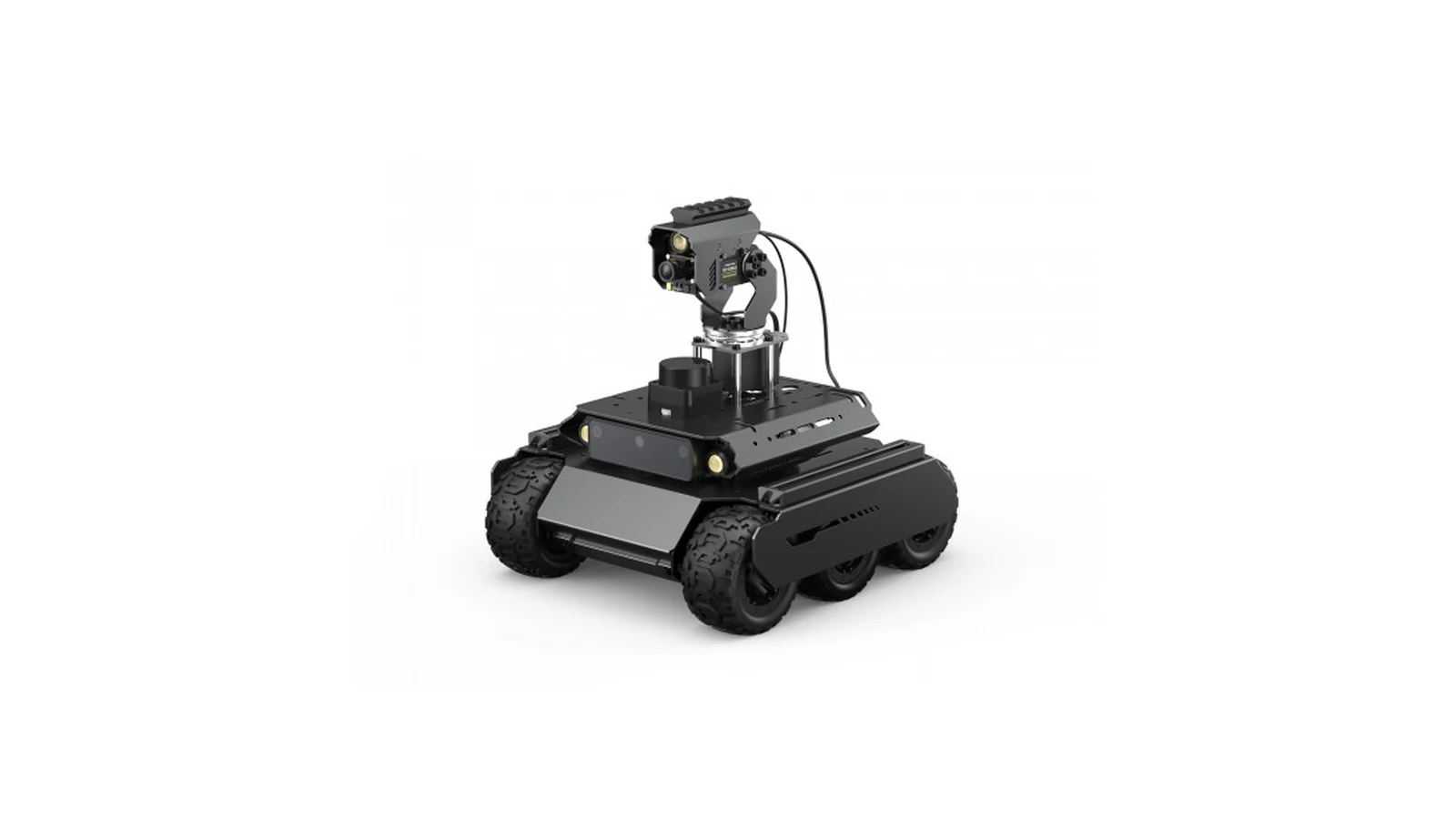
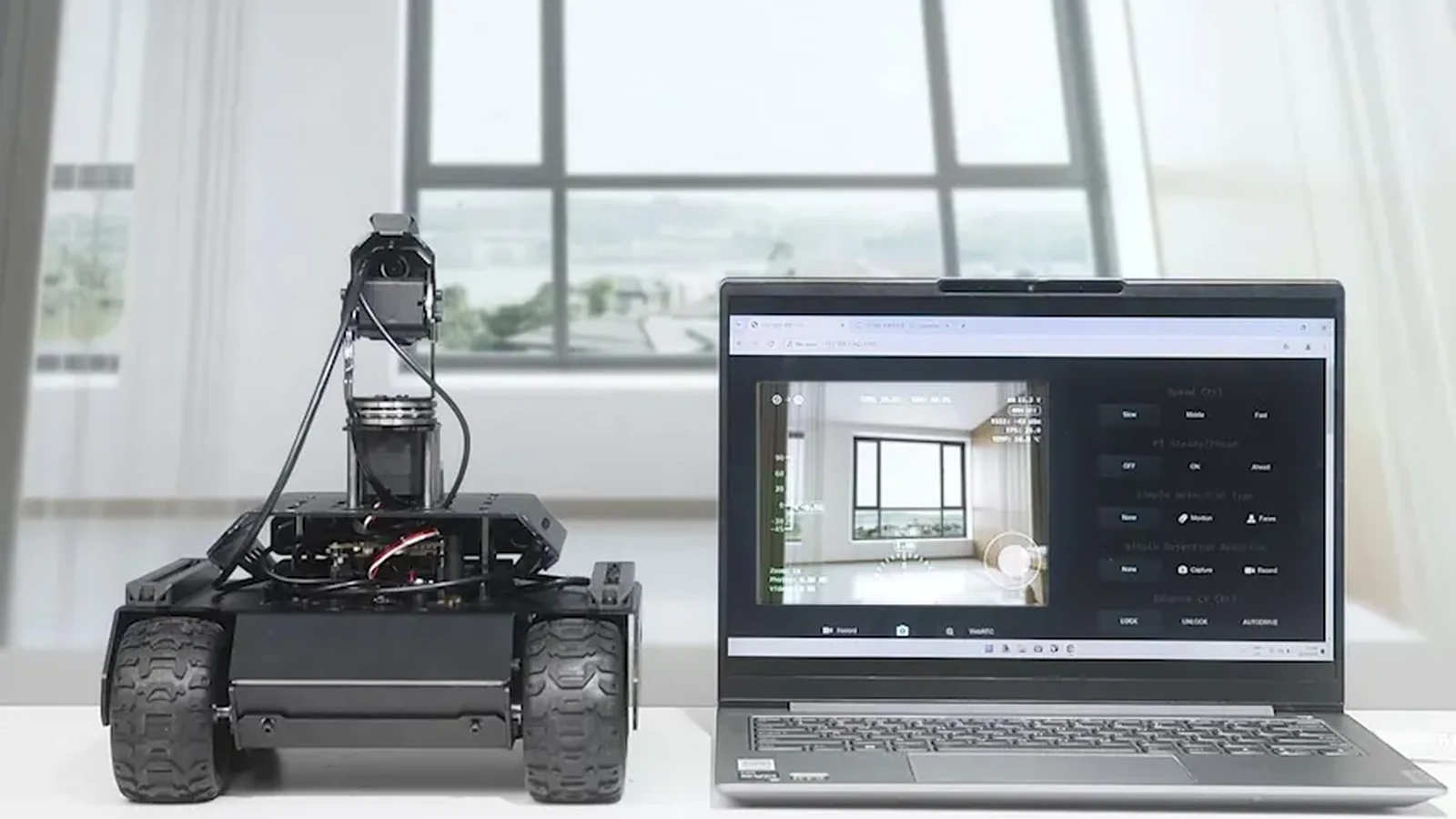
Waveshare’s UGV Rover ROS 2 kit is the kind of mid-size robotics platform that can matter more to a classroom, maker lab, or small autonomy team than another sealed consumer robot. It combines a six-wheel, four-wheel-drive chassis with Raspberry Pi host compute, an ESP32 lower controller, ROS 2 software, and optional perception hardware including LiDAR and an OAK-D Lite depth camera.
The pitch is not subtle: Waveshare is trying to package enough of the mobile-robot stack — chassis, motor control, camera, pan-tilt, web controls, tutorials, mapping, navigation, and open-source code — into one platform that a builder can start modifying instead of spending the first month just wiring a drivetrain.
Who it is for
The most obvious audience is STEM robotics programs that have outgrown toy cars but are not ready to buy industrial AMR training platforms. The UGV Rover ROS 2 also fits makers who want a Raspberry Pi 5 mobile base for computer vision experiments, small research teams prototyping navigation workflows, and educators who need a visible platform for explaining the difference between motor control, host compute, perception, and autonomy software.
It is less compelling for buyers who need a polished appliance. If the goal is a robot that simply works with minimal maintenance, ROS 2, Docker images, battery handling, network setup, camera calibration, and firmware recovery are not chores to hand-wave away. Those tasks are the product.
Technical specs and design signals
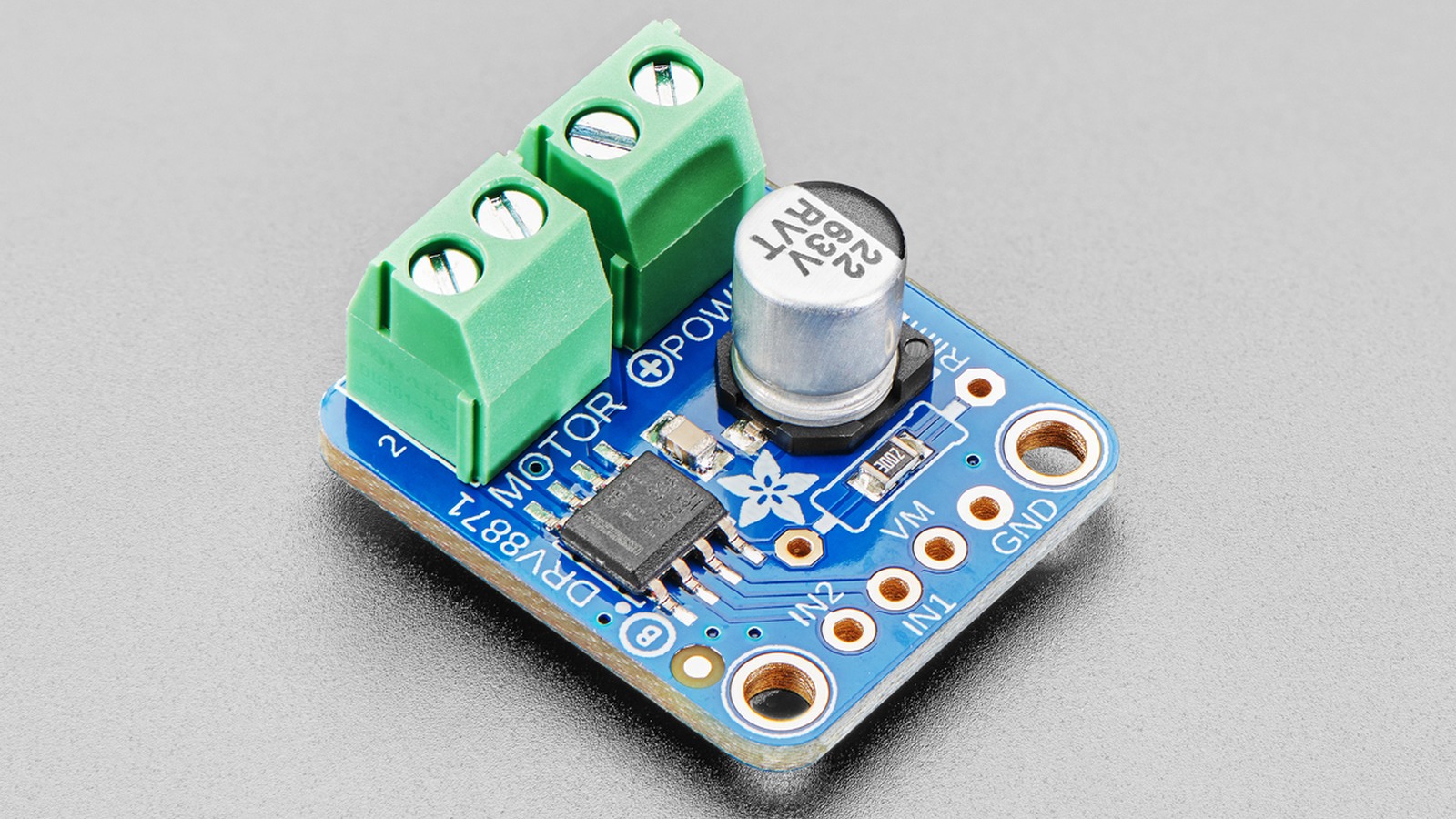
Official Waveshare material describes the platform as an open-source ROS 2 mobile robot with a six-wheel, 4WD architecture. The product page lists Raspberry Pi 4B and Raspberry Pi 5 support, while the documentation explains a two-layer controller design: the Raspberry Pi host handles higher-level computing and vision tasks, while an ESP32 slave controller handles motor PID, IMU readings, OLED display, servo control, and lighting.
That split is a useful design signal. On small robots, mixing Linux-level autonomy code with real-time-ish motor behavior can make failures hard to diagnose. Keeping the low-level motion and sensor work on a microcontroller gives the platform a cleaner teaching story: the Pi can crash, reboot, or change workloads without every drivetrain behavior being buried inside a single Linux process.
The ROS 2 package is another important signal. Waveshare’s wiki references ROS2 Humble, Raspberry Pi OS based on Debian Bookworm, a Flask/Python web application, JupyterLab tutorials, OpenCV examples, MediaPipe examples, LiDAR mapping, depth-camera mapping, auto-navigation, web natural-language interaction, command interaction, and Gazebo simulation. The official GitHub repository also gives buyers something to inspect before purchase, which is exactly what TVG wants to see in education robotics hardware.
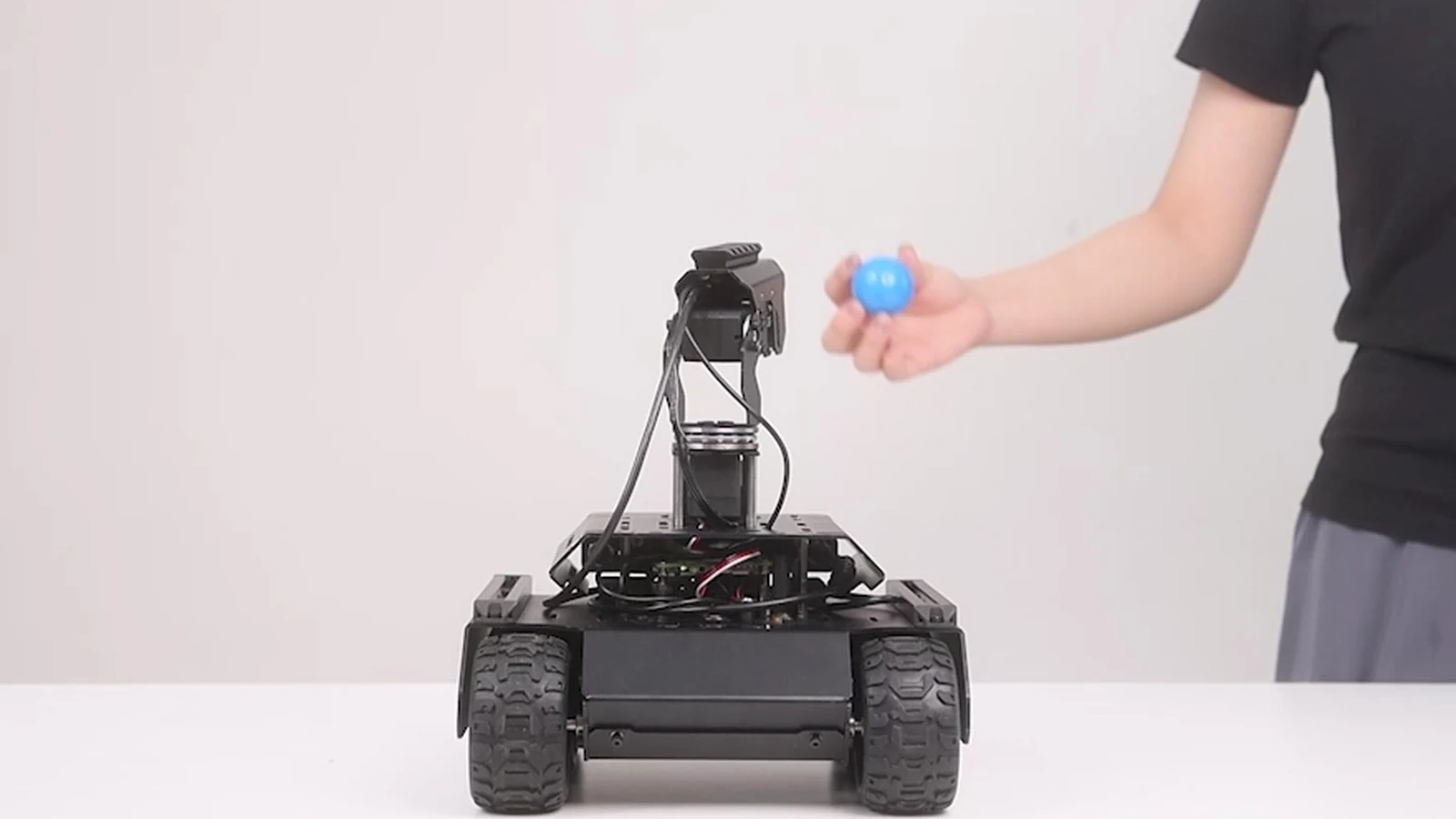
The higher-end PT ROS 2 kits add a two-axis pan-tilt, Waveshare’s D500 LiDAR, and an OAK-D Lite depth camera. That combination puts the platform in a useful lane for mapping, target tracking, classroom autonomy demonstrations, and edge-AI experiments without immediately forcing teams into custom mechanical integration.
What TVG would test
If TVG receives a review unit, the first test would not be a glamour video. It would be setup repeatability. We would document whether a first-time user can go from unboxing to browser control, JupyterLab access, camera streaming, and basic ROS 2 commands without undocumented fixes.
Second, we would test network behavior. Many education robots fail in classrooms because Wi-Fi modes, browser tabs, hotspot defaults, and IP discovery become the real curriculum. The UGV Rover documentation references web control, AP mode, STA mode, OLED-displayed IP addresses, and JupyterLab access. That is useful, but it needs stress testing across school and maker-space networks.
Third, we would test the perception stack. The OAK-D Lite and LiDAR options are strong on paper, but review value comes from checking camera mounting rigidity, pan-tilt repeatability, depth-camera frame stability, LiDAR scan reliability, RViz setup, mapping drift, and whether the tutorials recover gracefully after a failed launch or unplugged sensor.
Fourth, we would test mechanical durability: wheel traction, drivetrain noise, fastener retention, battery access, cable strain relief, pan-tilt backlash, and whether the all-metal body is easy to repair after classroom misuse. In robotics education, serviceability is not a bonus feature; it is the difference between a kit that survives a semester and one that lives in a cabinet.
Failure points / risks / unknowns
The biggest risk is complexity creep. A ROS 2 robot with Docker, Raspberry Pi images, ESP32 firmware, Wi-Fi mode switching, browser controls, LiDAR, a depth camera, and JupyterLab can be a great learning platform, but it also creates many places for a novice team to get stuck. Good documentation helps, yet TVG would still want to see whether the recovery path is clear when a student changes the wrong configuration file or a battery brownout interrupts a process.
The second unknown is long-term software maintenance. The current documentation references Raspberry Pi OS, ROS2 Humble, Flask/Python tooling, and multiple tutorial tracks. Buyers should check how often Waveshare updates images and repositories, whether issues are actively resolved, and whether the platform can be maintained if a class standardizes on newer ROS 2 releases later.
The third unknown is product-variant clarity. Waveshare sells several UGV Rover configurations, including accessory versions that require users to supply their own Raspberry Pi. Buyers should double-check exactly which kit includes the host controller, depth camera, LiDAR, pan-tilt, TF card image, battery components, and charger before treating any review or spec sheet as universal.
Who should consider it
Consider the UGV Rover ROS 2 if your team wants a visible, modifiable mobile robot for autonomy, perception, and STEM robotics instruction. It is especially interesting for programs that want the Raspberry Pi ecosystem, real ROS 2 concepts, a real microcontroller layer, and official tutorials in one package.
Skip it if your program needs a low-maintenance toy robot, a competition-specific platform, or a sealed industrial trainer with vendor-managed curriculum and support contracts. This looks like a builder’s platform: flexible, educational, and powerful, but only if the buyer is honest about the setup and maintenance work.
TVG Take
The Waveshare UGV Rover ROS 2 kit is a strong candidate for TVG’s review-access pipeline because it sits at the intersection we care about: affordable robotics education, Raspberry Pi compute, ROS 2, machine vision, mapping, and repairable hardware. The dual-controller design is the most promising engineering signal, while the main review question is whether the software and documentation are robust enough for real classrooms and small labs.
TVG would not score this platform until testing setup, network reliability, mapping repeatability, mechanical serviceability, and sensor integration on a real unit. But as a spec review, the UGV Rover ROS 2 deserves attention from educators and makers who want a practical mobile base instead of another black-box robot.