The second World Humanoid Robot Games took place in Beijing from 22 to 26 August 2026. Xinhua reported 51 events and 1,301 competitions, with 666 teams and 2,056 humanoid robots participating. That verifies the event, dates and scale; it does not turn every result into a controlled comparison of robot platforms.
A broader task mix than a sprint
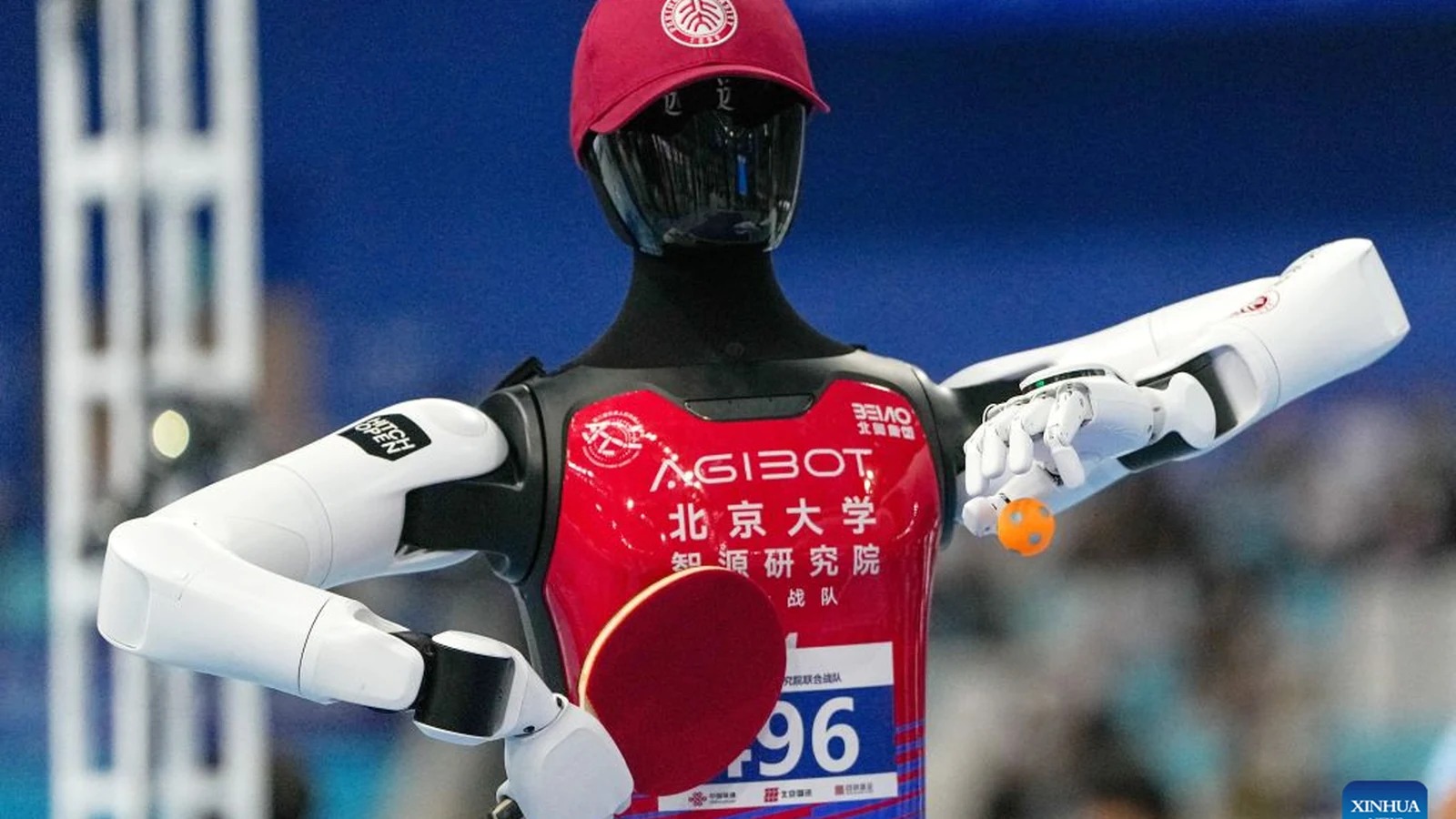
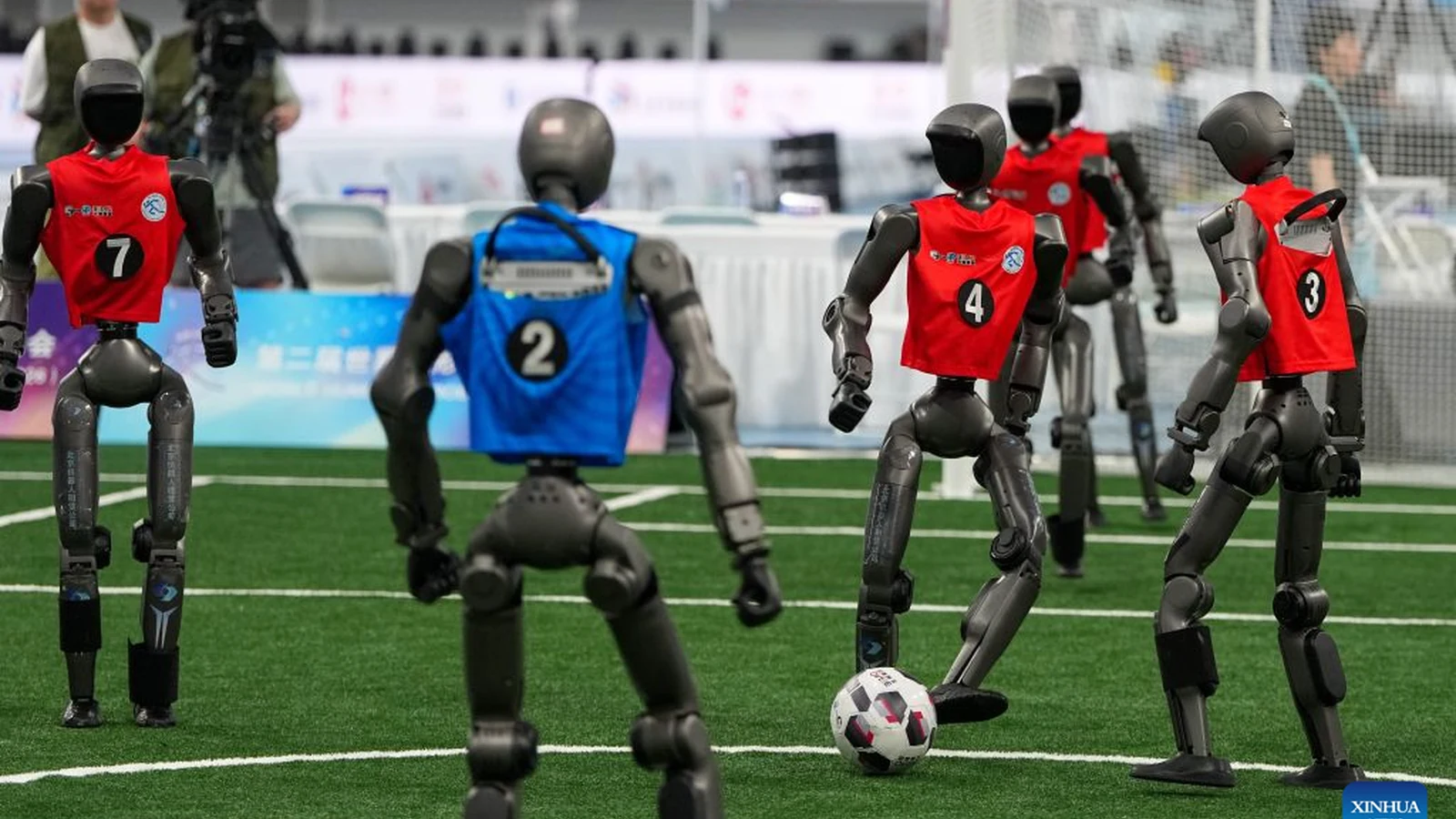
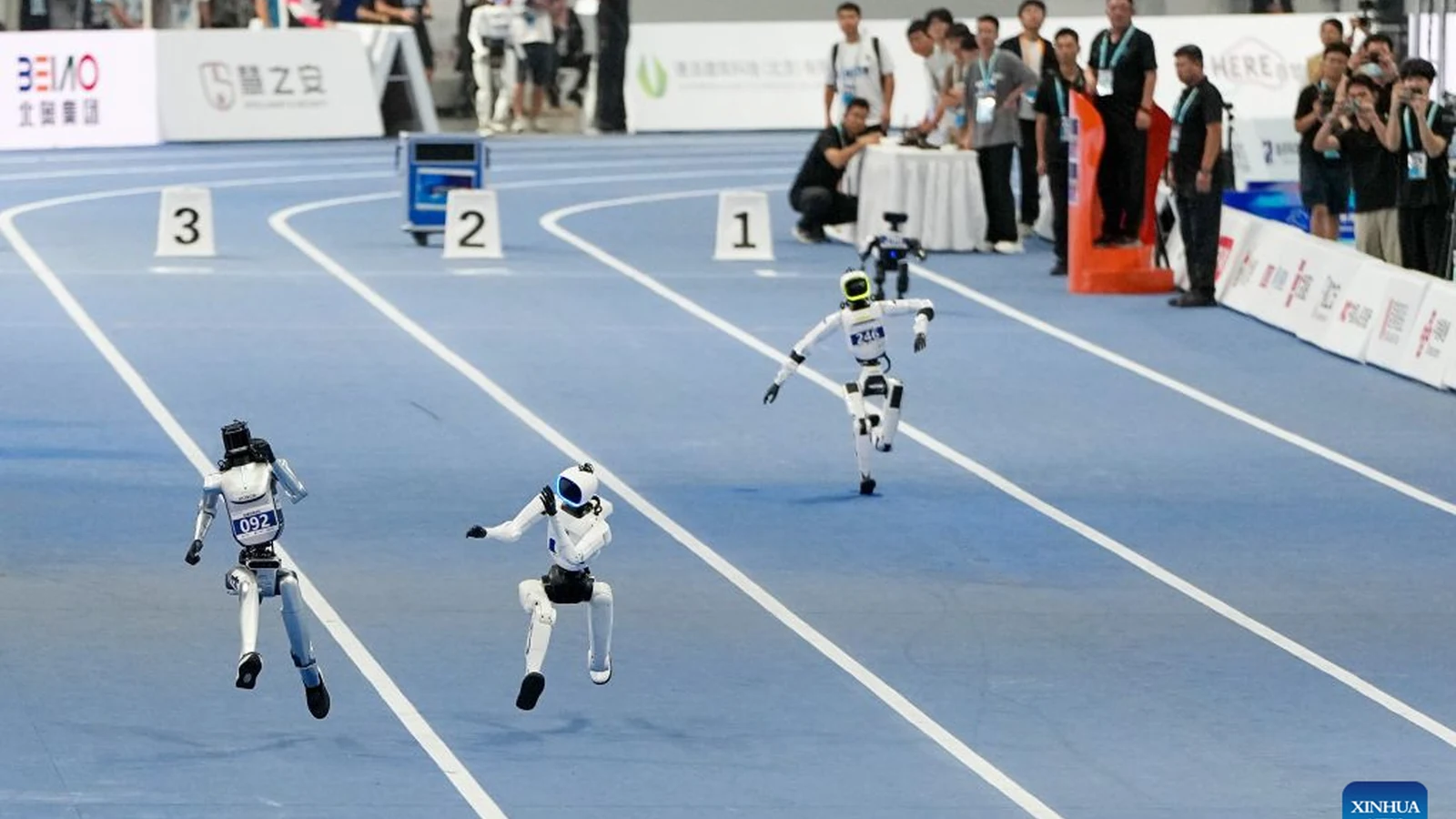
Official event photographs and reporting show robots in track events, football and table tennis. The program also included scenario-based tasks. Each format stresses a different system boundary: running emphasizes gait and balance; ball games add perception, contact and multi-agent behavior; table tennis adds timing and fast visual tracking.
The useful engineering signal is integration. A robot has to combine mechanics, sensing, control software, communications, batteries and team procedures in a public sequence. Falls and interrupted runs are visible in a way that a short manufacturer demo may not show.
What a competition result can establish
A recorded finish, successful rally or completed task establishes that one configured system performed that event under its rules and venue conditions. Repeated heats can reveal whether a team recovers consistently and whether the robot remains operable across turns.
It does not isolate why one machine won. Hardware platforms may run different software, use different operator workflows or enter different size groups. Repairs, substitutions and event rules also affect outcomes. The games are therefore field evidence, not a universal ranking of humanoid reliability, autonomy or commercial readiness.
Failures worth documenting
For engineers, the informative moments include recovery after a fall, restart time, joint or foot damage, perception loss under venue lighting, battery swaps and the amount of manual intervention between attempts. Public coverage rarely provides all of those details, so a dramatic clip should not carry more evidence than it contains.
The strongest follow-up would publish rule sets, run logs, intervention counts and hardware/software configurations alongside results. That would make year-to-year progress easier to interpret without pretending the venue is a laboratory.
What TVG will watch
The 2026 event confirms that the World Humanoid Robot Games exists and expanded into a large multi-event program. The next question is whether organizers and teams expose enough technical records to compare repeatability, recovery and task completion—not just fastest times or highlight footage.