Amazon’s Europe operations update puts Proteus back in the spotlight, but the bigger story is fulfillment-system integration. Mobile robots only help if traffic control, charging, floor layout, safety zones, and human handoff are designed together.
Quick answer
- What Amazon announced: a larger Europe operations investment that includes robotics and delivery expansion.
- Why Proteus matters: it shows Amazon pushing mobile robots deeper into fulfillment workflows.
- TVG view: the robot is only one piece; the hard part is the facility-wide system around it.
Why it matters
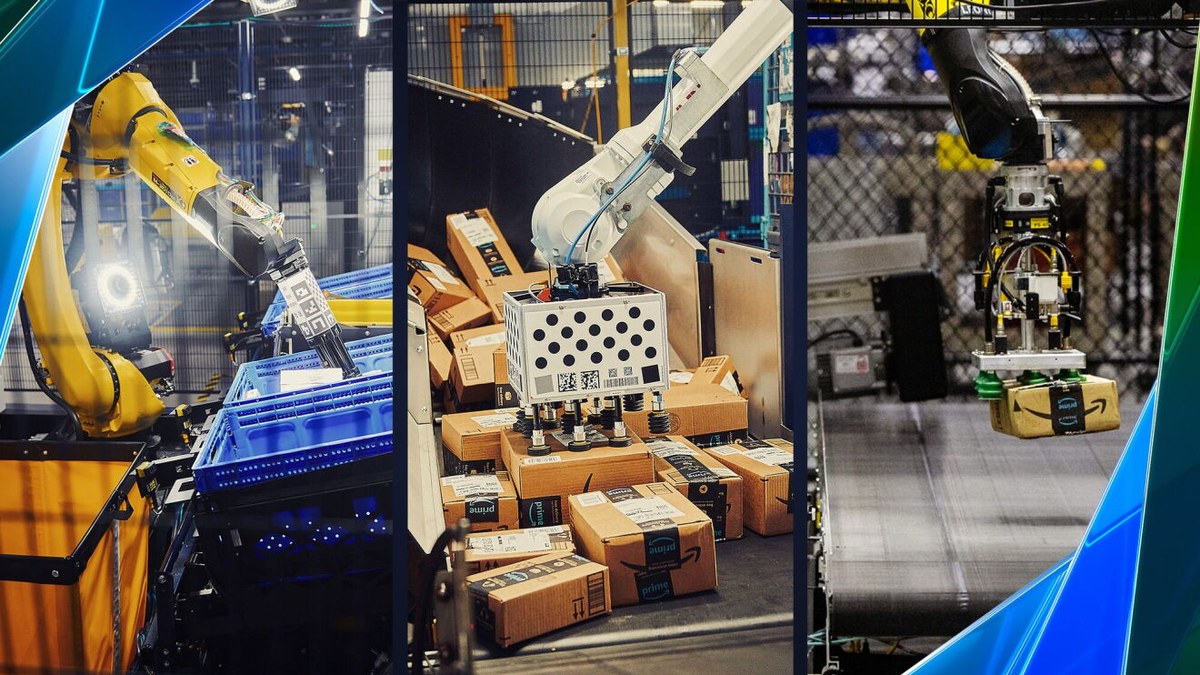
Amazon’s scale makes its robotics decisions worth watching even for small automation teams. The company says it has deployed more than one million robots across its operations network since 2012. That number does not prove every site should copy Amazon’s approach, but it does show that fulfillment robotics has moved beyond pilot projects and into fleet operations.
For robotics builders, the Proteus update is another reminder that autonomy in a warehouse is not only navigation. It is a product-readiness problem that includes safety validation, recovery behavior, worker training, spare parts, and system monitoring.
Technical breakdown
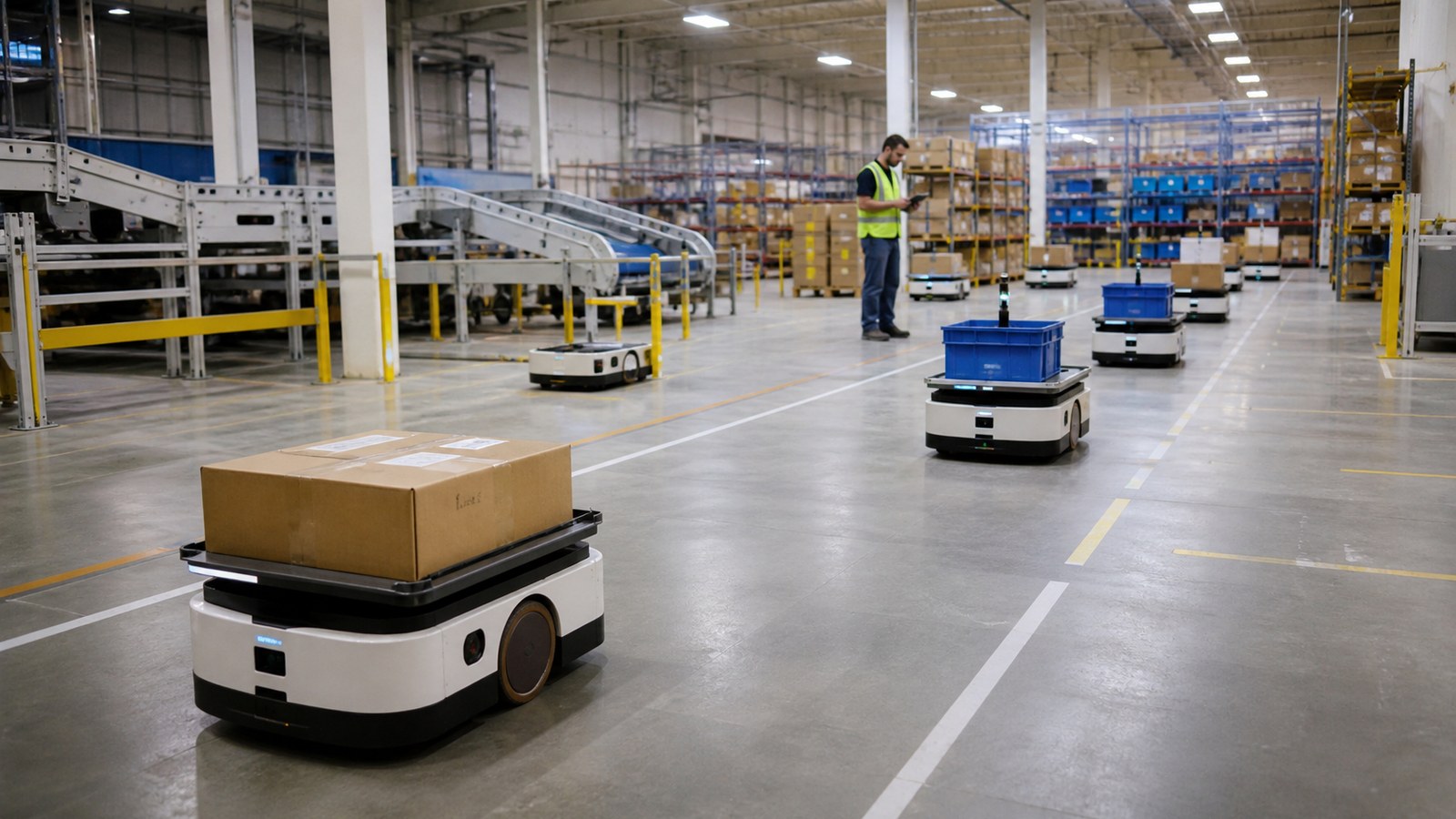
A mobile robot in a fulfillment building has to solve several jobs at once. It must localize, avoid people and equipment, respect site traffic rules, report faults, and fit into a software schedule that decides when inventory moves. The robot also has to be serviceable. A fleet that cannot be charged, cleaned, inspected, or pulled from service quickly becomes a bottleneck.
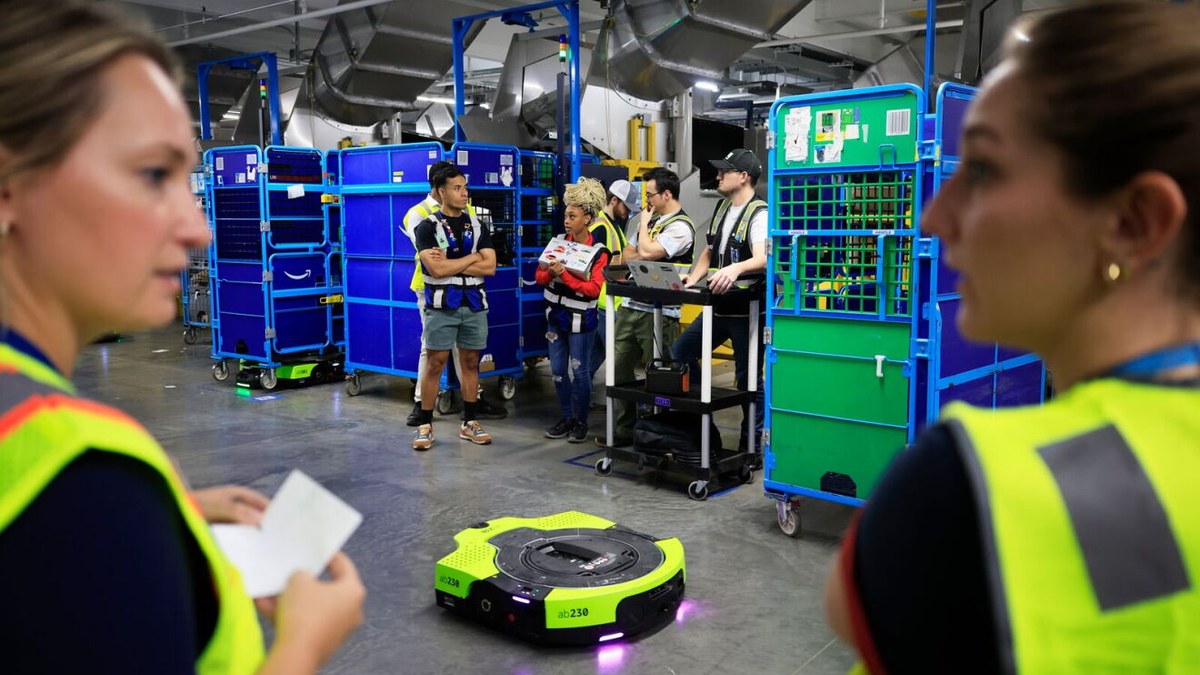
Proteus is notable because Amazon has previously positioned it as a fully autonomous mobile robot designed to move carts while operating around employees. In practice, that kind of system depends on more than obstacle detection. It needs conservative speed limits, predictable right-of-way rules, visibility into blocked paths, and clear escalation when a load, route, or sensor check fails.
Amazon’s update also links robotics with delivery-speed expansion. That pairing is important: faster delivery windows create pressure upstream. If inventory is not sorted, staged, packed, and handed off reliably, the last-mile promise becomes fragile.
Operational questions TVG will track
Several engineering details will decide whether the rollout becomes a useful model for others. One is mixed traffic: how the system handles workers, carts, forklifts, temporary obstructions, and seasonal layout changes without creating confusing stop-and-go behavior. Another is recovery time. A robot that fails safely is only half the job; the site also needs a fast way to identify the cause, clear the path, and return the unit to service without masking a recurring fault.
Training is part of the system, too. Workers need to understand robot intent, blocked-path rules, emergency stop behavior, and where maintenance responsibility begins. Those human signals are not a soft issue; they are what keep a high-volume site from turning every exception into a supervisor call.
TVG Analysis
The useful lesson for TVG readers is not that every warehouse needs an Amazon-style fleet. It is that robot autonomy becomes credible only when the surrounding process is engineered with the same seriousness as the robot.
A smaller warehouse, school lab, or maker demo can borrow that principle. Define safe zones. Log faults. Keep a manual recovery path. Treat chargers and carts as part of the robot system. Then measure throughput and stoppages before claiming the robot improved the workflow.
What remains unknown
Amazon has not published site-by-site performance data for the newly announced European robotics rollout, and it has not provided a full technical specification for the next-generation Proteus system in the public update. TVG will be watching for measurable details: deployment counts, safety metrics, uptime, maintenance load, and whether the newer systems reduce fulfillment exceptions rather than simply moving them elsewhere.