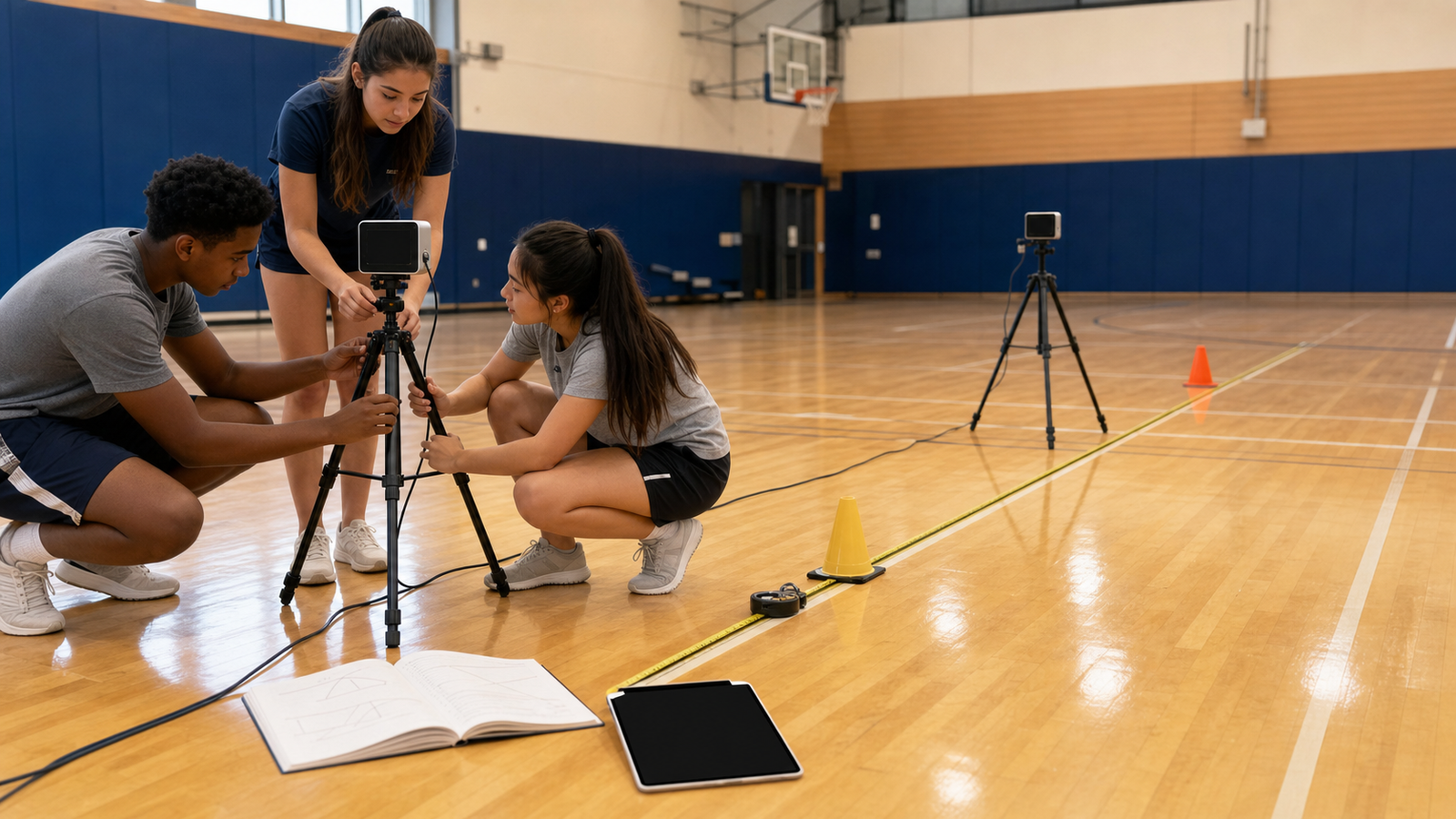
Sports timing gates are usually sold as training tools. In a TVG-style STEM lab, they can become something better: a measurement system students can question. A short sprint lane, agility drill, or robot speed test introduces sensor placement, timing resolution, reaction time, alignment, calibration, and uncertainty in a way students can see immediately.
NIST’s stopwatch and timer calibration guidance focuses on timing devices as measurement instruments. World Athletics rules likewise distinguish human timing, photo finish, and transponder timing roles in competition settings. A classroom does not need professional meet equipment to learn the same engineering idea: timing data is only useful when the method is understood.
Quick answer
Use sports timing gates as a STEM project by comparing them with hand timing and phone video, documenting sensor placement, repeating runs, and discussing uncertainty. The goal is not only faster athletes or faster robots; it is better measurement.
What students can test
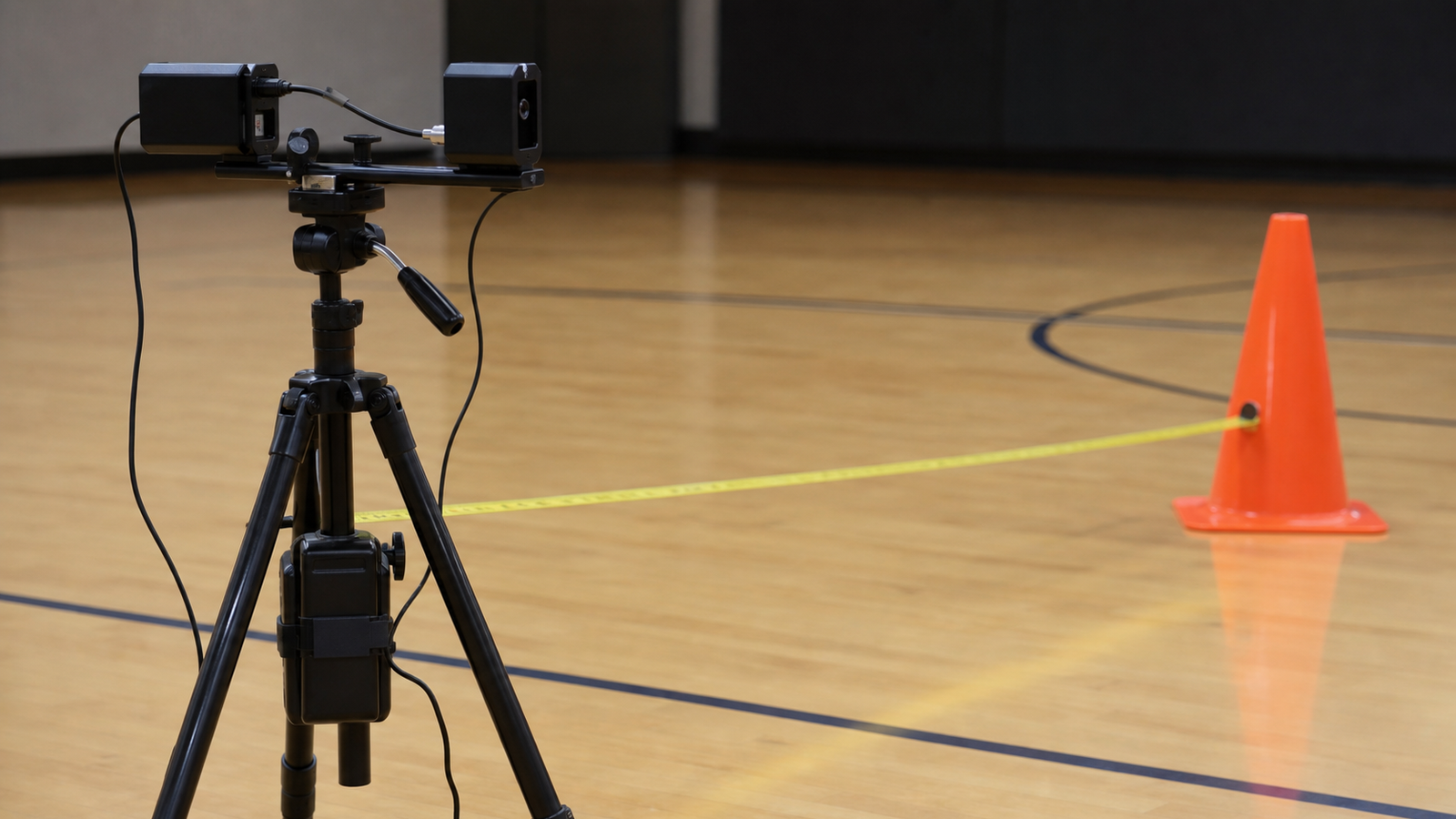
A timing gate has a deceptively simple job: detect when a body crosses a line. The measurement can still change if the sensor height moves, the lane is angled, the start command is inconsistent, or the subject breaks the beam with a hand before the torso. Phone video adds another method, but frame rate, shutter behavior, camera angle, and manual frame selection all matter.
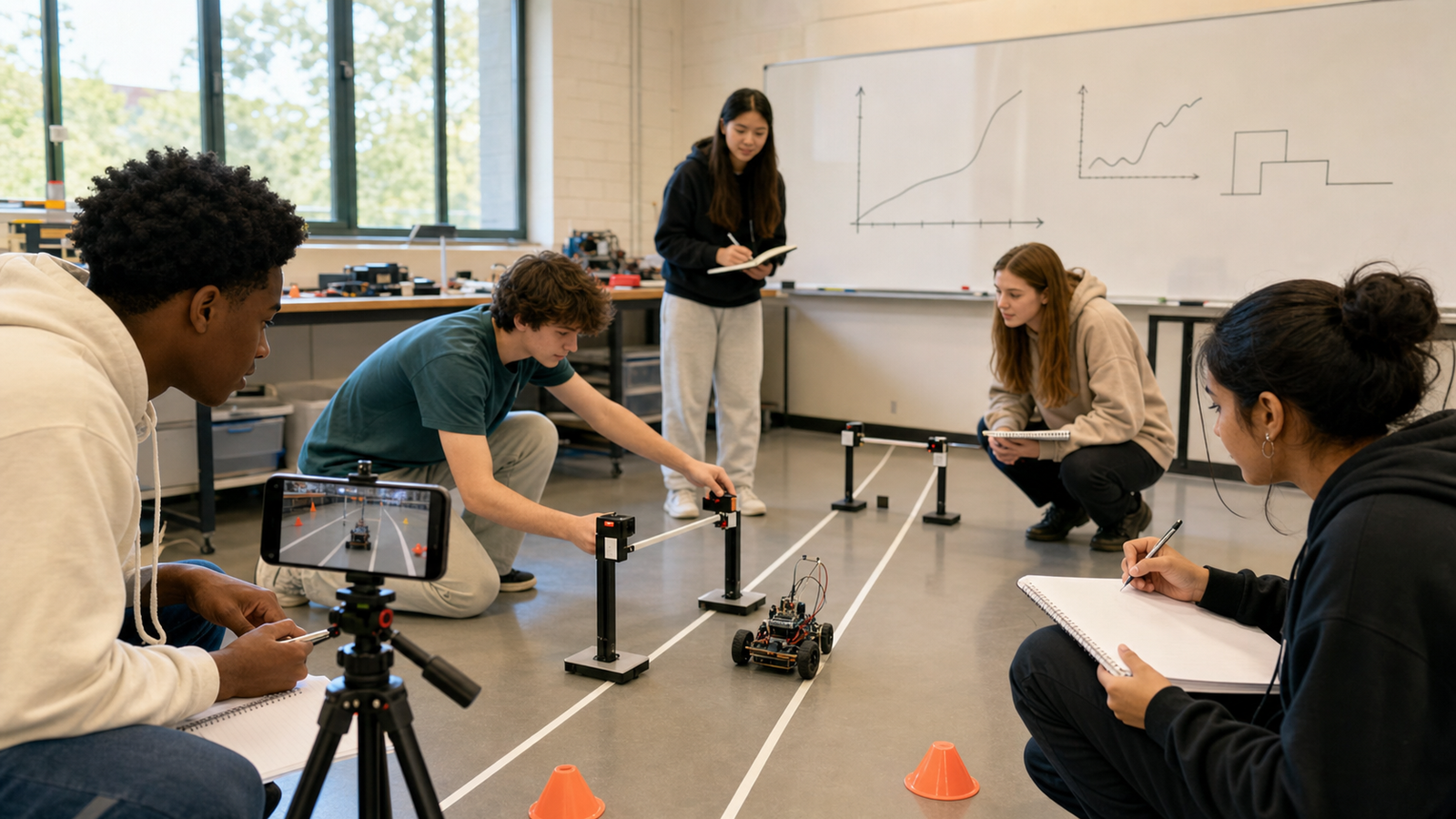
That makes a useful lab. Students can run the same course with hand timing, phone video, and timing gates, then compare spread, repeatability, and failure modes instead of pretending one number is perfect.
Build the lab like an engineer
- Fix the distance: measure the lane and keep start and finish lines marked.
- Set sensor height: record height and angle so the test can be repeated.
- Control the start: decide whether timing begins from first movement, beam break, or a start signal.
- Repeat runs: one run is not enough to understand variation.
- Compare methods: hand timing teaches reaction time; video teaches frame sampling; gates teach sensor alignment.
- Discuss uncertainty: show students why two honest measurements may not match exactly.
This broadened sports-tech lane connects directly to TVG’s earlier sports wearable data quality guide. In both cases, the learning value is not the gadget. It is the discipline of asking what the sensor really measured.
TVG Take
Sports timing gates are a good STEM tool when the class treats them as measurement equipment, not magic truth boxes. The same habits transfer to robot testing, drone flight logs, camera calibration, and maker projects: define the measurement, repeat it, record the setup, and respect uncertainty.
Phone video belongs in the comparison
Phone video is not a substitute for a well-designed timing system, but it is useful in a classroom because students can see the measurement tradeoff. A 60 fps clip divides time into larger chunks than a higher-speed capture, camera angle can shift the apparent crossing point, and students still have to decide which frame counts. Those limitations make uncertainty visible instead of abstract.
The strongest lab asks students to predict which method will vary most before looking at the results. Then they can calculate spread across repeated runs and explain whether the variation came from the athlete or robot, the start method, the sensor position, or the measurement tool.