Review status: TVG has not tested Moment’s Mobile II lenses hands-on. This is a spec review and field-workflow evaluation based on Moment’s official announcement, published product details, and independent camera-press coverage. It is not a verdict on optical performance.
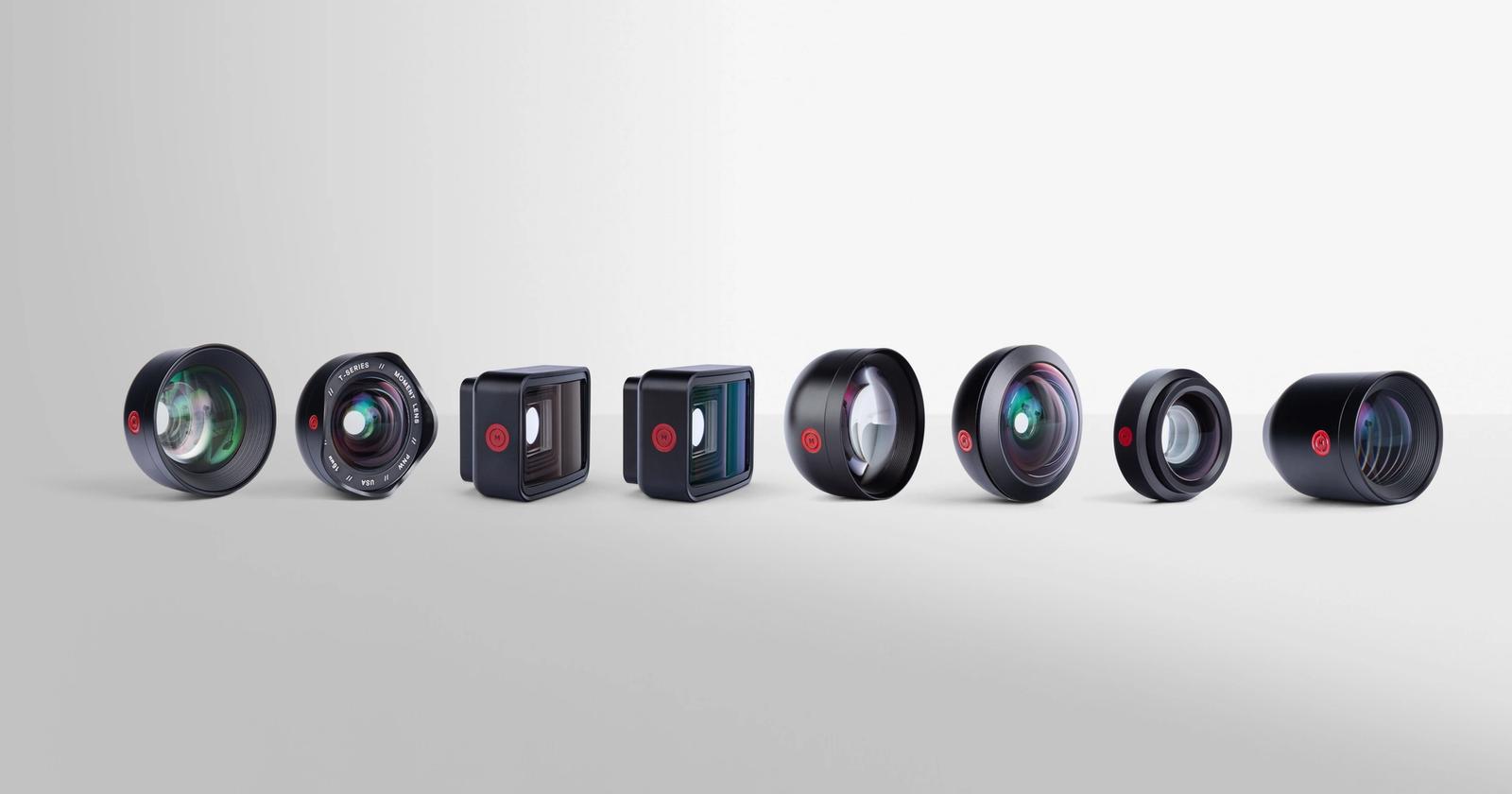
Moment has announced its T-Series Mobile II lens lineup, saying the phone lenses have been redesigned for larger camera sensors and higher-resolution phones. The collection includes a new SuperTele 240mm II, Tele 58mm II, Wide 16mm II, Fisheye 8mm II, Macro 75mm II, and Anamorphic 1.33x II.
The most interesting TVG question is not whether add-on phone lenses are fun. It is whether they can be reliable enough for creator kits, maker documentation, classroom media teams, and field capture where a phone is already the easiest camera to carry.
What Moment changed
Moment says Mobile II uses more glass and is designed for today’s larger phone sensors. The new SuperTele 240mm II is the headline addition. Moment describes it as its longest-reaching smartphone lens and says it is designed for modern periscope cameras rather than a phone’s main 1x camera. The company also says the lens uses cinema-grade optical glass, CNC-machined aluminum, a blackened interior, and 67mm filter compatibility.
PetaPixel’s coverage notes the same important constraint: the 240mm lens is meant to fit over compatible telephoto modules, not every phone camera. That matters because phone-camera systems have become multi-lens computers, not simple single-lens bodies. A lens accessory that aligns well with one model can be awkward on another.
Why phone lenses still matter
A dedicated camera or action camera is often better for planned shoots, but phones win on availability. A robotics mentor, field technician, or small creator team may already have a current phone, cloud backup, editing apps, and a known sharing workflow. If an add-on lens adds useful reach, close-focus detail, or perspective control without adding much setup time, it can be practical.
For maker and field documentation, the strongest use cases are specific: a macro lens for board labels and solder joints, a tele lens for safe distance capture, a wide lens for cramped workspaces, and an anamorphic or fisheye lens for creative projects where the look is intentional. TVG’s camera sensor size guide makes the same broader point: the right camera is the one that produces repeatable detail in the actual environment.
The alignment problem
The biggest risk with phone lenses is alignment. Modern phones use multiple cameras, computational photography, sensor-shift stabilization, focus stacking, and software switching. If the accessory is even slightly off-axis, edge sharpness, vignetting, focus, and flare can suffer. If the phone switches cameras unexpectedly, the lens may be sitting over the wrong module.
That is why a spec review cannot settle the question. The useful test is repeatability: mount the lens quickly, open the camera app, capture the same subject five times, and check whether framing and sharpness remain consistent. A lens that is optically good but fiddly may be fine for hobby photography and poor for field documentation.
Filters and control
Moment’s 67mm filter support on the SuperTele 240mm II is a practical detail. Filters are not only for cinematic style. Neutral density filters help manage shutter speed in bright light. Polarizers can reduce glare on glass, water, and some glossy surfaces. For field documentation, filter compatibility can make phone capture more controllable.
The tradeoff is bulk. A phone, case, lens, adapter, and filter can become a small camera rig. That may still be lighter than a dedicated camera, but it is no longer pocket-simple. Buyers should consider whether the kit will live in a bag, classroom drawer, drone case, or technician pouch.
What we would test
- Compatibility and alignment on each phone model the team actually uses.
- Time to mount, shoot, remove, and pack the lens without damaging the phone or case.
- Sharpness in the center and corners on printed labels, connectors, and outdoor details.
- Vignetting, flare, and focus behavior in bright sun, workshop lights, and mixed indoor scenes.
- Whether the camera app switches lenses unexpectedly while the accessory is mounted.
- Filter threading, filter clearance, and whether 67mm filters make the rig too bulky.
- Storage workflow: file size, capture format, cloud sync, naming, and project-folder discipline.
Who should consider it
Mobile II looks most relevant for creators and technical teams that already use phones as a serious capture tool. A school robotics team documenting outreach projects, a maker shooting assembly notes, a small studio filming product details, or a field team capturing distant conditions could benefit if the lenses mount quickly and survive regular use.
It is less compelling for buyers who want guaranteed ruggedness, waterproofing, swappable batteries, long recording sessions, or fixed mounting. In those cases, an action camera or compact dedicated camera may still be a better tool. TVG’s action camera mounting guide explains why mounts, vibration, and battery swaps often matter more than headline resolution.
TVG Take
Moment’s Mobile II lineup is technically interesting because it treats phone cameras as modular field-capture systems. The promise is not replacing dedicated cameras everywhere. The promise is giving a phone more optical reach, close-focus detail, or creative control when the phone is already the device in hand.
The purchase decision should wait for device-specific tests. If the lens aligns cleanly, avoids unwanted camera switching, accepts filters without making the kit awkward, and produces repeatable detail, it could be useful in a creator or maker field bag. If mounting is slow or the phone fights the accessory, the workflow cost may outweigh the image benefit.