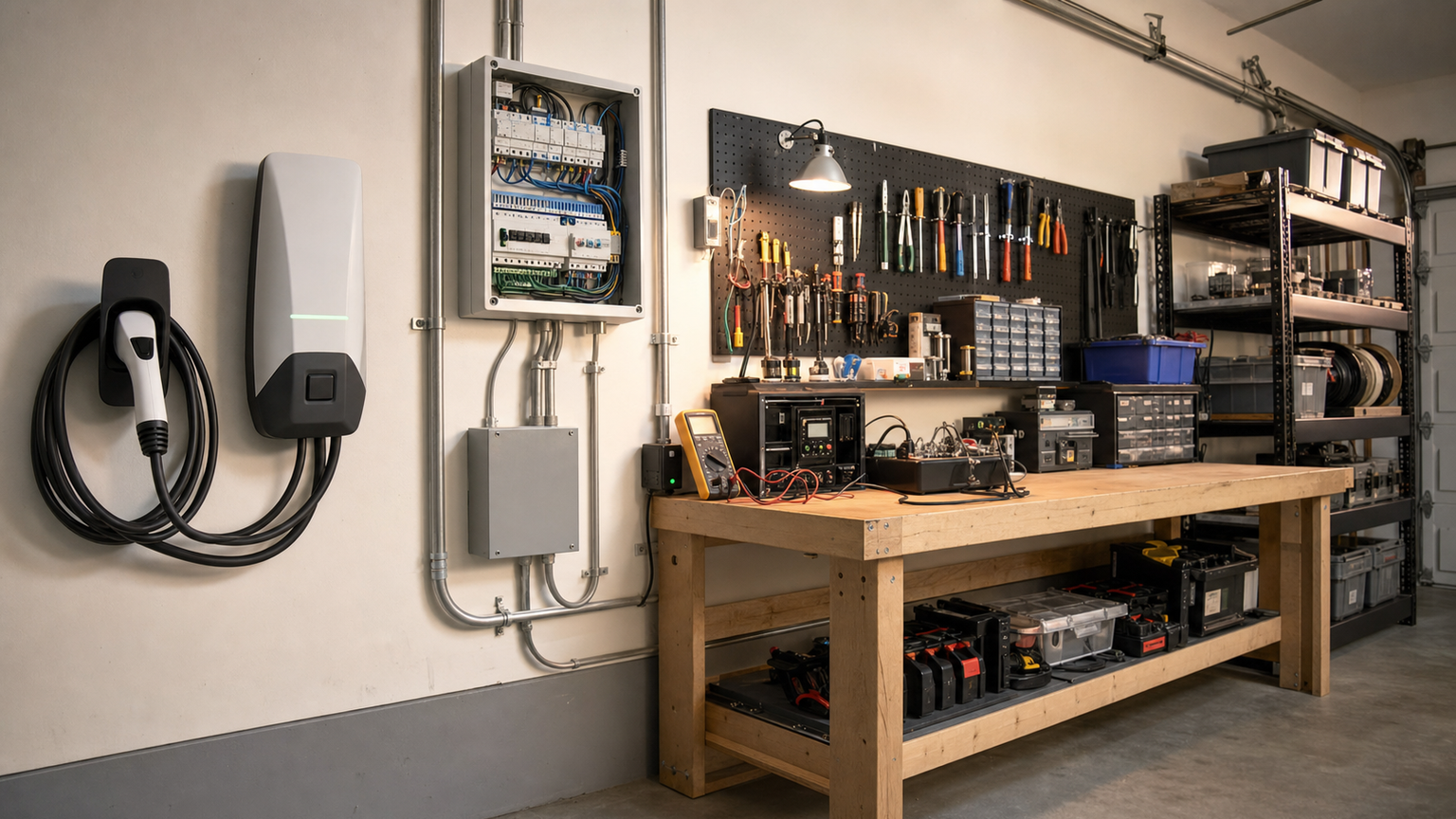
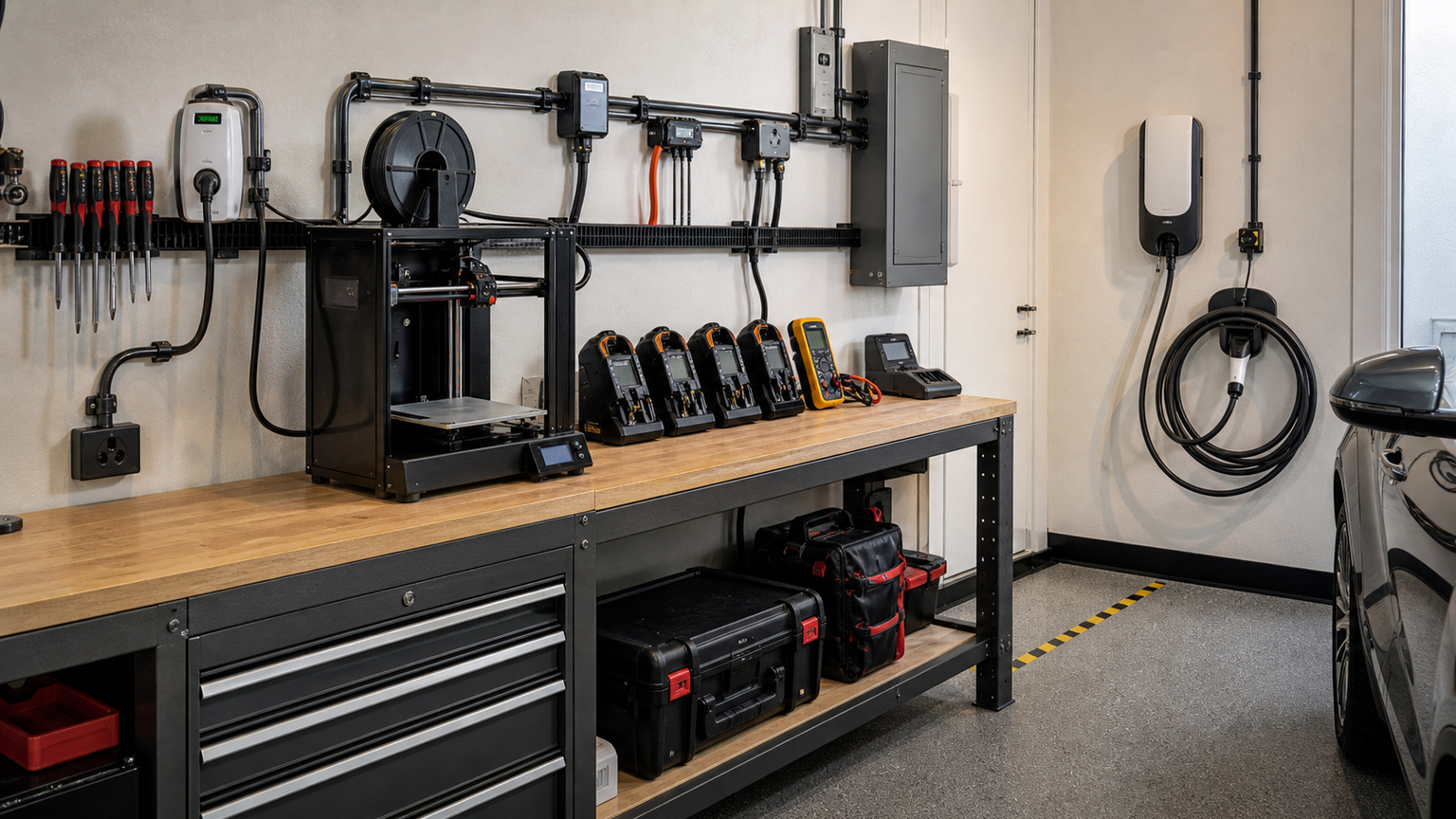
EV charging is often covered as a car feature or utility topic. For TVG readers, the more interesting case is the garage that also runs a maker lab: 3D printers, soldering stations, battery chargers, servers, routers, cameras, robot packs and now a Level 2 charger.
That combination turns load management into an engineering problem. The goal is not simply to install the biggest charger the panel can tolerate on paper. The goal is to keep the garage predictable when tools, chargers and automation equipment are running at the same time.
This is not electrical advice or a substitute for code-compliant installation. It is a planning checklist for technically minded homeowners, school labs and community makerspaces before they talk to an electrician or choose charging hardware. The safer the requirements are written down, the less likely the finished garage becomes a pile of adapters, overloaded circuits and mystery breaker trips.
Quick answer
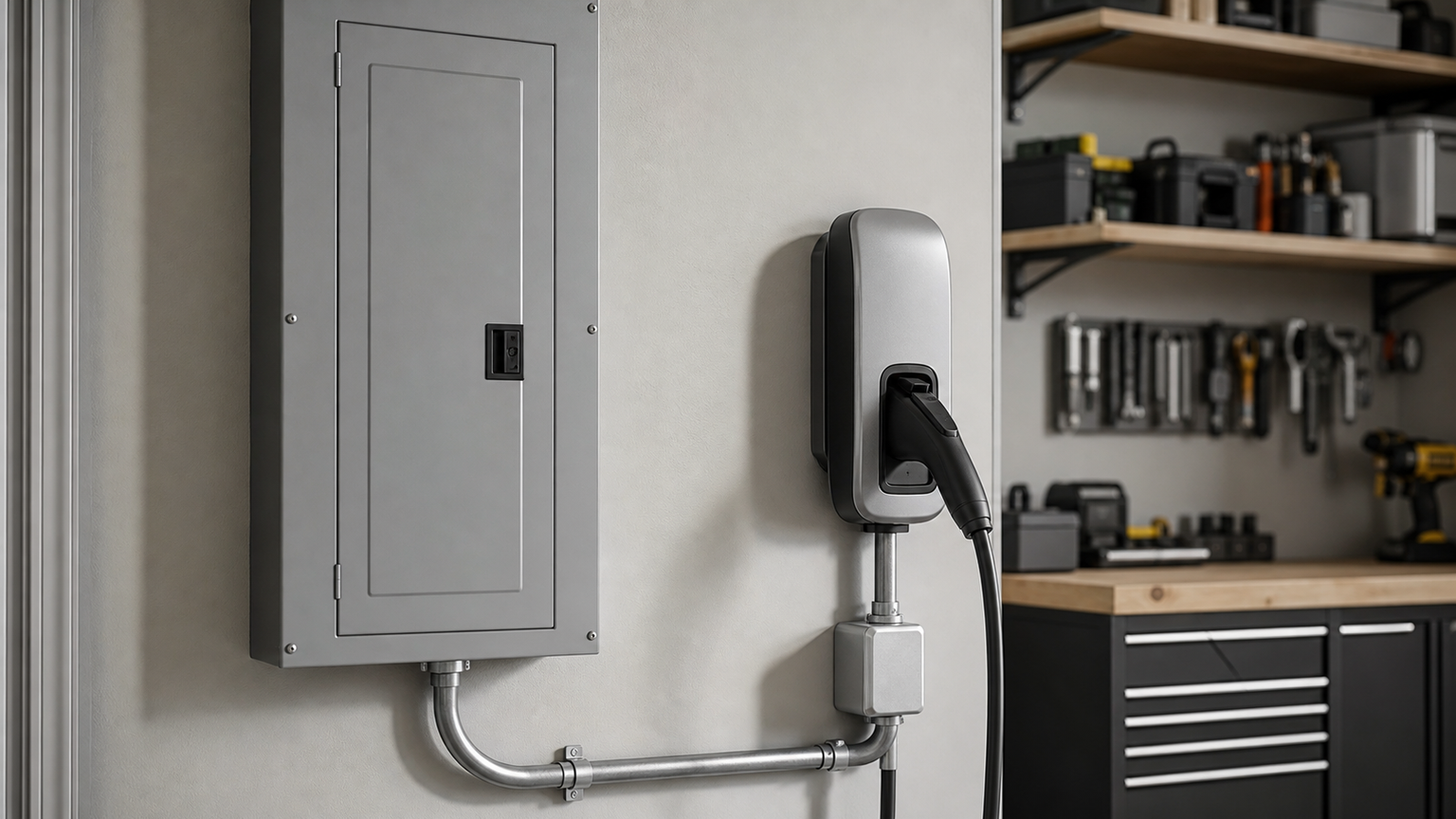
If a garage doubles as a lab, treat EV charging as one load in a managed system. Confirm electrical capacity with a qualified electrician, separate critical lab circuits where practical, avoid extension-cord workarounds, and choose charging hardware or management software that can reduce current when other loads are active.
Why open protocols matter
The Open Charge Alliance describes OCPP as an open communication protocol between charging stations and charging-management systems. OCPP is more common in commercial and managed charging contexts than in basic home setups, but the idea matters: a charger is increasingly a controllable networked load, not just a high-power outlet.
For a maker garage, that raises useful questions. Can the charger schedule charging away from print jobs or battery charging? Can it reduce current when the building load rises? Can it report enough data to diagnose nuisance trips or overload risk? Can it be managed without locking the user into one proprietary path?
The protocol detail is less important for a small garage than the system behavior. A managed charger should make load decisions visible, recover cleanly after a network outage and fail in a conservative state. If the charger cannot explain what it is doing, it becomes another black box in a room already full of power supplies and battery packs.
The garage-lab checklist
- Load inventory: List the EV charger, printers, heaters, soldering tools, compressors, servers, battery chargers and networking gear.
- Simultaneous-use plan: Decide what may run while the vehicle is charging and what should be scheduled separately.
- Dedicated circuits: Keep high-duty lab equipment and network hardware away from avoidable shared-load surprises.
- Monitoring: Use breaker-safe, code-compliant monitoring where appropriate rather than guessing from monthly bills.
- Thermal discipline: Treat heat at plugs, adapters and enclosures as a warning sign, not a normal side effect.
- Automation boundaries: Do not let hobby automations override safety equipment or electrical code requirements.
TVG Take
EV charging belongs in TVG’s broader lane because it is a systems problem. A charger, a 3D printer and a robot battery station may never talk to each other directly, but they still share a building, a panel, heat limits and user habits.
The smart move is to design the garage like a small lab: document loads, label circuits, plan charging schedules and leave margin. Convenience is useful only if the setup remains safe and debuggable.