A thermal camera can make electronics troubleshooting feel obvious. A bright spot appears on the screen, the board looks guilty, and the repair bench gets an answer. The danger is that thermal tools can also create false confidence when the user does not understand spot size, emissivity, focus distance or normal heat behavior.
This buyer evaluation compares thermal cameras and IR thermometers for maker labs, repair benches and STEM classrooms. It does not assume TVG has tested a specific model. The goal is to identify the specs and workflow checks that matter before buying.
Quick answer
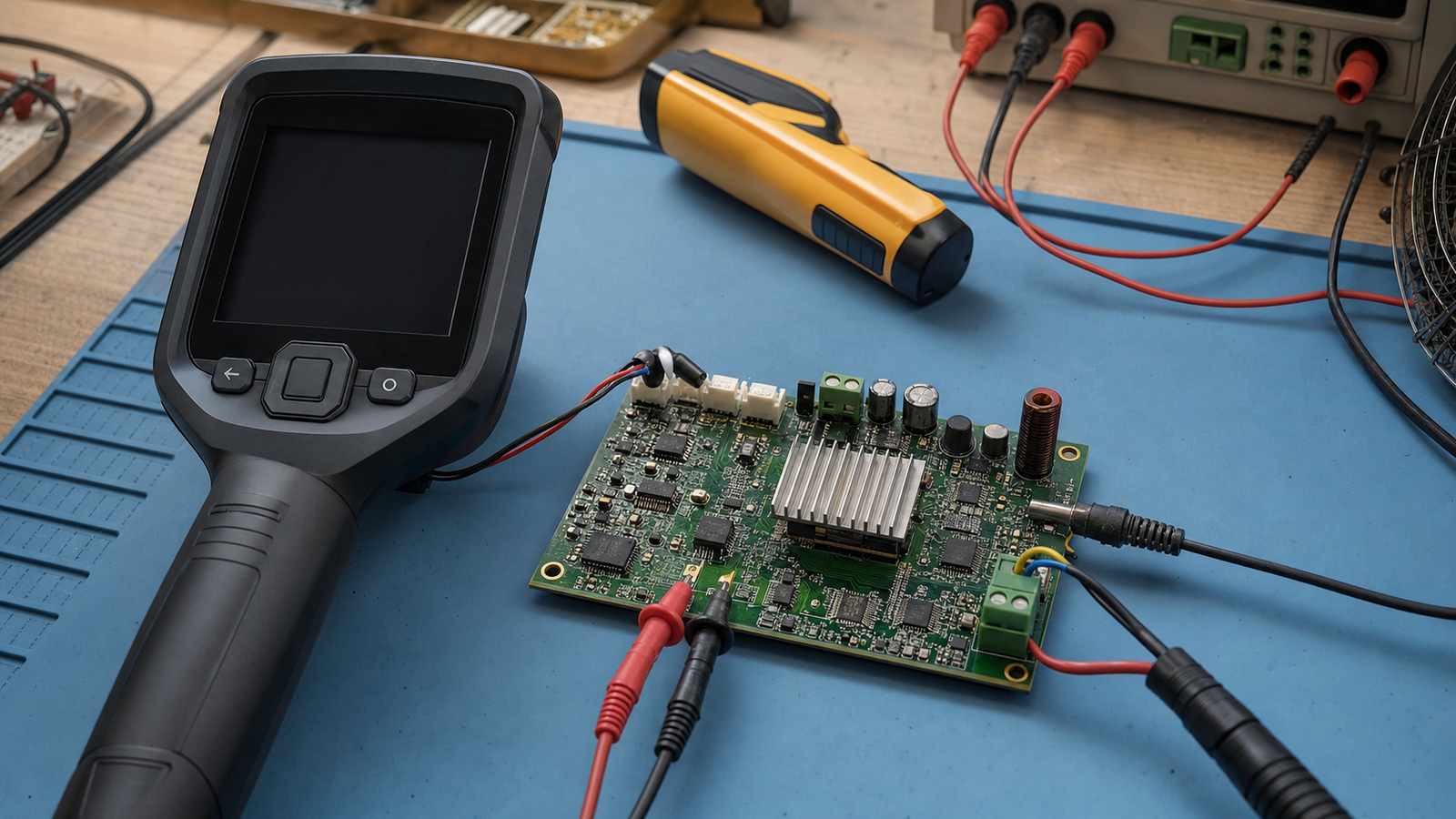
Choose a thermal camera when you need to see heat patterns across a board, compare components quickly or document faults. Choose an IR thermometer for rough surface checks on larger targets. For small electronics, an IR thermometer can be misleading unless the spot size is smaller than the part being measured. A contact probe or thermocouple still belongs on the bench.
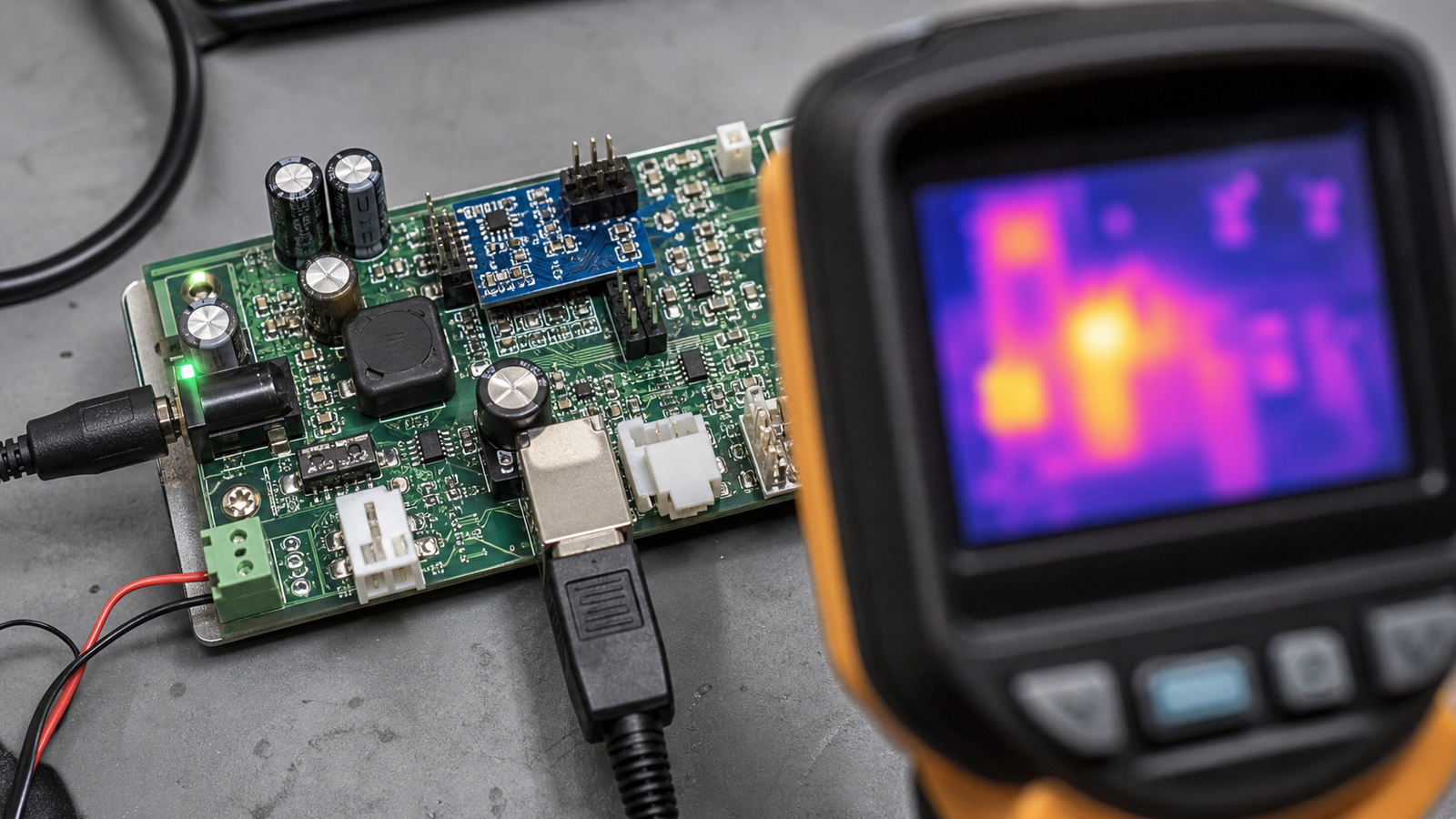
What each tool is good at
Fluke explains the broad difference between thermal cameras and infrared thermometers: an IR thermometer gives a spot reading, while a thermal imager shows a temperature pattern. That distinction matters on a circuit board where the target may be only a few millimeters wide.
FLIR’s electronics guidance is sometimes blocked to automated fetchers, but the company’s public thermal-imaging education has long emphasized locating hot components, comparing areas and using thermal tools as part of a diagnostic workflow rather than a standalone verdict. TVG retained the source link because it is a relevant official manufacturer education page, while relying on accessible source text and general instrument principles for the article wording.
Resolution and focus distance
Thermal-camera resolution is not the same as photo resolution. A low-resolution thermal sensor can miss a tiny hot regulator or blur several components into one warm blob. Minimum focus distance also matters. A camera that cannot focus close enough for a board-level inspection may be fine for panels and motors but weak for electronics repair.
For a maker lab, useful questions include: Can the camera resolve individual chips on the boards you use? Can it focus at bench distance? Can it save images for documentation? Does it allow repeatable settings, or does auto-scaling make every image look dramatic?
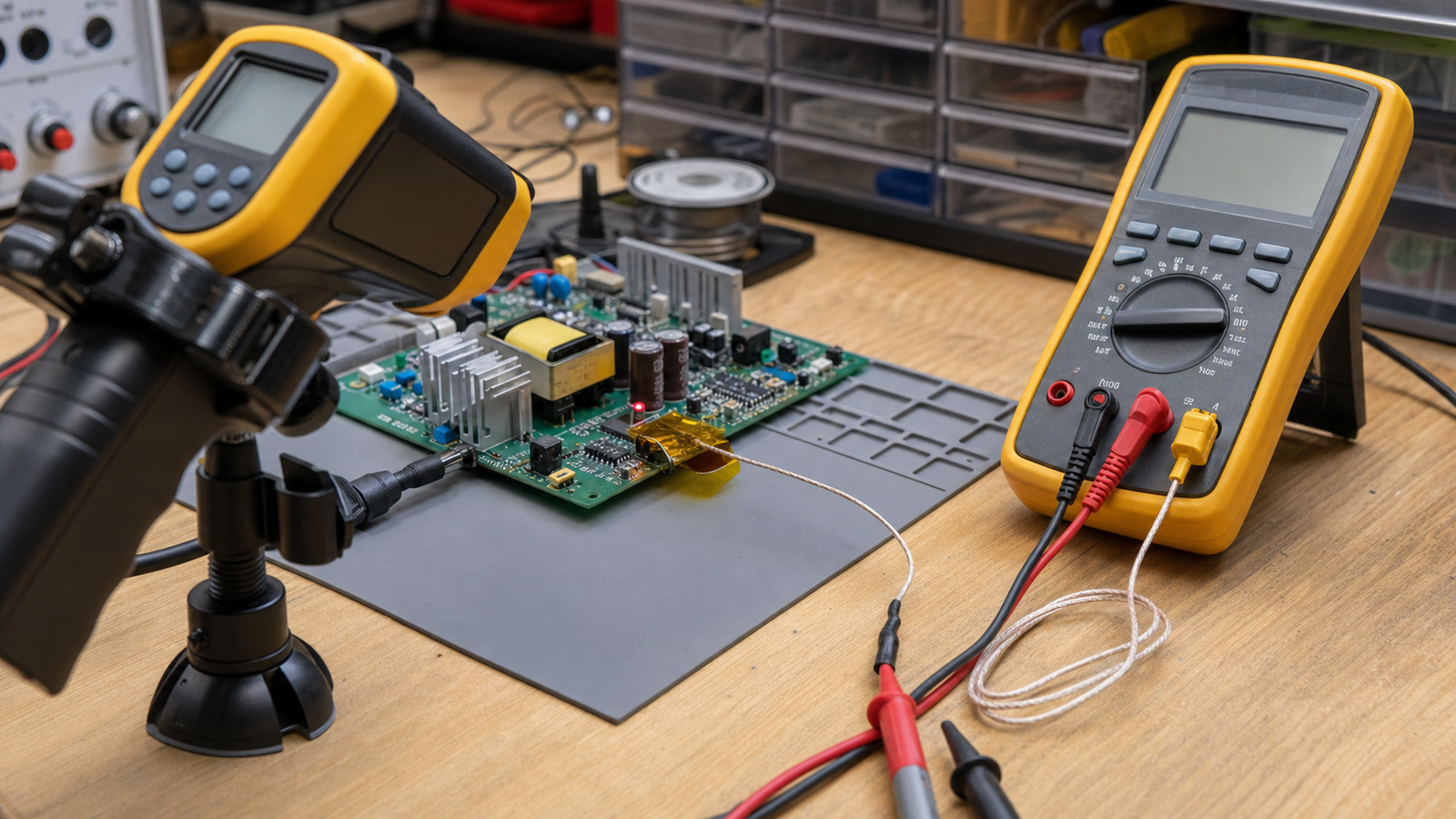
Why IR thermometers can mislead on boards
An IR thermometer measures an area, not a mathematical point. If the spot size at the target is larger than the component, the reading mixes the component, nearby board material and background. Shiny metal surfaces can also produce poor readings because emissivity differs from the default assumptions built into many tools.
That does not make IR thermometers useless. They are handy for power bricks, enclosures, motors, batteries, heated beds and other larger surfaces. They are less convincing when pointed at a tiny IC, resistor or connector pin.
Workflow before tool choice
Good thermal troubleshooting starts with a safe, repeatable test. Current-limit the supply when appropriate, avoid touching energized high-voltage circuits, note the operating state, and compare the suspect board to a known-good board when possible. TVG’s USB-C Power Delivery bench guide made a similar point: measurements only help if the setup is controlled.
Buyer checklist
- Thermal resolution high enough for the target size.
- Close-focus ability for circuit boards.
- Adjustable emissivity or at least a documented assumption.
- Image capture for repair notes and student reports.
- Safe mounting or hands-free operation for powered tests.
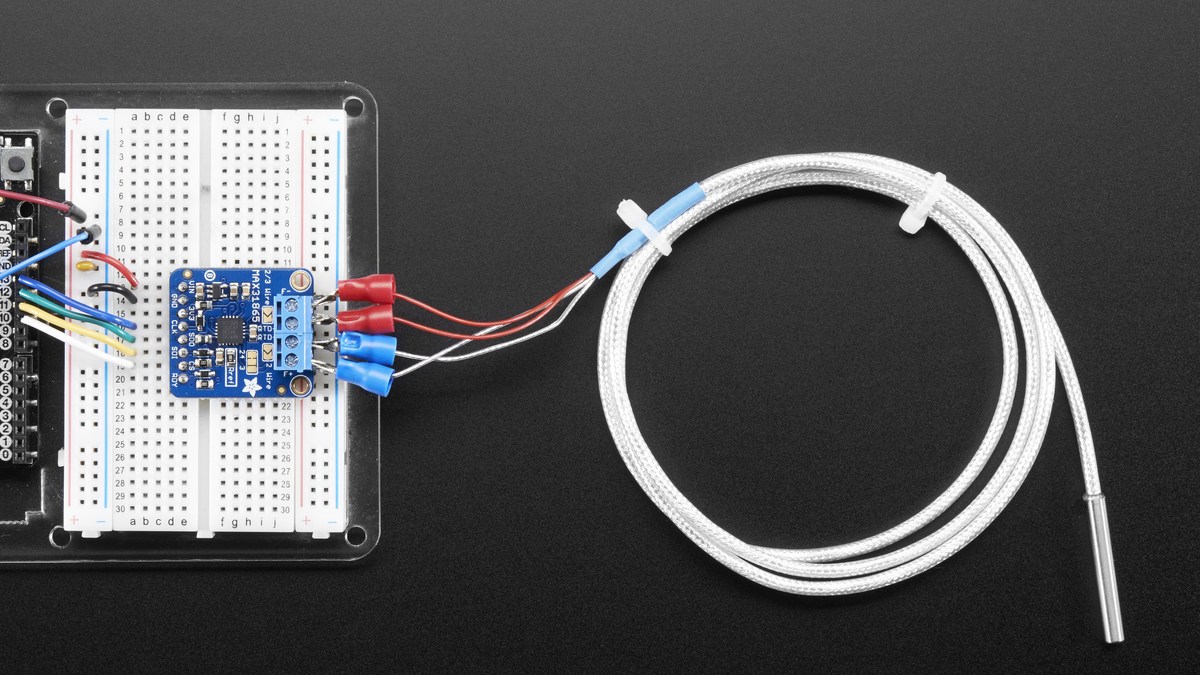
- Contact probe available when exact temperature matters.
- Software that does not lock useful data behind a confusing workflow.
TVG Take
A thermal camera is the more useful electronics tool when the lab needs to find patterns, compare boards and document faults. An IR thermometer is cheaper and useful for larger targets, but it is not a magic board-level diagnostic tool. For STEM and repair benches, the best setup is often a modest thermal camera plus a contact probe and a written test procedure.