
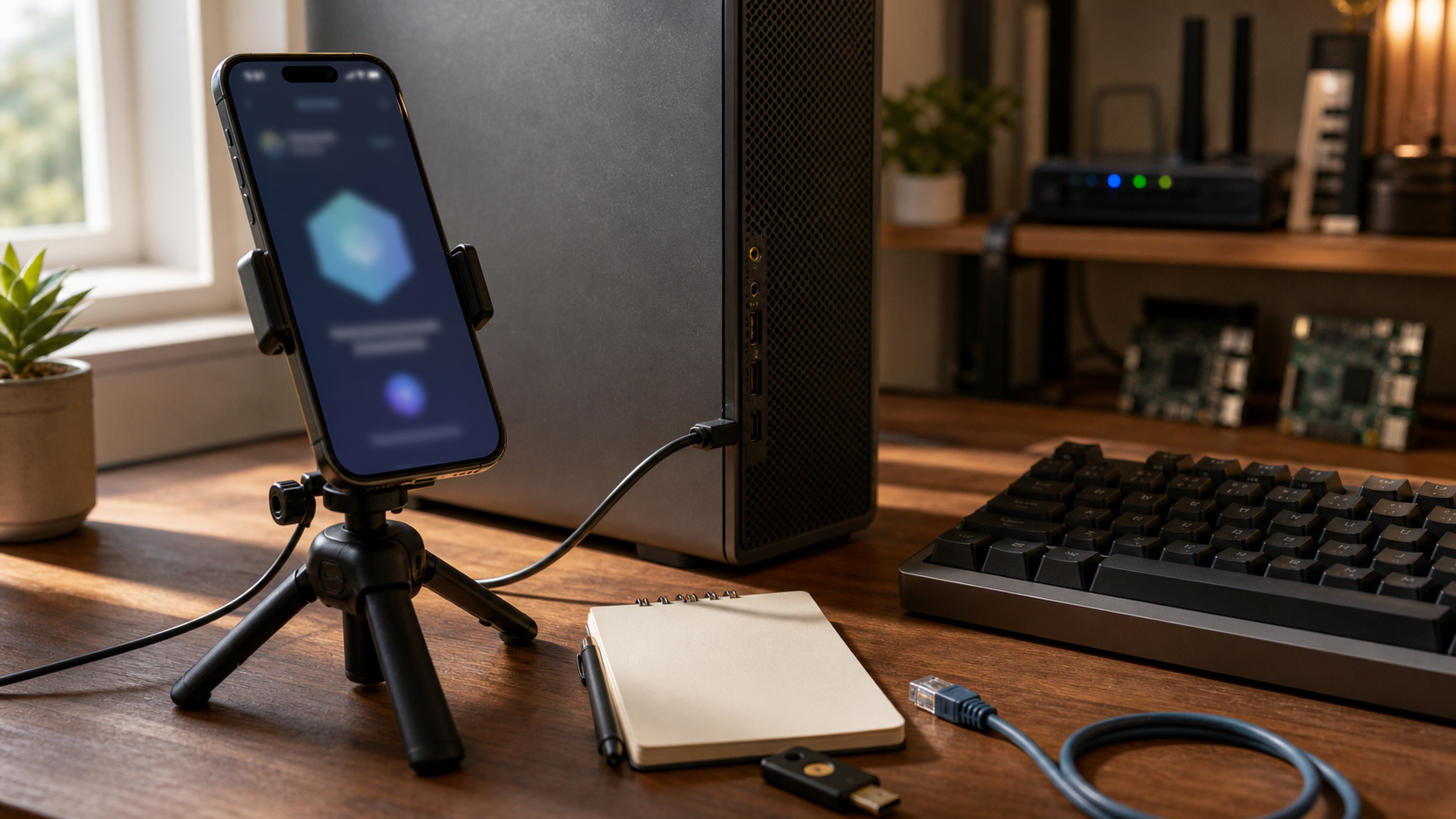
OpenAI says Codex Remote has reached general availability, moving a mobile-supervised coding workflow out of preview and adding a clearer device-pairing model for people who want to review coding-agent work away from the main machine.
According to the OpenAI Codex changelog, Codex Remote now lets users start or continue Codex work from the ChatGPT mobile app on a connected Mac or Windows host, review progress, and approve actions from a phone. OpenAI says Remote Control now uses authenticated one-to-one QR pairing between each iOS or Android device and each host.
The company also notes that users should update both the ChatGPT mobile app and the Codex App before connecting. Connections used since June 8, 2026, remain paired, while older inactive connections need to pair again.
What changed
The practical change is not simply that a phone can see coding work. The important part is the pairing boundary. A one-to-one QR pairing model gives developers a more explicit relationship between a mobile device and a host machine than a loose account-level remote-control flow.
OpenAI also describes a new DigitalOcean plugin that can provision a Droplet, configure SSH access, and connect it to the Codex App as a remote workspace. That gives the workflow a second path: local host supervision for machines a developer already owns, or cloud workspace setup for work that should run away from a personal laptop.
For TVG readers who maintain small labs, coding-agent workflows, or student robotics repositories, this sits near the same readiness questions we raised in our local AI lab hardware buyer evaluation: the hardware choice matters, but so does the control path around the agent. It also pairs with our Wi-Fi 7 access point guide for home labs and maker spaces, because remote coding work depends on predictable connectivity as well as compute.
Why it matters
Remote coding agents are most useful when they can keep moving while a human is not sitting in front of the main screen. They are also riskiest when approval steps become casual. A phone-based review loop can be convenient for build fixes, dependency updates, documentation work, and cloud setup, but only if the operator knows which host is paired, what repository is open, and which commands are being approved.
OpenAI’s public wording focuses on authenticated QR pairing, app updates, and the state of older connections. It does not, in this changelog entry, publish an independent audit of every remote-control path or a detailed threat model for every workplace deployment. That leaves administrators with normal questions: device loss, shared phones, account recovery, host naming, session revocation, and audit trails.
Practical implications for builders
Small engineering groups should treat Codex Remote as a supervision channel, not as a reason to skip repository hygiene. Before using it on production-adjacent code, check branch protections, secret scanning, test commands, and whether the host has access to tokens that should not be reachable from a mobile approval flow.
Maker labs and classrooms have a different concern: shared machines. A QR-paired phone can be useful when a mentor wants to approve safe actions on a lab host, but it should not blur ownership of the machine. Lab hosts need clear user accounts, predictable repository locations, and a policy for removing pairings when a student, mentor, or borrowed device leaves the project.
This is also relevant to remote workspaces. If the DigitalOcean plugin is used to spin up a cloud machine, cost controls and teardown habits become part of the engineering workflow. A persistent remote box that keeps working while someone steps away can be useful; it can also quietly keep resources, credentials, and open network paths alive longer than intended.
TVG Analysis
Codex Remote’s GA milestone makes mobile supervision feel less like a demo and more like an operating pattern. The useful test is not whether a phone can approve a coding agent. It is whether the team can explain, later, which person approved which action on which host, under which repository permissions.
For TVG Report, the key adoption question is control design. If the pairing model is visible, revocable, and paired with conservative host permissions, mobile supervision can reduce friction for routine coding-agent work. If it is treated like a magic remote keyboard, it becomes another place where convenience outruns process.
What remains unknown
OpenAI has announced the GA status and pairing behavior, but teams still need to evaluate their own policies around shared devices, host enrollment, cloud workspace lifecycle, and approvals that touch secrets or production systems. TVG will watch for more detailed deployment guidance, admin controls, and real-world reports from teams using mobile-supervised coding agents in labs rather than demos.

That’s a really clever addition to the workflow. It seems like a practical way to manage remote coding sessions.