NVIDIA released Isaac Sim 5.0 and Isaac Lab 2.2 in June 2025 with GitHub access, container images and downloadable packages. The practical change is distribution: robotics teams can inspect examples, pin versions and integrate the simulator into existing development pipelines more directly. It does not remove the need to validate every controller and perception stack on physical hardware.
The release changes how teams assemble a stack
NVIDIA describes Isaac Sim as an application built on Omniverse for developing and testing AI-driven robots in physically based virtual environments. Isaac Lab adds robot-learning workflows. GitHub distribution makes code review and issue tracking easier, while containers can reduce workstation-to-CI differences. Teams still need to record GPU driver, container, simulator, extension and asset versions together.
Parallel scenes improve throughput, not truth
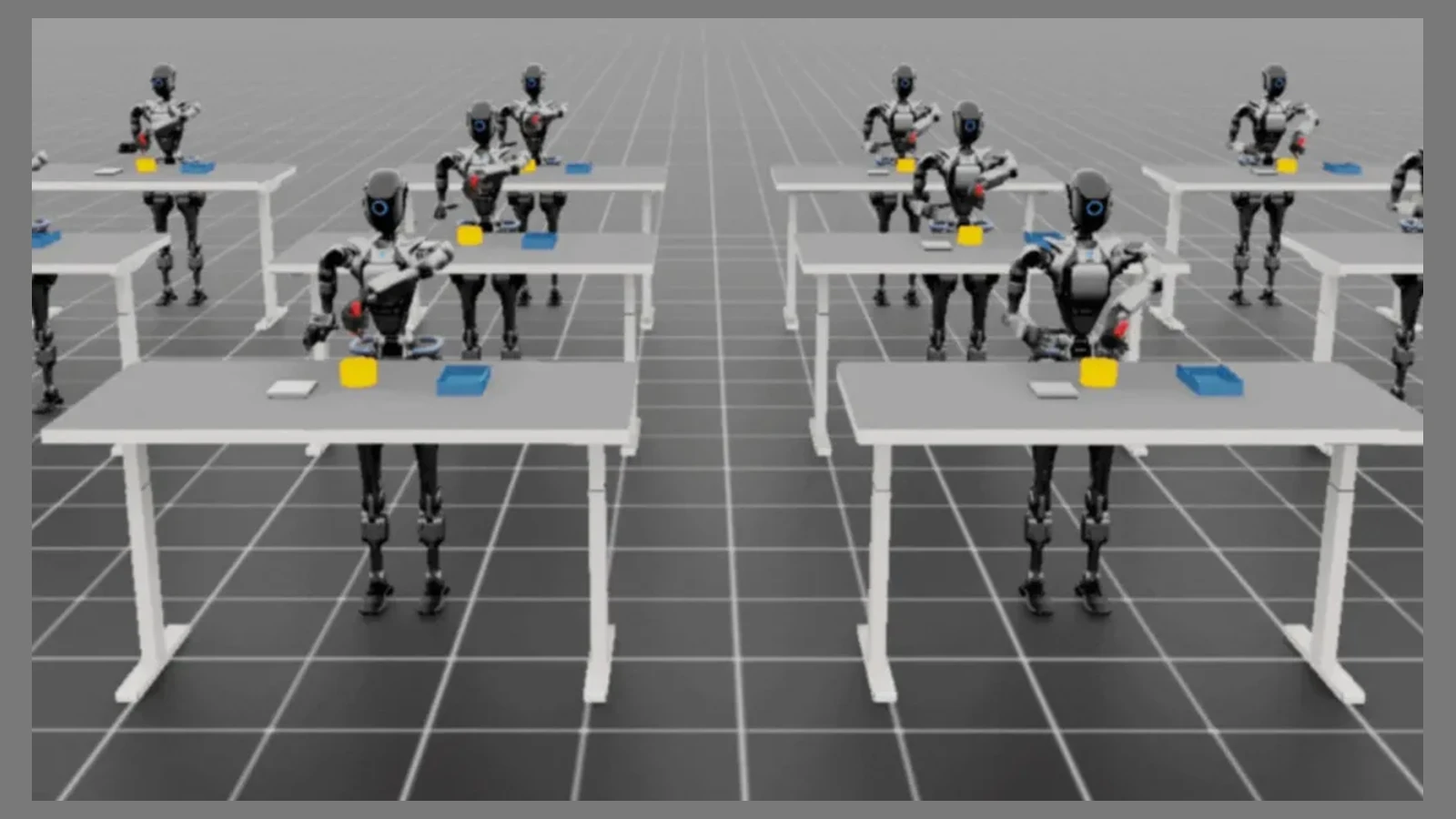
Running many simulated environments can generate more training episodes and expose a policy to varied conditions. The resulting volume is useful only when the variation represents real failure modes. Camera noise, latency, wheel slip, contact friction, lighting and actuator limits need defensible ranges. Randomizing everything without a measured basis can hide rather than fix a bad model.
Assets are part of the test definition
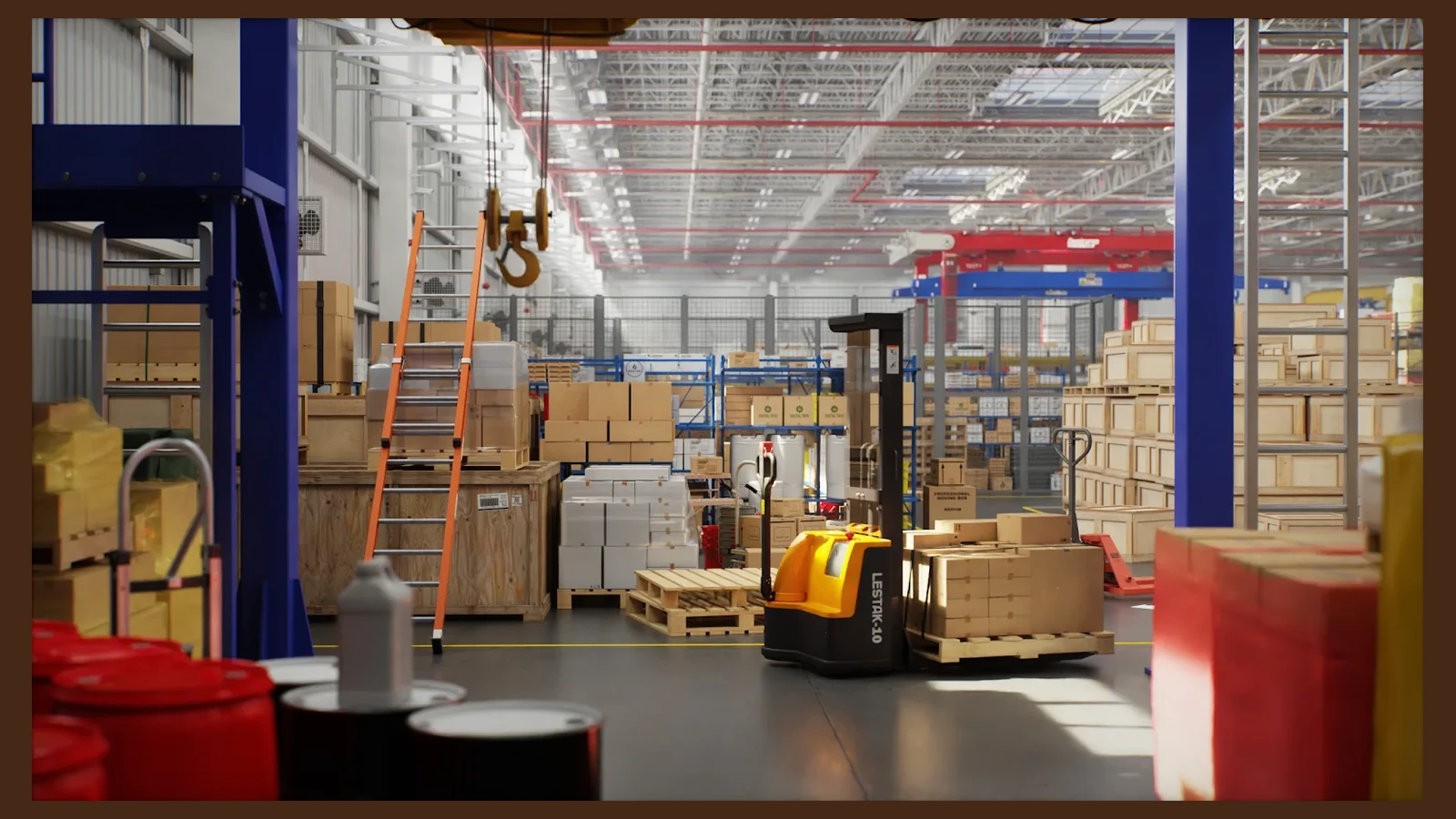
A robot model, sensor configuration and warehouse scene are not neutral decoration. Collision meshes, joint limits, materials and coordinate frames define what the simulator permits. Store those assets with versioned configuration and keep a small regression scene that produces repeatable outputs after an upgrade.
Keep a physical acceptance gate
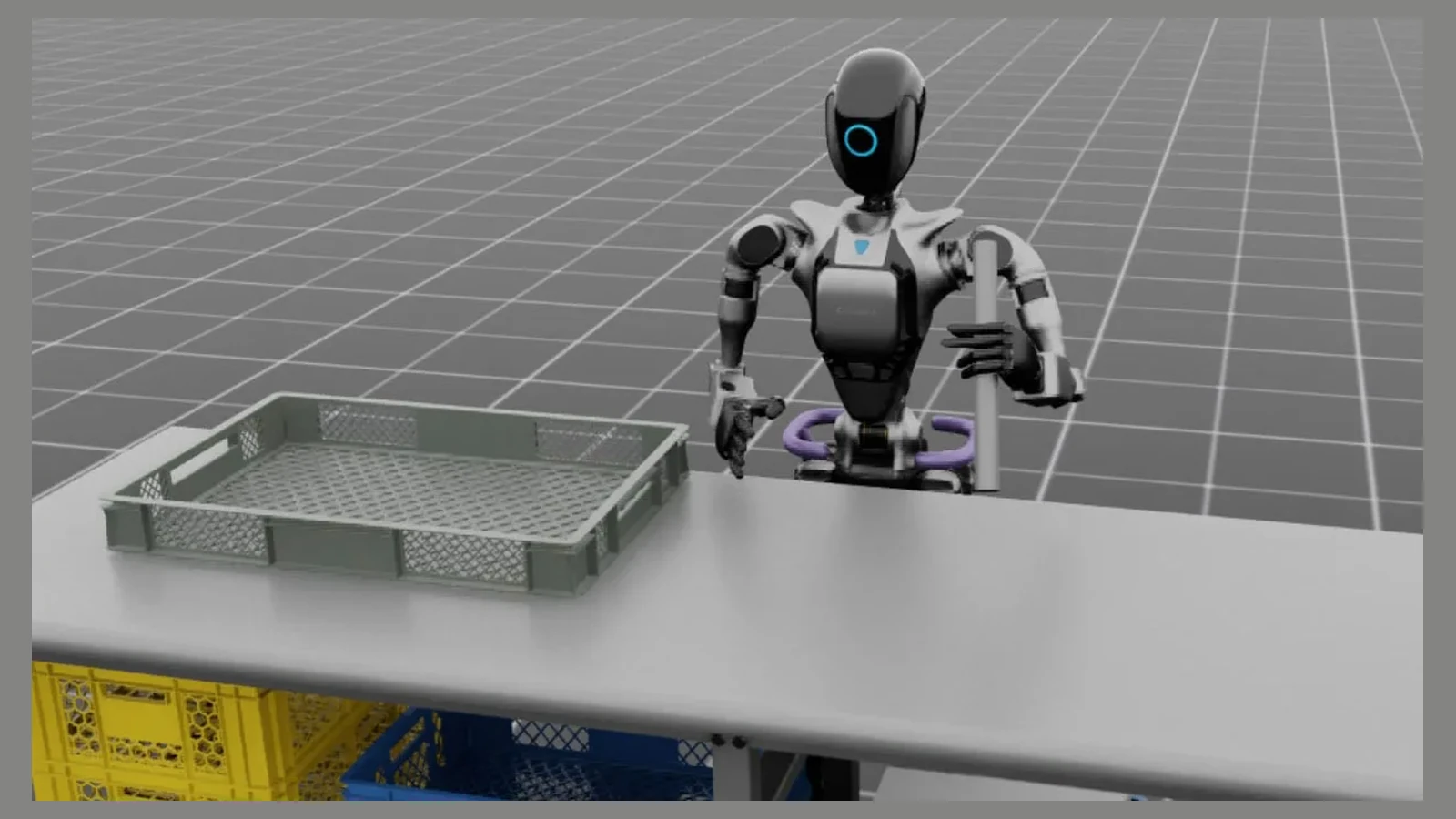
Move from simulation to a bounded hardware test with an emergency stop, conservative speed and logged sensor data. Compare a small set of measurable events: pick success, pose error, cycle time, contact force or recovery from an obstruction. A policy that works in thousands of simulated scenes has not passed until the physical system meets the stated boundary.
What TVG will watch
The open distribution path should make installation and integration more inspectable. The remaining engineering questions are compatibility across releases, reproducible assets, performance on supported GPUs and how clearly teams report physical validation. The images here are official simulation scenes, not photographs of completed real-world tests.
For an upgrade, duplicate one known scene before migrating the main project. Compare startup logs, sensor timestamps, joint behavior and a fixed task result under both versions. If outputs change, isolate the extension, asset or physics-setting difference before retraining a policy on the new stack.