Fast cards are only half of a field-media workflow. A CFexpress 4.0 card can capture high-bitrate video, but the day still fails if footage is copied through a flaky reader, hot SSD, mystery cable, or undocumented backup routine.
For robot testing, drone documentation, sports-tech timing projects, and creator field shoots, the decision is not simply “buy the fastest card reader.” It is how the whole offload chain behaves outside a comfortable desk setup.
Quick answer
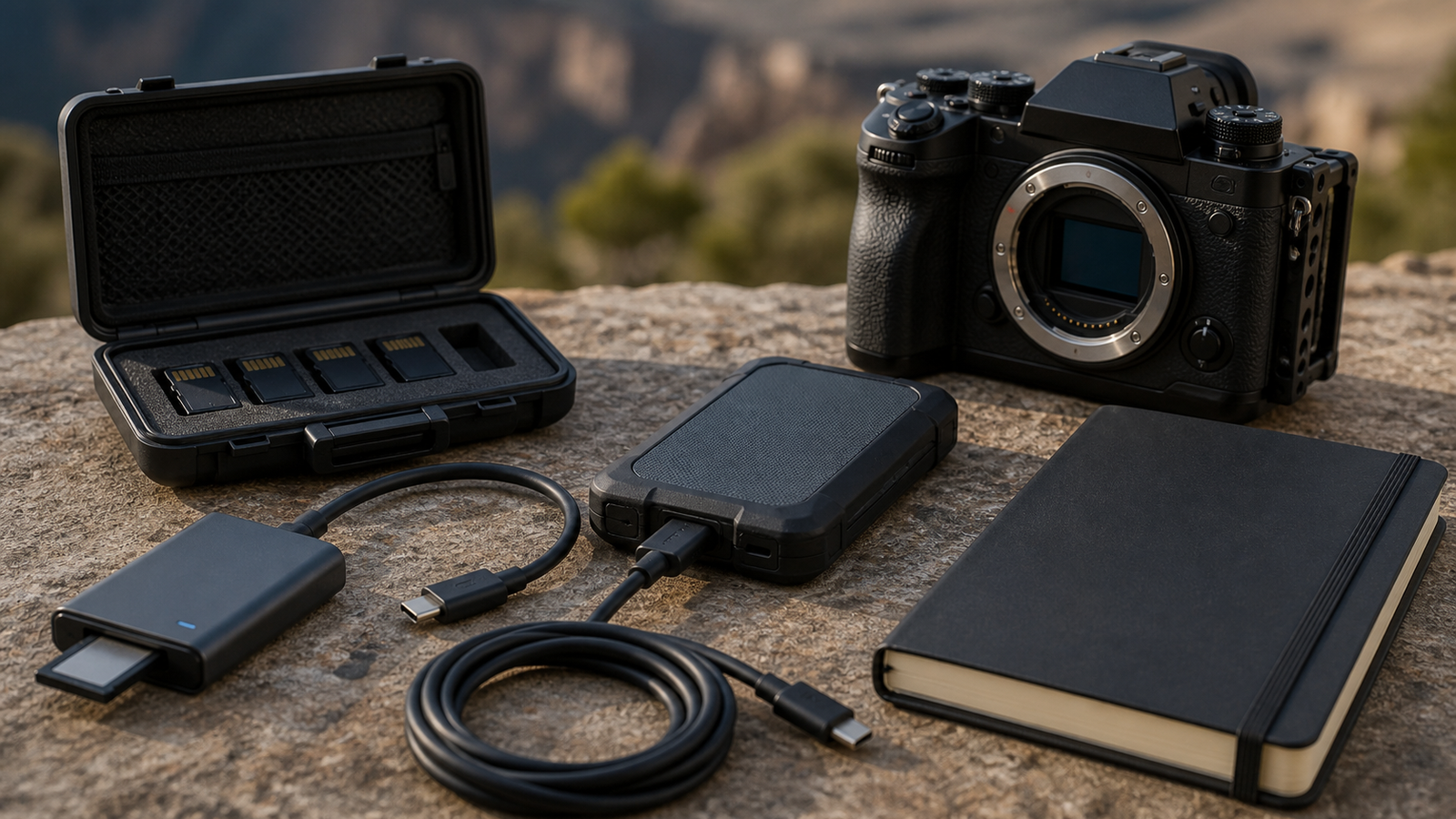
Choose a CFexpress 4.0 reader when ingest speed from compatible cards is the bottleneck. Choose a Thunderbolt or USB4 SSD workflow when editing, backup, and shuttle storage are the bottleneck. In serious field work, use both with short known-good cables, heat-aware placement, and checksum verification.
What each part does
The CompactFlash Association’s CFexpress standard is designed for high-performance removable media used in cameras and other capture devices. A reader turns that removable-card speed into a computer connection. USB4 and Thunderbolt-class external SSDs solve a different problem: moving and editing large files after they leave the card.
If the card reader is slow, ingest takes too long. If the SSD is slow or overheats, the backup stage falls behind. If the cable silently negotiates a lower mode, both expensive devices can behave like midrange gear.
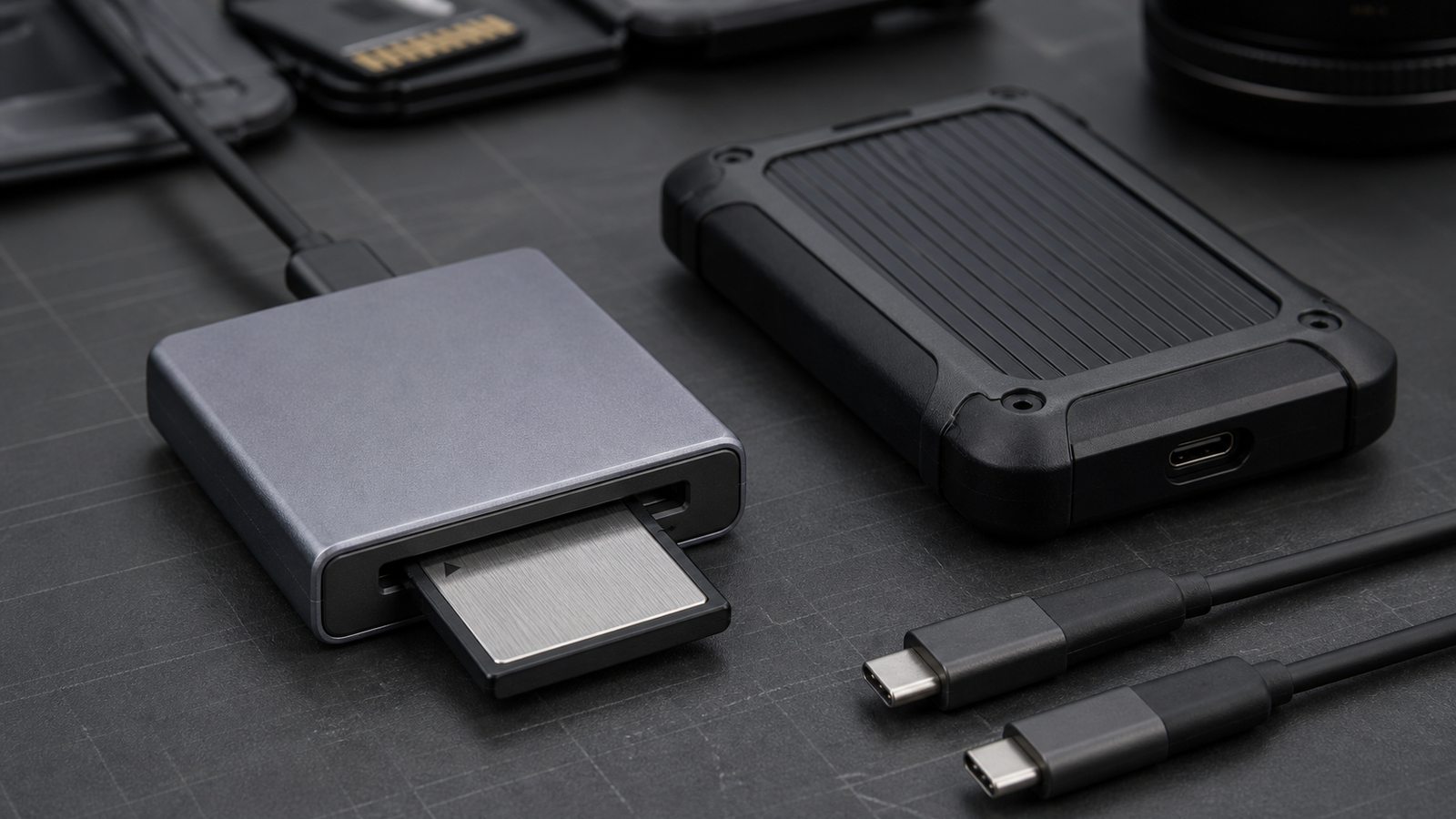
Buyer-readiness checks
- Card type: confirm whether your camera uses CFexpress Type A, Type B, SD Express, or UHS-II SD.
- Host port: check whether the computer port is Thunderbolt, USB4, or slower USB-C.
- Cable: use short certified cables and mark the ones that have been tested.
- Heat: keep readers and SSDs exposed to airflow instead of under bags or cloth.
- Verification: use checksum-capable copy tools for irreplaceable footage.
- Second copy: field media is not backed up until it exists in at least two places.
Where TVG would spend first
For a maker team documenting robots, the first upgrade is often not the absolute fastest reader. It is a complete kit: correct reader for the card type, durable SSD, tested cable set, power plan, and a simple ingest checklist. TVG’s V30/V60/V90 field-media guide applies the same thinking to SD cards: match the recording mode to the full workflow, not a marketing number.
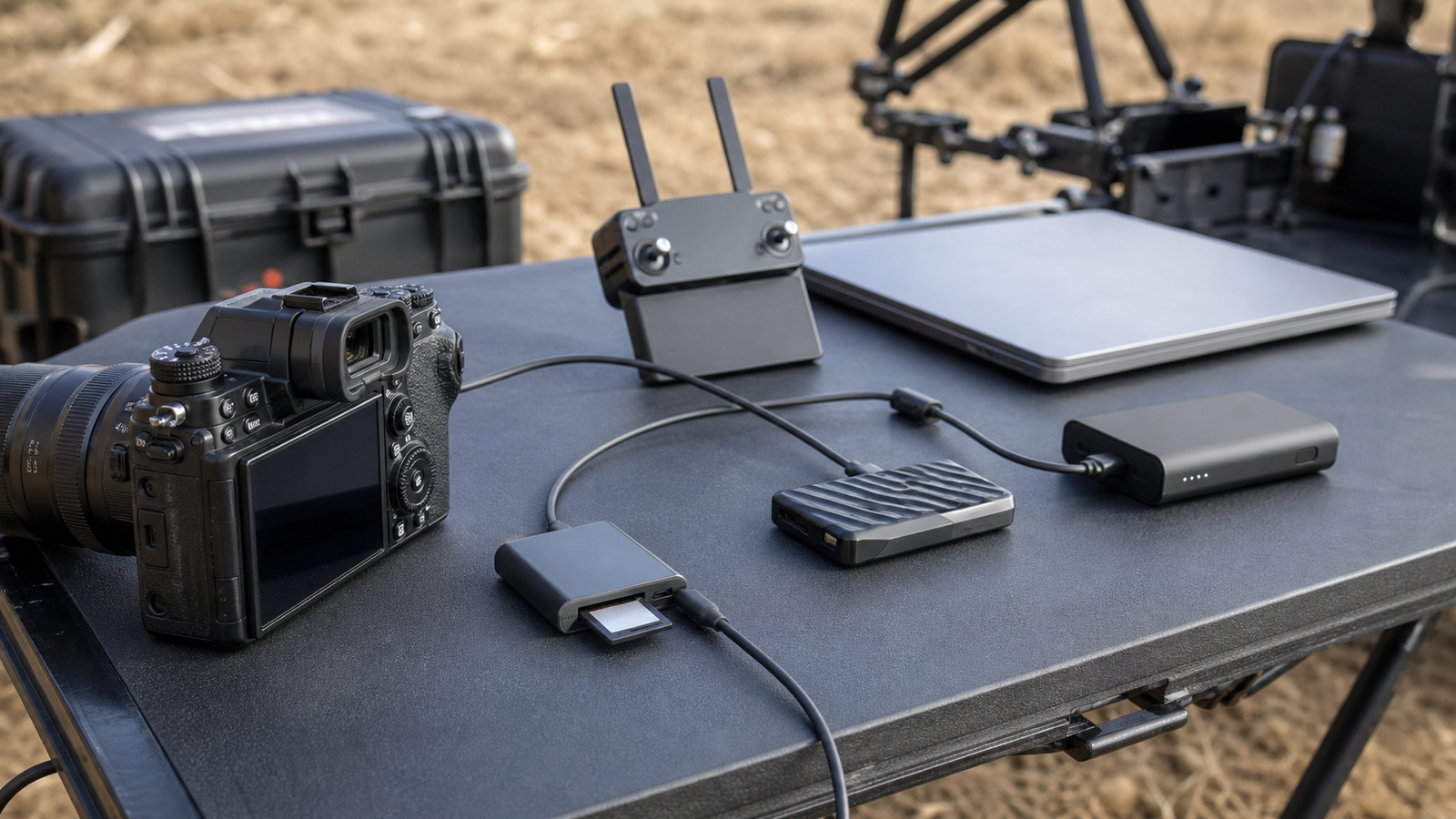
TVG Take
A CFexpress 4.0 reader is a tool for the ingest bottleneck. A Thunderbolt or USB4 SSD is a tool for the edit-and-shuttle bottleneck. The best field kit names the bottleneck before buying hardware, then proves the chain with a timed copy, checksum, heat check, and second backup.