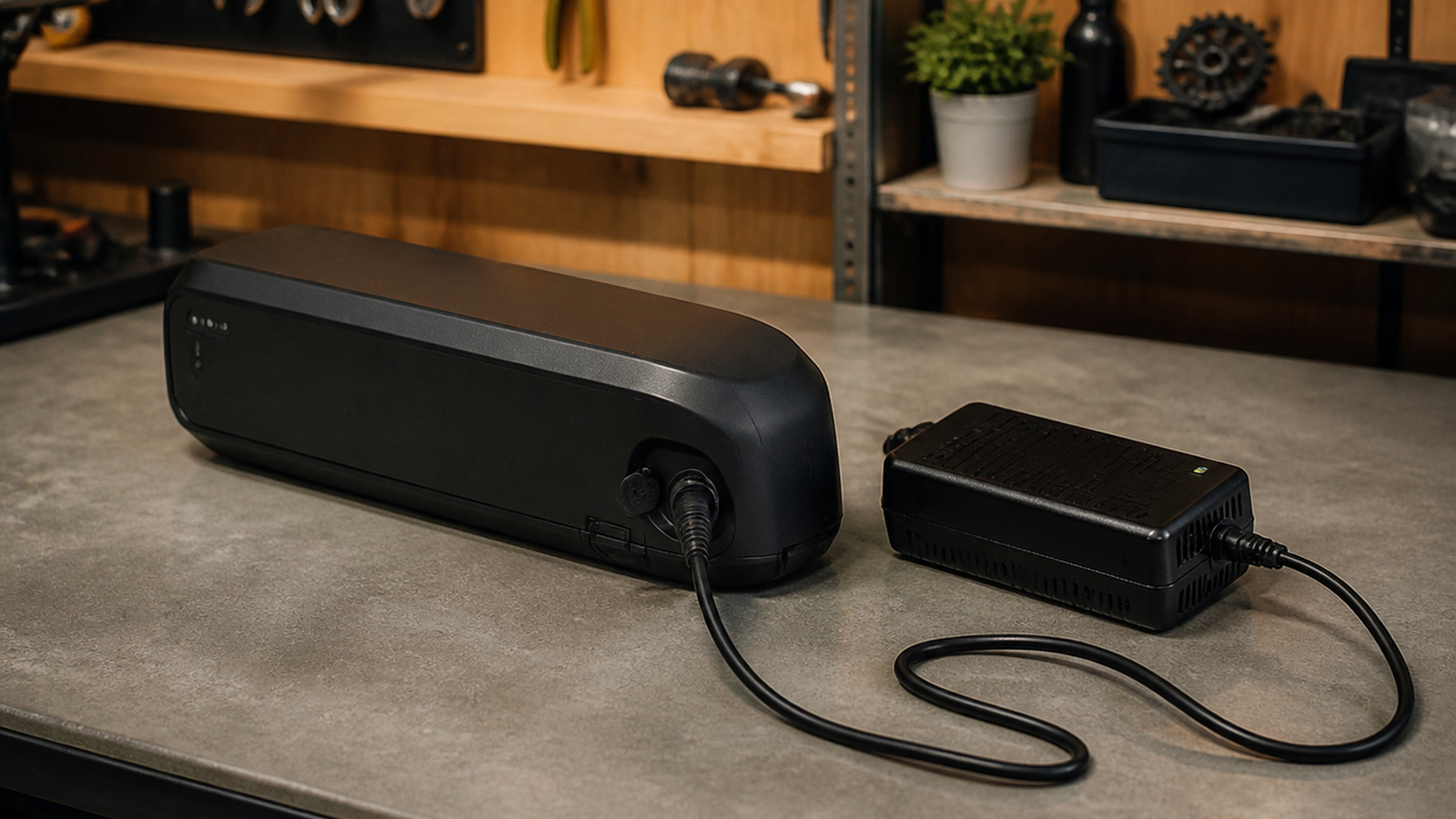
E-bike charging is usually discussed as consumer safety advice. For TVG Report, it also belongs in the maker-garage engineering checklist. A garage that contains soldering stations, 3D printers, robot batteries, power tools, and an e-bike has become a small energy-management environment, even if nobody calls it that.
This article is not legal advice, electrical code advice, or a substitute for manufacturer instructions. It is a practical engineering-first checklist for readers who already think in systems: certified equipment, charger matching, heat, cable strain, storage layout, and inspection habits.
Quick answer
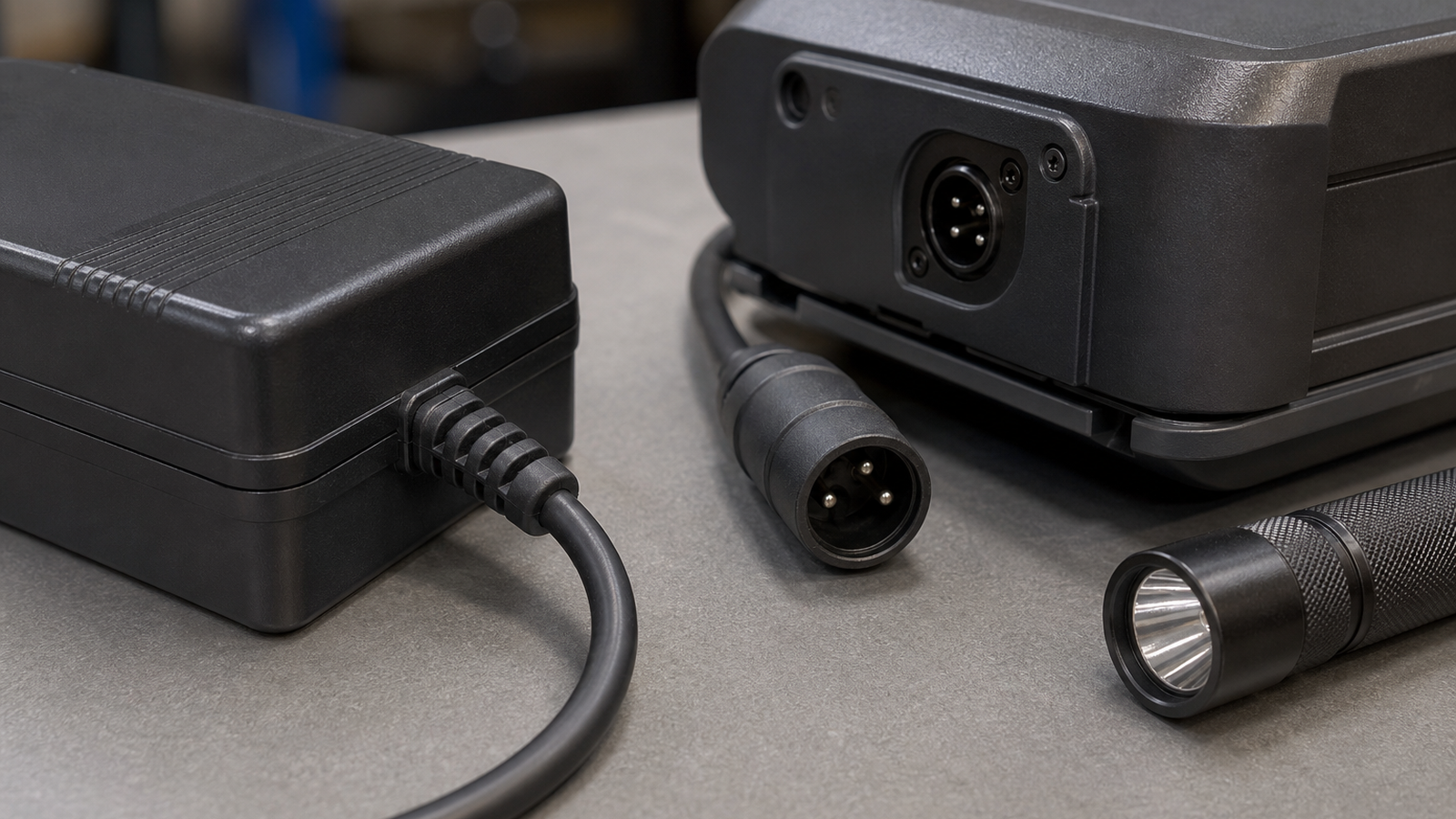
Treat an e-bike battery, charger, motor controller, wiring, and charge inlet as one system. Prefer products evaluated to recognized standards such as UL 2849, use the manufacturer-specified charger, charge on a clear surface away from clutter, stop using damaged packs or cables, and keep the charging area visible enough that heat, odor, swelling, or connector damage will be noticed early.
Why system certification matters
UL Solutions describes UL 2849 as a standard for electrical systems for e-bikes that examines the electrical drivetrain, battery, and charger system combination. That wording is important. The risk is not only whether one battery cell is good or one charger can output voltage. The risk is how the pack, charger, controller, wiring, and inlet behave together over time.
Maker readers understand this from robotics. A motor driver can be fine on the bench and fail when paired with the wrong power supply, cable gauge, connector, or firmware limits. E-bike charging deserves the same system-level thinking.
Garage checklist
- Use the matched charger: Do not treat barrel plugs, voltage labels, or online compatibility claims as enough.
- Inspect connectors: Look for heat discoloration, looseness, damaged insulation, bent pins, corrosion, or strain at the charge port.
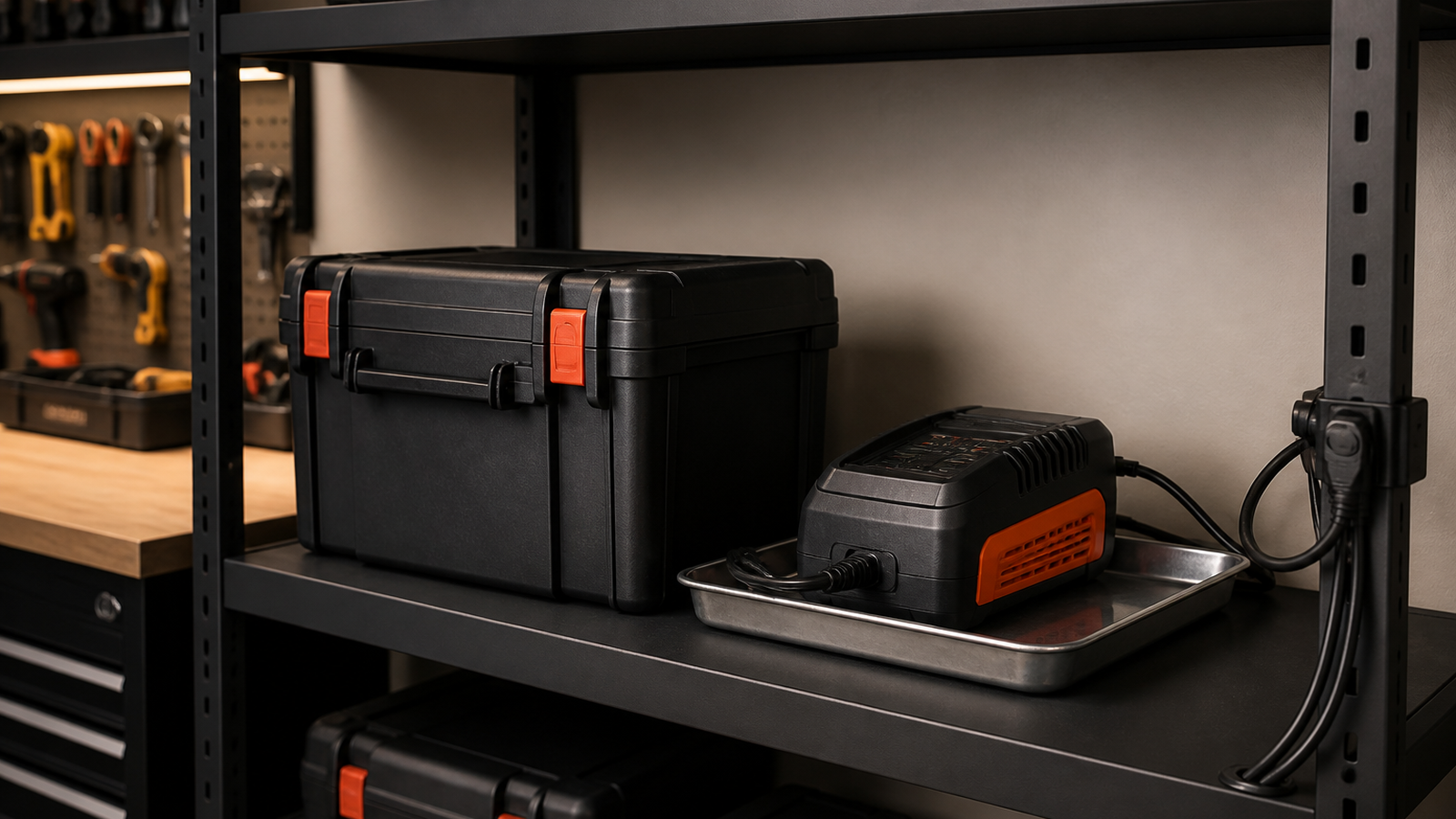
- Control clutter: Keep chargers away from cardboard, fabric, solvents, printer filament scraps, and tool piles.
- Watch heat: A warm charger can be normal; a hot connector, odor, swelling, or noise is a stop-use signal.
- Plan the outlet: Avoid overloaded strips and mystery extension cords. If the outlet or breaker behavior is questionable, involve a qualified electrician.
- Document the kit: Label the correct charger for the correct bike or pack in a way that cannot be confused during cleanup.
What STEM and robotics teams can learn
The e-bike example is useful for youth robotics and maker labs because it makes energy systems visible. Students can compare battery chemistry, connector ratings, charge profiles, cable strain relief, thermal behavior, and documentation discipline without pretending a garage is a professional test lab.
The same habits transfer to robot packs, drone batteries, portable power stations, and camera rigs. The lesson is not fear. It is traceability: know which charger goes with which pack, keep the setup inspectable, and design the physical space so obvious problems are actually visible.
TVG Take
Transportation tech is becoming part of the home workshop. E-bikes are not just gadgets parked next to the tools; they are battery-powered systems that share space with other energy-dense projects. A maker garage should treat charging layout with the same seriousness it gives to ventilation, soldering, and printer maintenance.