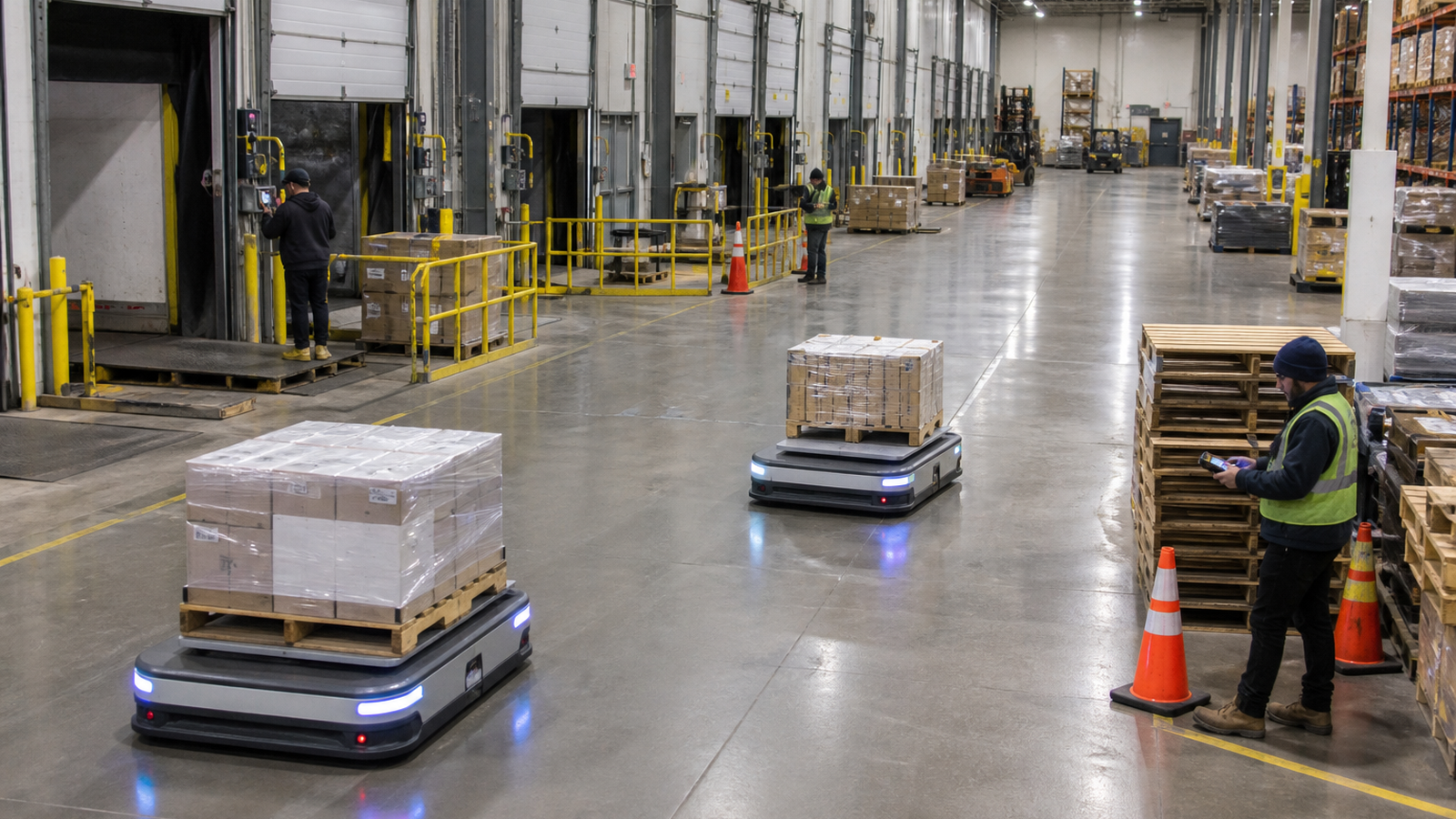
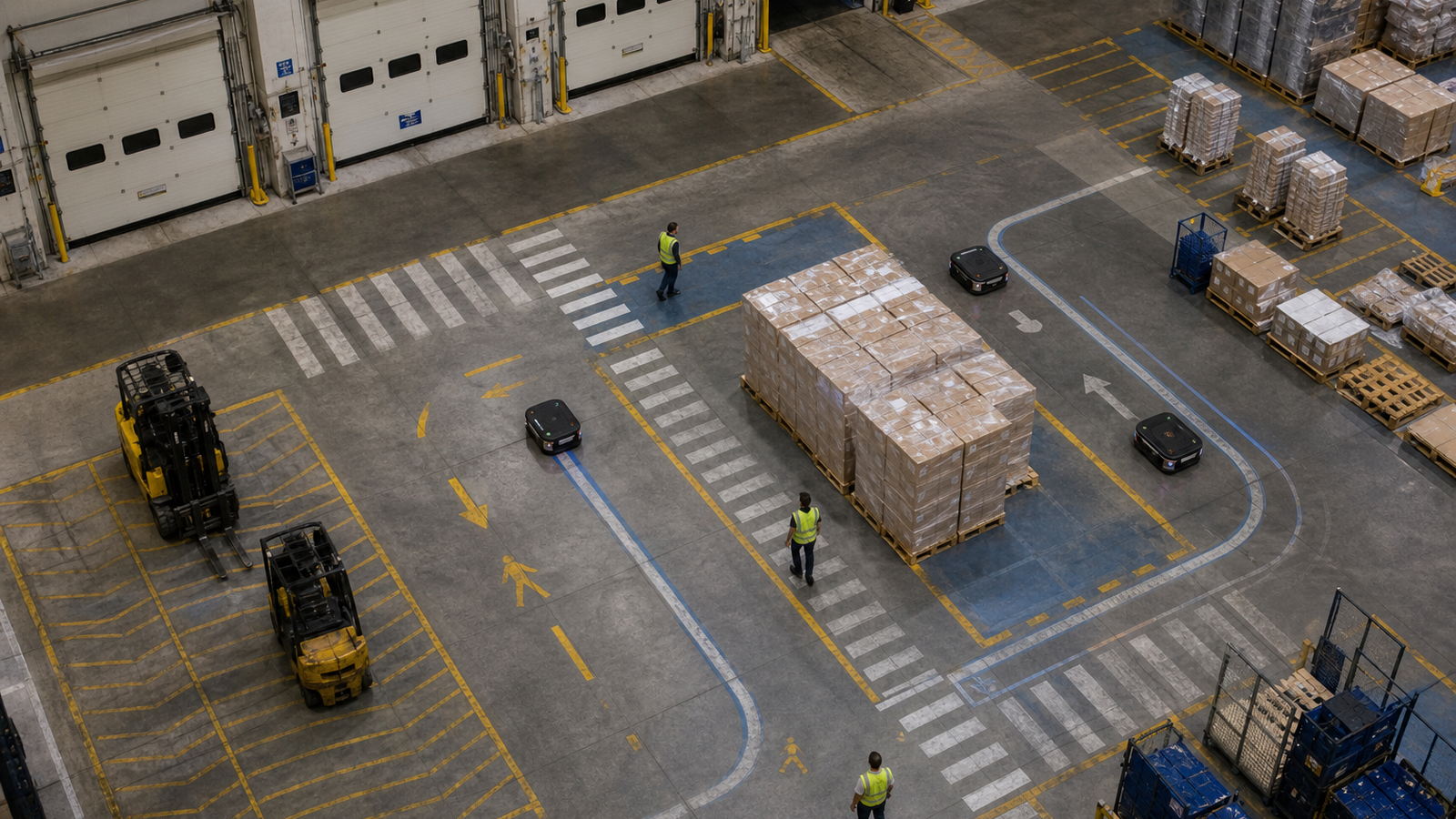
Yusen Logistics has partnered with Destro to deploy an AI-powered human-robot collaboration platform for transload operations, according to a Business Wire announcement published August 3. The companies describe the system as a way to coordinate warehouse associates, autonomous mobile robots, and work assignments in real time rather than treating automation as a set of isolated machines.
The news is a useful signal for robotics teams because transload work is messy. Freight moves between trailers, containers, staging lanes, pallets, scanners, and people. A mobile robot can be mechanically capable and still underperform if the software layer does not know which task matters next, where a human worker is headed, or when a dock lane is about to become blocked.
What was announced
Yusen says it is deploying Destro’s platform to help coordinate transload activities in real time. Destro describes its system as an AI-powered platform for human-robot collaboration, with a focus on orchestrating people, robots, and warehouse work instead of replacing one manual task with one automated device.
That distinction matters. In a controlled demo, a robot can move a tote from point A to point B. In a live logistics floor, the more valuable question is whether the system can keep work flowing when arrivals change, operators take breaks, a trailer is delayed, or a robot path conflicts with a forklift route.
Why it matters
Warehouse automation is shifting from hardware-first pilots toward systems that have to earn trust during ordinary shifts. Fleet uptime, safety zones, exception handling, worker handoff, and task priority often determine whether a robot program scales. The Yusen-Destro announcement puts the coordination layer in the foreground.
For TVG readers building STEM robots, AMR prototypes, or small automation cells, the lesson is concrete: robot navigation is only one piece. A useful deployment also needs a queue, a map of human work, a way to handle exceptions, and a simple interface that operators will actually use.
Technical breakdown
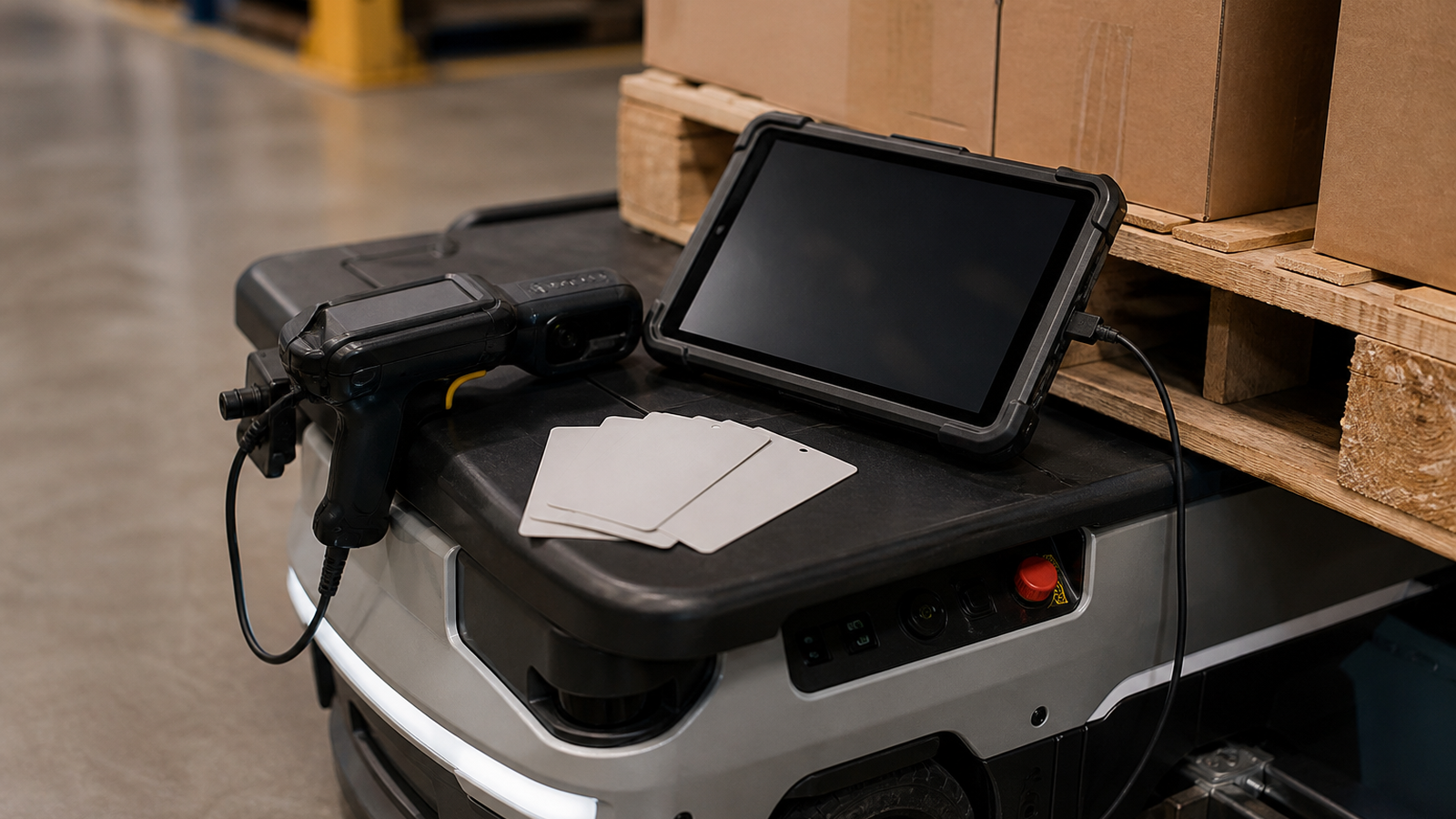
A transload workflow combines sensing, scheduling, identity, and physical movement. The system needs to know which load is present, which worker or robot is assigned, whether the destination is available, and how to recover when the expected path changes. The AI layer is valuable only if it is connected to warehouse events that are accurate enough to act on.
That creates several engineering pressure points: latency between scan and assignment, clean status reporting from robots, clear geofencing around dock doors, and fallback rules for when automation cannot complete the next step. The best orchestration system is not the one with the most impressive dashboard. It is the one that lets a supervisor understand why work is moving or why it has stopped.
TVG Analysis
The Yusen-Destro announcement is not a robot spec story. It is a deployment story. The interesting part is the claim that human and robot work can be coordinated in real time in a logistics environment where exceptions are normal.
TVG will be watching for evidence beyond the announcement: measurable throughput changes, worker acceptance, safety reporting, downtime data, and whether the platform can handle mixed fleets or only a narrow set of robot workflows. Those details have not been announced yet, but they are the difference between a promising pilot and a repeatable warehouse automation pattern.