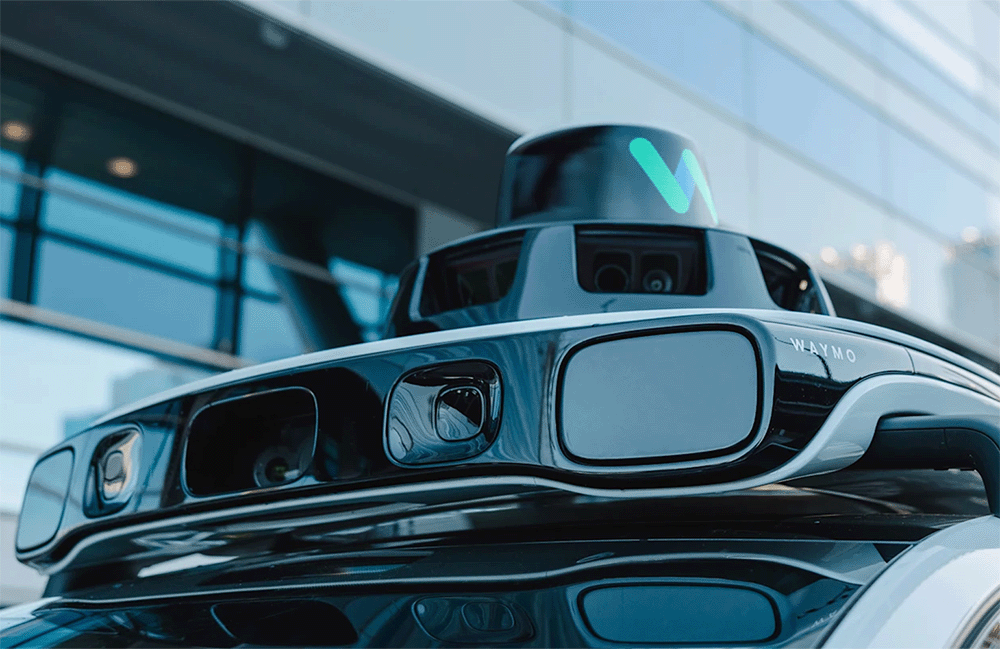
SANTA MONICA, Calif. — The National Highway Traffic Safety Administration (NHTSA) has opened a preliminary evaluation into Waymo after one of the company’s autonomous vehicles struck a child near an elementary school on Jan. 23 during morning drop-off. Waymo says the vehicle detected the child as she emerged from behind a double-parked SUV and braked from about 17 mph to under 6 mph before contact; the child sustained minor injuries, stood up, and walked to the sidewalk. The company called 911, moved the vehicle to the side of the road, and notified NHTSA the same day, pledging full cooperation.
What NHTSA is evaluating
NHTSA’s Office of Defects Investigation (ODI) is examining whether Waymo’s automated driving system (ADS) exercised appropriate caution in a school zone during peak drop-off, including adherence to posted limits, contextual slowdown policies, and behavior around double-parked vehicles, crossing guards, and children. The probe also covers the vehicle’s post-impact actions. As a preliminary evaluation, ODI typically pulls vehicle logs, telemetry, perception traces, and policy stack decisions to assess whether the ADS’s intended behavior and performance in this context meet safety expectations.
Perception, occlusion, and braking profile
Waymo reports the pedestrian became visible only after emerging from behind an occluding SUV—an edge case where perception and prediction stacks must reconcile partial observations under tight latency budgets. At 17 mph (~7.6 m/s), the vehicle’s hard brake to under 6 mph (~2.7 m/s) reduced impact energy substantially but did not avoid contact, highlighting the trade-off between speed policies and occlusion risk near schools. Waymo cites a peer-reviewed study suggesting a fully attentive human driver would have made contact at ~14 mph in a comparable scenario; the company has not released video of this event, making independent verification difficult. Regulators will likely scrutinize occlusion-aware planning, conservative standoff around double-parked vehicles, and any school-zone-specific inference rules that cap speed and increase caution thresholds.
School-bus compliance troubles
This incident follows separate scrutiny of Waymo’s behavior around school buses. In December, the company announced a voluntary software recall after its robotaxis illegally passed stopped school buses in multiple states. A televised incident in Atlanta in September preceded an NHTSA probe into school-bus stop compliance. Austin Independent School District reported 19 instances of “illegally and dangerously” passing stopped buses since the 2025–2026 school year and urged Waymo to suspend operations during loading and unloading windows.
Operations, safety record, and prior recalls
Waymo says its robotaxis surpassed 100 million autonomous miles in July 2025 and are adding about 2 million miles weekly. The service operates paid rides in Atlanta, Austin, Los Angeles, Phoenix, and San Francisco, with more than 10 million paid trips completed. In May 2025, Waymo recalled 1,212 vehicles to address collision risks with chains, gates, and other barriers, resolved via a November 2024 software update. The company plans to expand to additional U.S. cities including Nashville, Las Vegas, San Diego, Detroit, Washington, D.C., Miami, Dallas, Seattle, Houston, Orlando, San Antonio, Baltimore, Philadelphia, Pittsburgh, St. Louis, and Denver, and targets a 2026 London deployment after initiating testing in Tokyo.
The Editor’s Take: For riders and nearby road users, expect AVs to drive even more conservatively around schools—slower approach speeds, wider buffers near occlusions, and more frequent full stops. For developers, the near-term work is clear: tighten school-zone geofencing, increase occlusion penalties in the planner, lower speed caps under partial visibility, and validate end-to-end perception-to-brake latency against child-pedestrian benchmarks; those changes will likely trade throughput for safety but should reduce impact velocity in worst-case scenarios.
Credit and Source: The Robot Report
What to watch next
For more TVG Report context, see How to Choose Sensors for a School Robotics Team in 2026, Starbucks builds AI ordering companion for ‘vibe’ coffee, and MoonshotAI Kimi K2.5 Tech Report Details Latency and Inference Upgrades.