Yesterday Google pulled the curtain back on Project Genie, an AI demo that can spit out short, interactive 60-second “worlds” using Genie 3 and Gemini. It looks impressive in clips — you can wander an environment and see familiar mechanics — but it’s capped at 720p and 24 FPS, forget full objectives, and often “hallucinates” bits of level geometry or forgets what it already placed. In plain English: it’s like a very creative prototype designer that occasionally daydreams into your level.
Why stocks freaked out
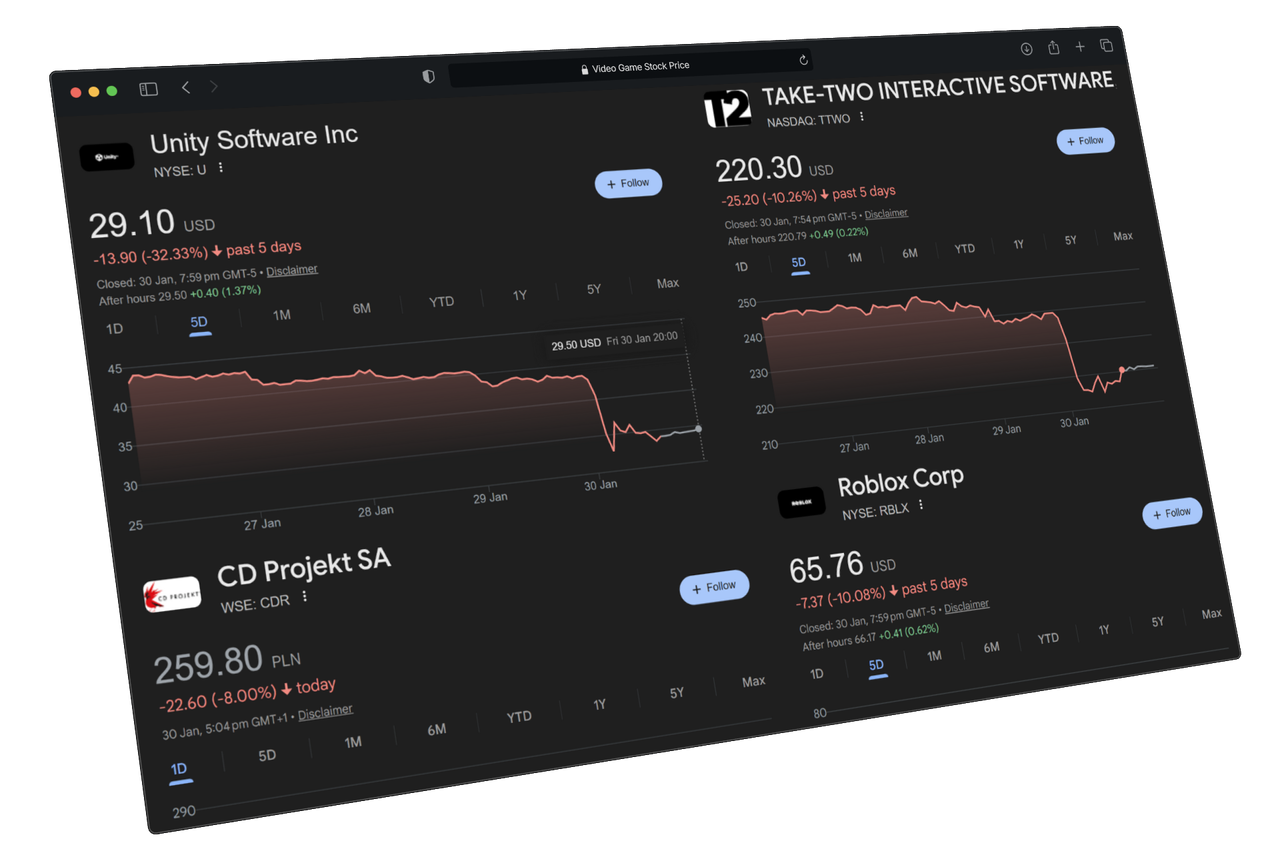
Investors dumped shares across the sector — Roblox, Nintendo, CD Projekt Red, Take-Two, and especially Unity (down ~20%) — because they imagined a future where AI automates game development. That reaction says more about market fear and hype than about the tech itself. Unity got hit hardest because it’s literally the scaffolding most studios build on; the idea of an AI skipping that scaffolding scares shareholders.
What Project Genie actually buys developers
Where Genie could be legitimately useful: rapid previsualization. Think of it as a fast way to lay out level geometry, test camera ideas, and get a feel for scale and movement before committing time and money to an engine-specific build. That can shave weeks or months off early-stage design, helping teams iterate concepts without building full systems first.
The catch (there’s always a catch)
- Visual fidelity: 720p/24FPS is closer to DVD-era visuals — fine for mockups, not retail-ready.
- Mechanics and goals: Genie doesn’t create objectives, AI forgets context, and it fills gaps weirdly (think patches of grass in the middle of a road).
- Marketplace noise: easier content generation could flood platforms with low-effort garbage and squeeze funding for polished games.
Who should care?
Developers and producers should be curious — this is a time-saver for early mockups. Gamers? Not yet; we won’t be playing full AAA releases made end-to-end by Genie. Investors should temper panic with technical reality: this prototype helps visualize ideas, it doesn’t ship full games or replace design teams overnight.
The Editor’s Take: Project Genie is cool tech for concepting and rapid previews, not a game-making magic wand. This is a massive win for early-stage design speed, but the catch here is that it’s low-res, forgetful, and lacks goals — it helps sketch levels, it doesn’t craft polished experiences. Don’t sell your studio stock over a demo clip.
Credit and Source: Tom’s Hardware