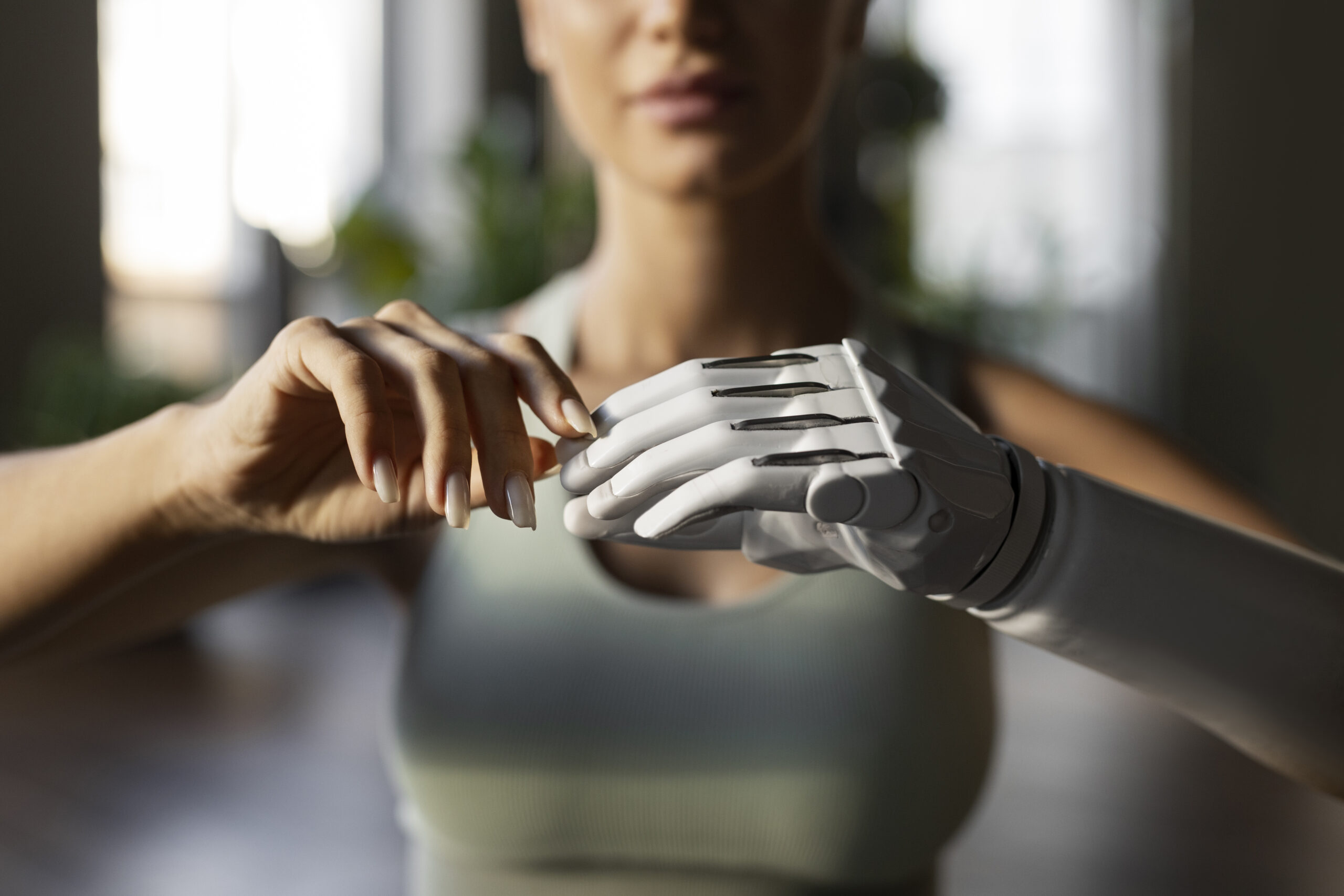
Robots have closed large gaps in visual recognition and autonomous navigation, yet touch exposes fundamental limits. Human skin houses multiple mechanoreceptor types tuned to vibration, stretch and fine texture, and biological sensing operates through active exploration: we press, slide and adapt to convert raw signals into perception. Reproducing that across an entire robot requires more than dense pressure maps—it demands low‑latency sensing, local processing and compliant materials that shape behaviour.
Technical analysis
Current tactile systems typically combine arrays of pressure sensors with centralized processing. That approach scales poorly: high channel counts raise wiring complexity and processing load, and centralized inference introduces latency that degrades closed‑loop control. Practical soft robots therefore need embedded, millisecond‑scale inference close to the sensor—implemented as lightweight convolutional or temporal-filter networks, or purpose-built signal‑processing pipelines running on microcontrollers or tiny ML accelerators.
Researchers are instead exploring distributed architectures inspired by biological examples such as the octopus, whose limbs contain substantial neural resources that generate local reflexes. In robotics, morphological computation—letting compliant materials passively shape contact forces and filter signals—reduces the computational burden on controllers. Combined with local processing, this enables faster reactive adjustments to grip and posture without round trips to a central planner.
Applications already demonstrate these principles. Oxford’s soft‑skin patient simulator, Mona, embeds tactile sensing and behaviour to mimic pain responses and resistances, providing occupational‑therapy trainees with realistic haptic cues. For care robotics, whole‑body sensitivity would allow machines to modulate force when lifting or supporting people, improving safety and dignity—but developers face regulatory safety tests, high development costs and unclear commercial pathways.
Transferring lab prototypes into certified products requires rigorous validation of latency bounds, fault modes and sensor fusion strategies. Designers must specify worst‑case inference latency, deterministic control loops for force modulation, and fail‑safe mechanical compliance. Without those, even sophisticated perception models risk unsafe behaviour in contact scenarios.
Editor’s Take: For developers, the path forward is technical and practical—prioritise distributed sensing, millisecond‑scale local inference and material designs that embed control. For end users, that approach promises safer, more intuitive physical interaction: from better clinical training tools to assistive robots capable of measured, context-aware touch.
Advances in soft materials, low‑power embedded inference and sensor fabrication are narrowing the gap, but we remain far from autonomous robots matching human tactile finesse. Each integration of compliant anatomy, local computation and sensor fusion not only improves machine performance—it highlights how tightly sensation, movement and intelligence are coupled in biological systems.
Credit and Source: Robohub